Tag: writing-tips

A Chat with A.J. Hooks

A Chat with A.J. Hooks

When I first sat down with AJ Hooks to talk about Eugenesis: Inception, I felt that spark you get when a writer knows exactly what world they are building and is bold enough to follow it wherever it goes. His debut sweeps you into the life of Maria Guevara, a brilliant genetic engineer who finds herself pregnant under circumstances that refuse to make sense. One moment you’re in a quiet Spanish town, and the next you feel the walls shift around you as Maria realizes she is not alone, not safe, and not entirely in charge of her own future.

Hooks writes with a confidence that caught my attention. He blends science with the unsettling tension of conspiracy. The story moves quickly, yet it lingers in your mind long after you close the book. I found myself leaning in as he described how the idea took shape. It started with a simple question about genetic engineering, and then it spiraled into a full exploration of legacy, secrecy, and how far people will go to shape the world in their image. You can purchase Eugenesis: Inception here.

What sparked the idea for Eugenesis: Inception?

Eugenesis: Inception grew out of my interest in what might be the dangers of bio/genetic engineering if it was used for nefarious ends and, more generally, the question of the nature of humanity in the face of accelerating technology. Also, I wanted to explore the complicated terrain of personal identity vs. family/group heritage.

How do you approach writing on days when inspiration feels thin?

When I get stuck I will first wait a day or two and take some walks in nature, as I feel it’s often the case that my unconscious is still chewing something over that’s not quite ready. If nothing comes after that, I will go to a separate table in a different room and start working on (or re-working) the outline for the next chapter or two. When I’m writing I feel more in a nonlinear flow (right brain?) state, almost letting the characters lead me on, but when outlining I’m more in a plotting/linear (left brain) state. If the writing is stuck or drifting, it helps sometimes to zoom back up to the overview and re-examine/re-arrange some skeletal plot and action points which I can use to then dive back in and guide my flow.

What part of your book changed the most during revision, and why?

The character arc of a secondary antagonist. I originally thought I would have him transform towards the end and fall in love with the main character. About a third of the way through the book that changed though, as I had developed a sympathetic supporting character and, as I was writing, it just seemed natural that he and the main character were drawn together and [SPOILER ALERT] ultimately fell in love. My lesson from that is often your characters and their emergent character development will sometimes lead you in story choices rather than the other way around.

What do you hope readers carry with them after finishing your work?

A curiosity about what it really means to be human and a realization that we will always need to be careful about how new technology is  deployed and used when humans are involved. Because there will almost always be misguided, or just plain bad, people that will eventually use it in the wrong way.

Is there a scene or moment in the book that feels closest to your heart?

Probably the climactic scene where the main antagonist [SPOILER ALERT] meets his end. It’s a scene imbued with historical parallels and irony, and happens in a place that I have personally  visited and where there are powerful, tragic historical echoes. It’s also a bittersweet scene because another character, one that we have been rooting for, [SPOILER ALERT] dies in the process of protecting the main character.

What book or writer shaped your voice in a way you still notice?

The narrative non-fiction of Hampton Sides (Blood & ThunderThe Wide, Wide Sea) and the novels of Stieg Larsson (The Girl With the Dragon Tattoo, etc.)

What are you working on now, and how is it taking shape?

I’ve recently finished the sequel to Eugenesis: Inception, and it’s with the editor and is targeted for a 2026 release. It’s called The Second Becoming. And I just started working on a collection of 3 short (~ 30 pages each) stories with a loosely unifying theme. I’m enjoying the challenge of distilling the essence of a story into a shorter format and writing in a different POV.

I wanted to send a warm thank you to A.J. for these amazing answers. THANK YOU!

Go check out A.J. Hooks here.

The Writer as a Tortoise.

The Writer as a Tortoise.

by Sheelagh Aston

It is estimated that 97% of people who start writing a novel never finish it. So, congratulations on finishing the first draft of your MS.

Do not underestimate the achievement and enjoy the satisfaction of writing THE END.

Celebrate. You deserve it.

Now what?

You will be eager to get it out there in the world.

Here is some advice – DON’T.

Jericho Writers estimate the chance for a new writer to get an agent is 1 in 1000. The most common reason for rejecting an MS given is poor presentation or the story needs more work/editing done on it for an agent to send out on submission or a publisher to take on.

Few agents or publishers have the time or inclination to undertake several rounds of edits.

As for self-published novels. The biggest compliant by readers is many novels feel underwritten and contain grammatical errors in them.

 JK Rowling rewrote the first chapter of HP & the Philosopher’s Stone 15 times. As a writer your may find you have more in common with the tortoise and not the hare of the children’s Aesop’s fable. The tortoise took their time, did not rush, and won the race. The bragging, puffed-out hare failed to stay the distance.

Learning to be a tortoise, not a hare, is a key skill for a writer. One not often discussed at writers’ courses or conferences. Many writers simply learn via the school of hard knocks.

Developing a process for ensuring your work is the very best it can before you send it out for submission or to print takes time and a lot of patience. For many new to writing it can also be confusing – just check out the number of editing services and writing courses advertised on the internet. Yet they emphasise how important it is to take your time and get the MS up to publication standards.

It will take you time to work out a process that suits you and your budget. (if you have one) and to find people you can entrust your precious work for critiquing and editing.  What is offered below is a framework that can be done for little money and will enable you to reach a point where you can have confidence that whether you go down the traditional or self-publishing route your manuscript is the best it can be for the next stage of it journey to publication.

  1. Put the 1st draft in a drawer and leave it there for at least three weeks – longer if you can. Give yourself time to distance your giddy emotions from writing it so when you come back to it, you can look at it with a fresh eyes and clearer head.
  2. Go through a hard copy with a red pen– yes it means printing and paper but it is easy to miss things when reading material on computer screen. You will catch more typos, notice issues about the overall story’s pacing, plotting and characterisation if you read a paper version. You can make notes in the margin.
  3. As you go through it write a scene/chapter breakdown of the story. This will help if you need to move scenes or chapters around, check your timeline works and, if you are writing more than one POV, ensure everyone gets a turn. It can be a quick reference to locate what happens when (believe me you will get confused at some point)
  4. When you have done your revision find 2-3 people who will read it (called beta readers) – not friends or relatives. Joining a writers’ group, in person or online can help this – you may have to return the favour – and this in turn will help you develop your inner-editor’s eye for your own work. There are online critique groups you can join as well. Critique.com is one. A search on Yoututbe to find writing webinars will throw up zillions on various aspects of writing including editing and critiquing that can help you. 
  5. While waiting for feedback research the different types of editing in case you need one later i.e. the differences between developmental and line editing. (This is where it can get expensive – understanding the different types of editorial services will help you chose the right one for your MS and discuss your need with an editor.)
  6. Clunk or Chime? – When you get all the critiques back go through each beta reader’s feedback. Note their consensus on issues with the story – plot, pacing, world building as well as what they liked. Mark up your revised copy. Put it in the drawer again to rest for a couple of weeks. You may not agree at first with their observations. It is tempting to discard the feedback. When you go through the marked-up MS with the feedback keep what ‘chimes’ with you. If something still ‘clunks’ with you either do nothing with it or ask for clarification from the person who gave it. It maybe they have mis-understood something or you have not written a scene or plot point clearly.
  7. By this stage you should have a robust MS but hold back the hare inside you. Go through the MS once more (or twice) Eliminate all the ‘weasel words.’ ‘Weasel words’ are weak works i.e. adjectives, ‘glue words such as, but, just so, very. Most grammar checkers have a faculty that can help you with this.
  8. Put the new revised draft back in the drawer once more. Go off and write something else. Start working on your submission package and submission list. When ready return to the MS. Do the tweaks you need to do.

What you decide to do from this point is up to you. You can start submitting to agents and publishers, get a professional editorial assessment carried out to ensure it is ready to go out for submission or you may decide to self-publish.  

Whatever you decide you will have a MS that supersedes the original version you started with, you will have grown as a writer and the next 1st draft will benefit from what you have learnt.

Happy Writing.

Sheelagh has been writing since she could hold a pen. Her novels weave together suspenseful plots with exploring how people find their inner worth and place in the world. When not writing novels, she freelances for radio, magazines, and anthologies for a wide range of genres. Her gothic horror story Little Redd Cupcake with be published by Wild Ink in the Anthology Penny Dreadful later this year.

Social media links:

www.sheelaghaston.com

X @aston_sheelagh

 Facebook: https://www.facebook.com/sheelagh.aston.9

Author Interview with Haddessah Anne Brice

Author Interview with Haddessah Anne Brice

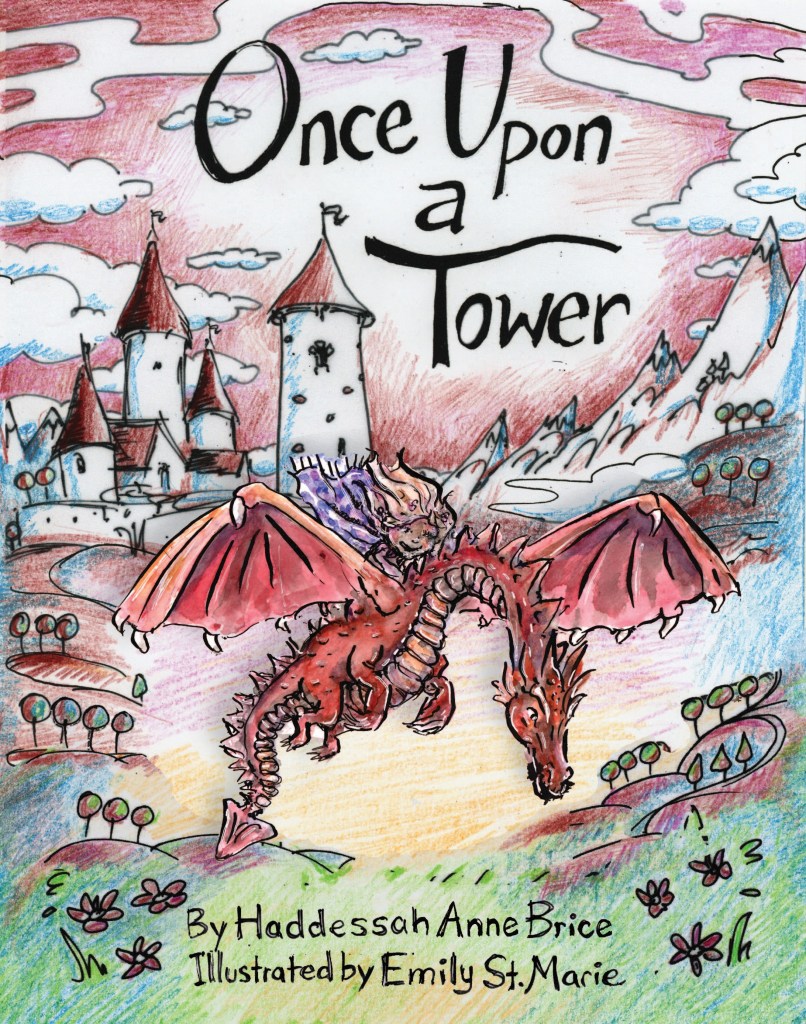
We are so excited to meet with one of our wonderful children’s author’s Haddessah Anne Brice, or as we like to call her, Haddie. Her children book, Once Upon A Tower, about a young princess under the thumb of her cruel parents, is available now for purchase! It was artfully illustrated by Emily St. Marie and captures the whimsy and magic of a powerful fairytale that will teach children to gather the strength residing within their young souls and tear down barriers holding them back from their true calling.

Once Upon a Tower With Haddessah Anne Brice Cover

Haddie, thank you for meeting with us today! Can you tell us a little about yourself.

Ummm… I don’t know where to start, and don’t like talking much about myself. But I’ll brag on my friends and Godkids for hours! LoL 

What type of material do you usually write? 

That depends. I dabble in a lot of things, but mostly I write kid’s books and poetry in various genres.

 What does your writing and revision process look like?

If the story isn’t working, I go back to the beginning and work my way through it until I figure out what the characters are trying to say that I missed. This typically happens every few chapters. So by the time I show it to Abby and Brittany, I have literally done everything I can with it and need another set or two of eyes to help me dig deeper into the story.

 What is the hardest part about writing, in your opinion?

Getting what’s in my head, onto the page. I have two sayings that I use equally as often. 1. I wish I could run a patch cord from my brain to the computer, so then all I’d have to do is edit. 2. I can’t edit what isn’t on the page. Type ANYTHING!

 What is your favorite thing about being a writer? 

I’ve been a story teller since I could talk and a writer since I learned to read and write. The written word and the images your particular set of word choices creates are my drug. I am addicted to stories.

 What advice do you have for new/debut authors? 

Read A LOT! Write fanfic and RP as practice for new techniques you want to try out. Don’t hold yourself to a higher standard than you would others. If you would be understanding of someone else’s gaff, be understanding toward yourself for the same gaff.

 Do you have any links or resources you’d like to share about writing or for your own materials? 

I tell anyone who’s interested in ANY kind of writing, that they need to read “Noble’s Book of Writing Blunders (and how to avoid them)” by William Noble.

I’ve read several books about writing but that one doesn’t read like a textbook and it changed my life (as far as my writing goes).

Do you have a favorite quote from a book?

“I could no sooner choose a favorite star in the heavens!” Danielle De Barbarac ~ Ever After