Category: Blog

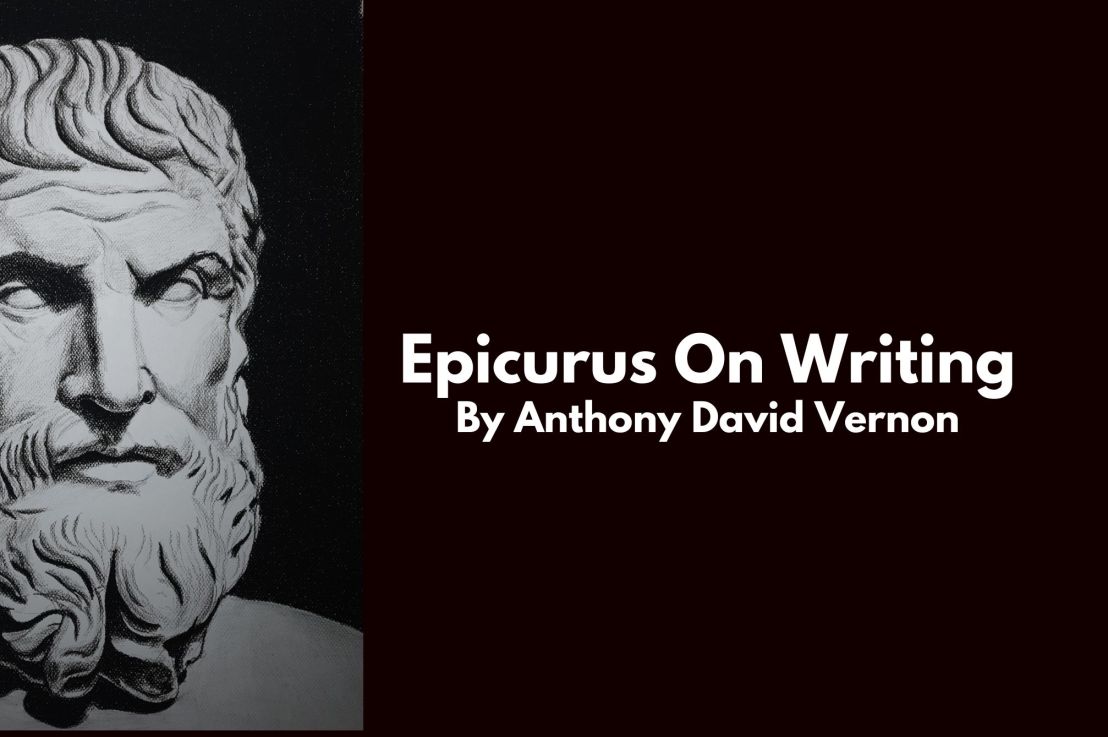
Epicurus On Writing

Epicurus On Writing

By Anthony David Vernon

Epicurus is perhaps one of the most misunderstood philosophers and writers. He was a man of simple pleasure mistaken for a hedonist, and his writing resume is usually reduced to one work, The Art of Happiness. This is partly because the vast majority of his work did not survive, but “Estimates claim that Epicurus wrote over 300 works during his lifetime.”[1] Nonetheless, this all has led to Epicurus being an underestimated writer. But, Epicurus, in the fragments we have from him, presents quite useful pieces of writing advice.

Epicurus speaks to his writing, stating, “I write this not for the many, but for you; indeed, each of us is enough of an audience for the other.”[2] Epicurus points out that writing is always between the writer and a single reader. Too often, writers focus on a potential mass of readers instead of focusing on the fact that is is always one reader engaging with a work of writing. Even if a work of writing is being read aloud to a crowd, each reader is having a personal engagement with a given piece. When writing, imagine that there will only be one reader of your work, this will allow your writing to be more intimate. For Epicurus, writers are too concerned with having mass appeal and so lose out on emotionality. This is not to say that writing for one person cannot appeal to the many, quite the opposite, personal works possess personality.

The above quote from Epicurus also teaches another writing lesson: a writer should be happy that they have readers at all instead of being worried that they do not have enough readers. As the proverb sometimes goes, expectation is the thief of joy, and writers often suffer from expectation. Having a quantity of readership expectations can kill the writing process because it shifts the writer away from the joyful intimacy of writing into mass expectations that can never be actualized. A writer can never fully know who their readers will be or how their writing will be interpreted. Thus, a writer at any level should write with the satisfaction of knowing that they even have the potential of having a single reader.  

Epicurus also states, “Writing presents no difficulties to those who do not aim at a constantly changing standard.”[3] What Epicurus means by this is many-fold, but for one, Epicurus is advising writers not to worry about writing trends. For Epicurus, it is more important for a writer to hone in on their style rather than the style of the day. If one writes as themselves, they will not struggle to be as themselves. Meanwhile, it is a struggle to fake a writing style that is not one’s own to wear sheep’s clothing.

In addition, for Epicurus, writing should be an act of personal ease, not an uphill battle, but instead a demonstration of a self-constant standard. This means that writers should not set shifting goals but instead aim for one simple goal. What this goal is depends on the writer. However, a writer should pick a goal that at least rarely shifts and ideally is a constant.

Likely, a great deal of writing wisdom was lost among Epicurs’ missing works. Still, what we hold from Epicurus is extremely limited, it holds depth both mentioned and not touched upon. This is part of the greatness of Epicurus; a writer can dig for inexhaustible writing advice from Epicurs with examination.


[1] https://www.thecollector.com/epicurus-on-the-values-of-family-and-friendship/

[2] https://marxists.architexturez.net/archive/marx/works/1839/notebook/ch05.htm

[3] https://www.attalus.org/translate/epicurus.html

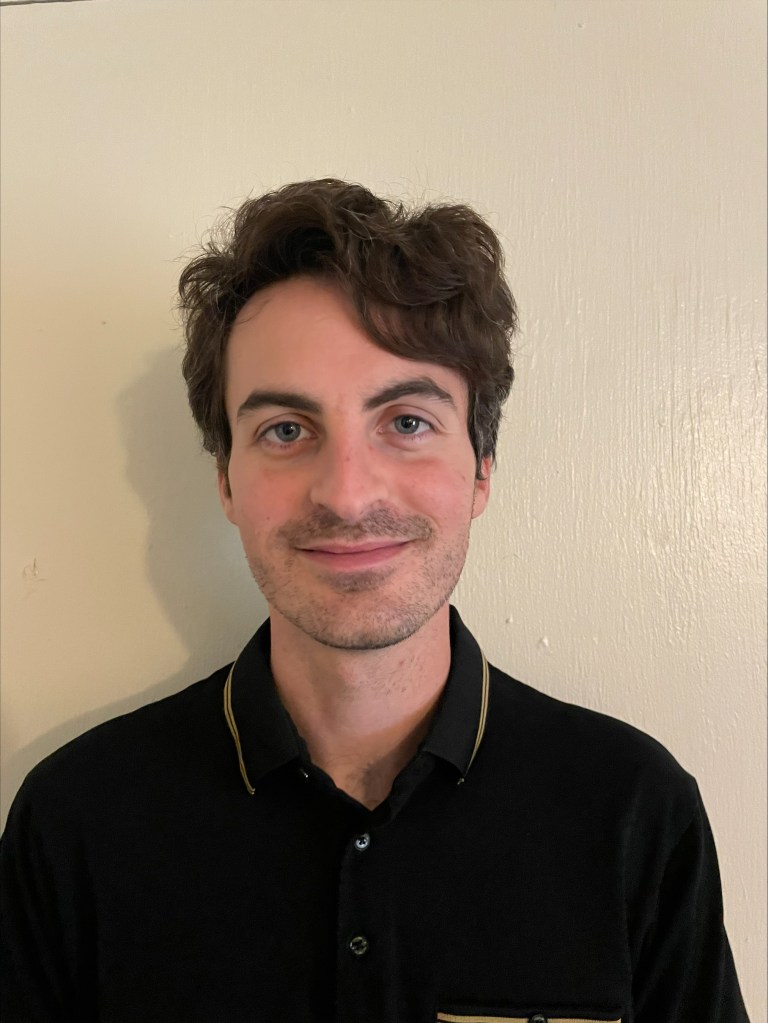
Written by Anthony David Vernon

Author’s Bio

Anthony David Vernon mainly writes poetry and philosophical articles when he is not walking trails.

Education: 

Oklahoma State University MFA

Publications & Prizes

Anthology: 

Faery Flying: The Art of Self Care (Fae Corps Publishing, 2023)

Book: 

The Assumption Of Death (Alien Buddha Press, 2022)

Journals: 

Apocalypse Confidential

Beautiful Space: A Journal of Mind, Art and Poetry

Brief Wilderness

Conceptions Southwest

Poetry Super Highway

Synchronized Chaos

The Drabble

The Literary Yard

Unlikely Stories

ZiN Daily

Prizes won: 

Pushcart Prize Nominee 2022 for “Guilt is a Pleasure” nominated by Alien Buddha Press

Taming Your Inner Dragon

Taming Your Inner Dragon

By Sheelagh Aston

Writing can be brutal. Take the mantra kill your darlings. First mentioned in Arthur Quiller-Couch in On the Art of Writing in 1916 but often attributed to William Faulkner. As writers, we tear our writing apart repeatedly, boil down our precious words we have poured blood, sweat and tears over to produce to a fine honed piece of work a reader can immerse themselves.

The gem above was aimed at encouraging writers to view their work objectively – to omit words, passages, sentences or even characters that hindered the flow of the story. Here an editor can be a valuable alley to a writer. Being open to constructive criticism over your work can and often does add value to the quality of the final product.

But what about that inner critic – the one inside your head?

Say hello to your inner dragon.

The one that looks over your shoulder as you read other writer’s work and tells you ‘You’re not half as good as them, you’re kidding yourself with this writing lark.’ The one when you look at words you painstakingly wrought out of your head the day before, only allows you to see the purple prose, plot holes and complicated sentences. The condition it causes is imposter’s syndrome.

The good news is ever writer has one – and I mean every writer. Our inner dragon is like Philip Pulman’s daemon in The Dark Materials. They have a voice, know you  so well they reflect your own doubts over your writing. Most of all, they mirror our ability to sabotage ourselves if not properly tamed.

What can be done to tame this beast of doubt? What follows are suggestion based on the own battle with mine own dragon.

  • Acknowledge they exist. Like the imagery monster under the bed, once we admit it is there, it become less scary. This will also help you take ownership of your self-doubt and control your inner critical eye.
  • Read other’s work but do not compare yourself to them. Try to learn from them – what makes that character you just love/hate work?  How do they hold your attention? Then remember the ‘why’ when you come to your own work – e.g the saggy bit in your story – how did X keep the pace going so consistently?
  • Find a positive writing buddy, group, or mentor. Individuals who will give constructive feedback who will point out the good stuff along with the bits that need working – and offer suggestions to resolve them. People you can share hopes, favourite books/writers or just hang out with whether it is online, WhatsApp/FB or face-to-face.
  • Learn the difference between constructive criticism and unhelpful criticism. Take on board the first (see above) and ignore the other. A person is entitled to not like something but if they cannot explain why they do not like it, it is not helpful criticism.
  • Be prepared to accept disappointment and setbacks. You are not going to win or be shortlisted for every competition or award you enter. Not everything you write will see the light of day. Many well-known authors have spent years in the wilderness before they became well known. It is no reflection on you as a writer.
  • Switch off your critical editor when you are writing 1st drafts. They are meant to be messy. Train your dragon to take a nap then.
  • When editing and your dragon speaks – listen to it. They may have a point about that scene you have been wrestling with and they could even supply the answer to fix it.

Tempting at it might be you do not need to kill your dragon, just tame it. As a tamed dragon, you will have a valuable writing tool to help you as a writer.

Kill your darlings if you can but not your dragon.

Sheelagh is a freelance writer and blogger. Her contemporary suspense novel, In-Between Girl, will be published in November by Resolute Books. You can follow Sheelagh at @aston_sheelagh,  www.sheelaghaston.com

UnCensored Ink Interview – Vi Putrament

UnCensored Ink Interview – Vi Putrament

Hey everyone,

Ian Tan here, lead editor and project coordinator of UnCensored Ink: A Banned Book Inspired Anthology, set to release this October 29. Here is the UnCensored Ink interview series to introduce you all to the incredible writers, as well as the local bookstores and libraries that gave them safe creative spaces. Hopefully you can put these incredible places on your to-visit list, and feel inspired to support your own local bookstore, library and indie authors.

Today I am with Vi Putrament, from London. She is a writer, editor and translator born in Warsaw and raised in New York City, specializing in science, folklore, fantasy and magic. She’s also a language editor for an astrophysics journal based at the Paris Observatory and writes science fiction and fantasy in every rare speck of spare time.  

  1. You’ve written a fine piece for UnCensored Ink: a banned book anthology. Can you give us a synopsis? How did the idea for this piece come about?

My SFF story Stranger in the Archives is about a jaded administrator working in a library of old earthly books on the planet KOI316.02. When she witnesses the theft of one of the rare tomes in the illicit collection, she ends up caught in the grips of this enigmatic book smuggler and rediscovers the role of literature in making us human. 

  1. Now, we would love to know you more! What do you enjoy doing in your free time, what is your favorite book quote, and how did you get into reading and writing?

I don’t really have many hobbies so most of my free time is spent going for walks and reading books. I’ve always been a writer, ever since I was a child, but my career in writing began in earnest after I started translating curatorial texts and art books for museums and cultural institutions. My favorite book is Orlando by Virginia Woolf and honestly every single line in that book is a banger.

  1. Do you have a favorite local library or bookstore? Also can you remember bookstores and libraries from your childhood, if they are not the same as the ones now? 

One of my favorite bookshops in London is The Common Press in East London, packed with dynamic queer energy and awesome books.

  1. Tell us more about this bookstore/library. What do you love most about it? 

I discovered this bookshop not too long ago, when I attended a panel on queer neurodivergent YA books by some of the most incredible local authors of the moment: Faridah Àbíké-Íyímídé, Elle McNicoll, Leanne Egan and Theo Parish, moderated by Rosie Talbot. It was such a good event, full of serious takes but jokes and laughs too. I felt so welcome there and the selection of books is a dream. Plus, they have a coffee shop right at the front of the shop.

  1. What do you have to say on the importance of sustaining bookstores and libraries?

When I was a kid, the local library was my babysitter and my whole world. We couldn’t really afford to buy too many books and my hunger for stories was insatiable. I would take out stacks and stacks of books every week and gobble them all up. I would spend hours at the library after school since my mother would be working really late and it was my sanctuary from the drabness of the world around me – and a channel for my imagination. I don’t think I ever dared to dream that I’d find my books on the shelf at the library one day, but little me would be so proud today to see my name on the title page of a book!

  1. Do you have any projects that your current and future readers can look forward to?

I have a SFF novel titled ULTRALUMINOUS about an art heist at the galaxy’s first space university that I hope to publish in the near future. The mixed-race protagonist comes from Brooklyn (like me) and is a scholarship student (also like me), so she has to navigate the obstacles of prejudice and marginalization to achieve her goal of winning back a digital painting made by her late mother, which had been smuggled into space at the dean’s behest.

  • Lastly, what platforms can we find you?

Twitter: @ViPutrament

IG: @ultra.luminous

And that is a wrap on London, the UK, everyone. Stay tuned for our final hop down under to Australia, and then this interview series is done!

Purchase UnCensored Ink at Barnes & Noble

Purchase UnCensored Ink at Amazon

UnCensored Ink Interview – Riley Kilmore

UnCensored Ink Interview – Riley Kilmore

Hey everyone, 

Ian Tan here, lead editor and project coordinator of UnCensored Ink: A Banned Book Inspired Anthology, set to release this October 29. Here is the UnCensored Ink interview series to introduce you all to the incredible writers, as well as the local bookstores and libraries that gave them safe, creative spaces. Hopefully, you can put these incredible places on your to-visit list and feel inspired to support your own local bookstore, library, and indie authors.

Today, I’m with Riley Kilmore from Pennsylvania.

  1. You’ve written a fine piece for UnCensored Ink: A Banned Book-Inspired Anthology. Can you give us a synopsis? How did the idea for this piece come about?

An inquisitive farm boy in 1940s Appalachia encounters a peddler surreptitiously distributing banned books and is given a copy of John Steinbeck’s Grapes of Wrath.

Prior to writing The Tinker, I’d finished reading Ann Pancake’s Strange As This Weather Has Been, about an Appalachian family struggling in the shadow of exploitative mountain top mining. Pancake’s book was the 2023 One Voice One West Virgina Read, and she was the Appalachian Heritage Writer In Residence that same year. 

I was taking some Appalachian Studies classes at Shepherd University at the time, so I entered a (different) piece in the 2023 West Virginia Fiction Competition, which she judged, and I won. So her novel and body of work definitely inspired me. 

My winning piece, Mother, May I?—about a disillusioned Catholic caught in a Twilight-Zone-esque liminal space (a western Pennsylvanian convent-cum-Bread & Breakfast run by a handful of aging nuns)—appears in the 2024 Anthology of Appalachian Writers along with five of my photographs which were also selected for inclusion.

I originally wrote The Tinker as my entry piece for the 2024 West Virgina Fiction Competition, but didn’t place. However my sister, playwright DW Gregory (Radium Girls) did win this year! In fact, she also won the 2022 competition.

  1. Now, we would love to know you more! What do you enjoy doing in your free time, what is your favorite book quote, and how did you get into reading and writing?

Well, I used to run a lot in my spare time. That’s when I’d compose stories in my head that I’d later put to paper. Now, though, I mostly walk, but it’s still my “composition” time. 

As for a fav book quote, I have to wonder if any reader or author can honestly pick just one. I certainly can’t. So I’ll leave you with a quote from my 2024 debut middle grade adventure, Shay The Brave, which champions friendship, the courage to be your authentic self, and vegetarianism: “One is wise to hunger for friendship, but a fool to hunger for friends—no matter how good they may taste.”

That third part of your question begs a twist: how did reading and writing got into me?

I credit several things. One of them is a mother who made weekly trips to our local public library a part of our childhood. She also subscribed to numerous magazines—Time, Post, Life, National Geographic—and to the local papers, so that there was always current event news and information at our fingertips along with all the books containing fiction and poetry that were shelved right in our attic bedroom.

Another possibility is an inborn propensity for it—as in, “is there a writing gene?”—since I’m one of nine kids and the majority write, along with some in the next generation, as well. Not all are published, but I mentioned my award-winning playwright sister above, and our oldest sister’s debut novel just came out this year as well: The Bomber Jacket by K.M. King, also available from Wild Ink Publishing.

  1. Do you have a favorite local library or bookstore? Also can you remember bookstores and libraries from your childhood, if they are not the same as the ones now? 

I grew up in Lititz, PA, so my fav public library was, of course, the Lititz Public Library.

When I was born the library was set up in the old ballroom of the famous General Sutter Inn. From there it moved to an old house further down South Broad Street from our own place. That was my favorite location of the library because it was a house my parents almost bought, themselves, before deciding on the one I grew up in. So I loved imagining it being our family home when I’d go there and check out books each week.

The bedrooms—which weren’t accessible to the general public but which I and my sisters convinced the librarians to show us—had an ancient intercom system, which was really fascinating. After that we not only frequently imagined what it would have been like growing up there, but imagined calling back and forth to one another via those old intercoms. It certainly would have leveled-up Earl Hamner’s notion of simply shouting out “Good night, John-boy; Good night, Mary Ellen!”

The only “book store” in town back then—or what we called the bookstore—was Bell’s Bookstore on Main Street, only it was more of an early rendition of Staples marries a Hallmark Card shop. Lots of office supplies and cards, but not too much in the way of books. I loved to wander around in there when I was growing up, but Lititz today has a genuine book store and a great one, at that: Aaron’s Books.

It’s great for a host of reasons, but of course one of them is that they stock copies of Shay The Brave. Copies of Shay The Brave are also available at another Lancaster County indie book seller, which is the delightful Pocket Books Shop. 

  1. What do you have to say on the importance of sustaining bookstores and libraries?

Libraries launch imaginations. Towns without a library are like clipper ships without sails: sure, they can stay afloat, but their citizens aren’t apt to take in distant horizons, eh? And librarians? Well, they’re the captains who keep us on course—always sailing forward, never aft.

  1. Do you have any projects that your current and future readers can look forward to?

You bet! Check out my website, www.rileykilmore.com for updates, but here’s what’s in the offing: a companion workbook to Shay The Brave called Share With Shay, which uses prompts from the original adventure to encourage kids to do a little deep thinking of their own on important issues; a sequel to Shay The Brave called Alexy, Strong and Silent, which follows Shay’s sidekick from the first book into his own adventure of personal growth while simultaneously—just like Shay—redeeming others.

  1. Lastly, what platforms can we find you? (Social media and websites are all encouraged, this is to highlight and champion you guys)

Besides my author website listed above, readers friends can find me on facebook, on Instagram, on Twitter, and at my own Substack, where I write the (generally) weekly Monday Morning Literary Bric-a-Brac to which they can subscribe for free.

Map indicating Pennsylvania

Well, that was Riley Kilmore, everyone. It’s time to take a trip across the pond to the United Kingdom.

Riley Kilmore earned an MFA in Writing Popular Fiction from Seton Hill University in 2022. Her award-winning poetry and short fiction have appeared in numerous anthologies. Her debut novel, Shay the Brave, a middle-grade fantasy, is available from Wild Ink Publishing. A twenty-year veteran of the fire service, Kilmore has leaped from airplanes, sailed the world, been a cop, and braved the life of a homeschool mom. She resides on a sequestered mountainside farm in south central Pennsyltucky with one horse, one cat, a dancing goat, a beer-guzzling hound, and her husband of 36 years.

Purchase UnCensored Ink at Barnes & Noble
Purchase UnCensored Ink at Amazon

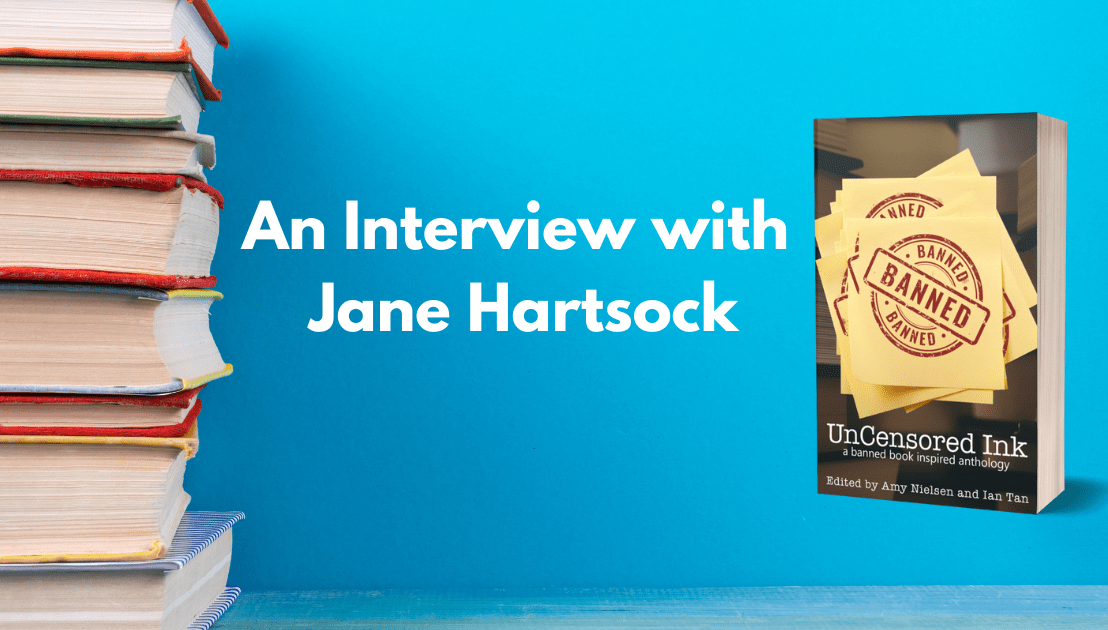
UnCensored Ink Interview – Jane Hartsock

UnCensored Ink Interview – Jane Hartsock

Hey everyone, 

Ian Tan here, lead editor and project coordinator of UnCensored Ink: A Banned Book Inspired Anthology, set to release this October 29. Here is the UnCensored Ink interview series to introduce you all to the incredible writers, as well as the local bookstores and libraries that gave them safe creative spaces. Hopefully you can put these incredible places on your to-visit list, and feel inspired to support your own local bookstore, library and indie authors.

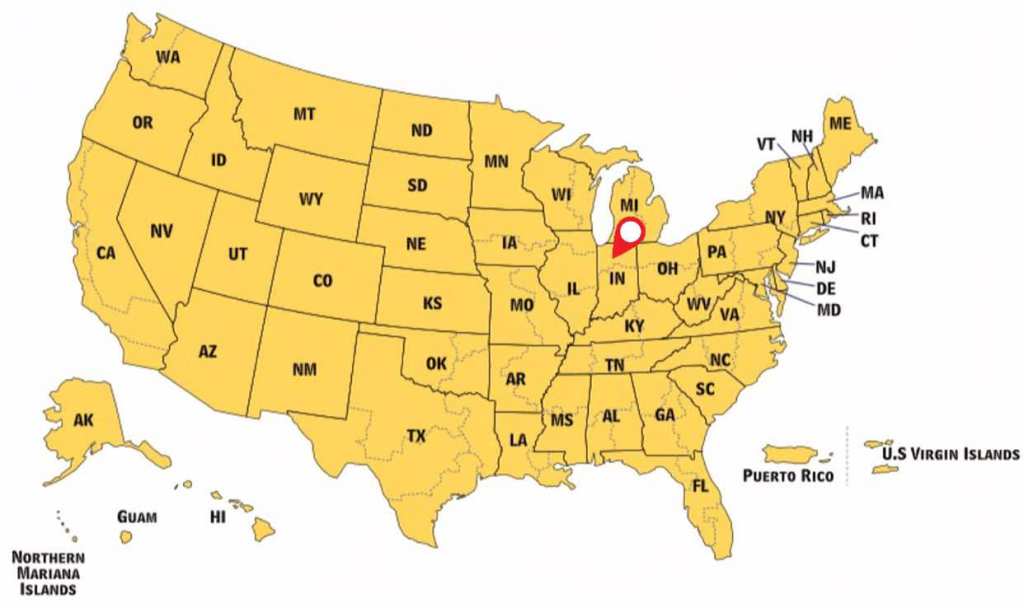
Today I am with Jane Hartsock from Indiana. She wears a lot of hats, such as the Director of Clinical and Organizational Ethics for Indiana University Health, the Co-Director of the Scholarly Concentration in Medical Humanities at the Indiana University School of Medicine, and an Adjunct Assistant Professor of Medical Humanities at the Indiana University School of Liberal Arts. She also holds a B.A. in English (creative writing), an M.A. in Philosophy (bioethics), and a J.D. and has published and presented at national and international conferences on the use of fiction to develop ethical sensitivity. She resides with her husband, two children, and one poorly behaved, but well-meaning Irish Terrier.

1. You’ve written a fine piece for UnCensored Ink: A Banned Book Inspired Anthology. Can you give us a synopsis? How did the idea for this piece come about?

My piece was a response to the efforts of conservatives in Hamilton County, Indiana to “reshelve” some young adult literature in the adult section of the public libraries. This campaign was clearly intended to target LGBTQ+ YA literature, which I found utterly repugnant, but other books were being pulled in as well including titles by beloved Hoosier author John Green. The reshelving project seemed to me to be the efforts of people who generally don’t use the library, and probably rarely read fiction. Certainly, if they were genuinely worried about young people accessing sexually explicit material in a library, putting that material next to the adult books is not a great plan and, I think, speaks to the absurdity of these people’s worldview. The language that was being used around this reshelving project–describing the books as “pornography”, referring to any book that was sexually suggestive as “erotica”–was intended to stigmatize the books and the people who read them. I don’t think erotica should be stigmatized, and pornography has First Amendment protections, but the books being targeted weren’t either erotica or pornography, so the whole project reeked of a kind of pseudo-censorship by people who don’t even read enough to properly genre a book.

Anyway, as a humanities professor and writer myself, and as the daughter of a literature professor and a history professor, I do know that the people trying to make it harder for other people to read are never the good guys. So my piece was a way to express that. 

2. Now, we would love to know you more! What do you enjoy doing in your free time, what is your favorite book quote, and how did you get into reading and writing?

I talk a little about this in my essay on Forever, but I grew up in a house with books everywhere (my father was an historian and my mother was a literature professor). I was allowed to read anything I could get my hands on, and have early memories both of being read to and of being taught to read. I started writing little stories as a young child and in first grade won a Young Authors award in Bloomington, Indiana for a story I wrote about barn owls. In college, I pursued an English degree with a concentration in creative writing, and worked as a counselor at Butler University’s Creative Writing summer camp. I moved away from creative writing while I was practicing law, but rediscovered it during COVID and wrote a novel I self-published (Load Bearing). I am almost always writing something. 

3. Do you have a favorite local library or bookstore? Also can you remember bookstores and libraries from your childhood, if they are not the same as the ones now? 

My favorite library in Indianapolis is the Fort. Benjamin Harrison library, the only one in Indiana that is a Certified Autism Center.

I am also partial to the Ruth Lilly Medical Library at the IU School of Medicine.

Favorite bookstores, hands down, are Loudmouth Books on 16th Street (in Indianapolis), and Indy Reads in Fountain Square (Indianapolis)..

The exterior of the finished Fort Ben Branch Library on July 26, 2023.

Fort Ben Branch of The Indianapolis Public Library

4. Tell us more about this bookstore/library. What do you love most about it? 

The Ft. Benjamin Harrison library contains an entire section of neurodiverse literature and the thoughtfulness that has gone into making a library space that is diversely accessible is something to be admired.

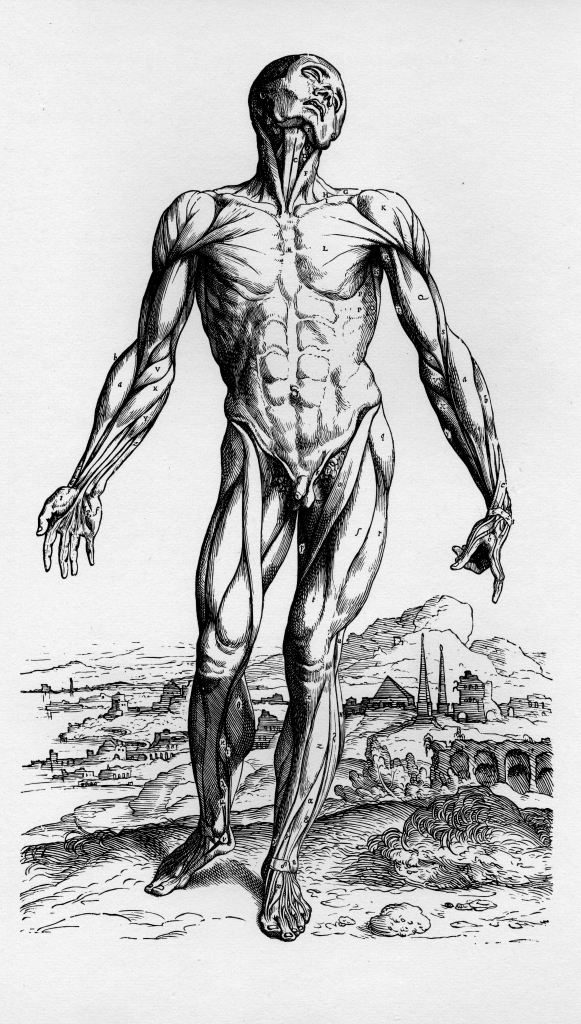
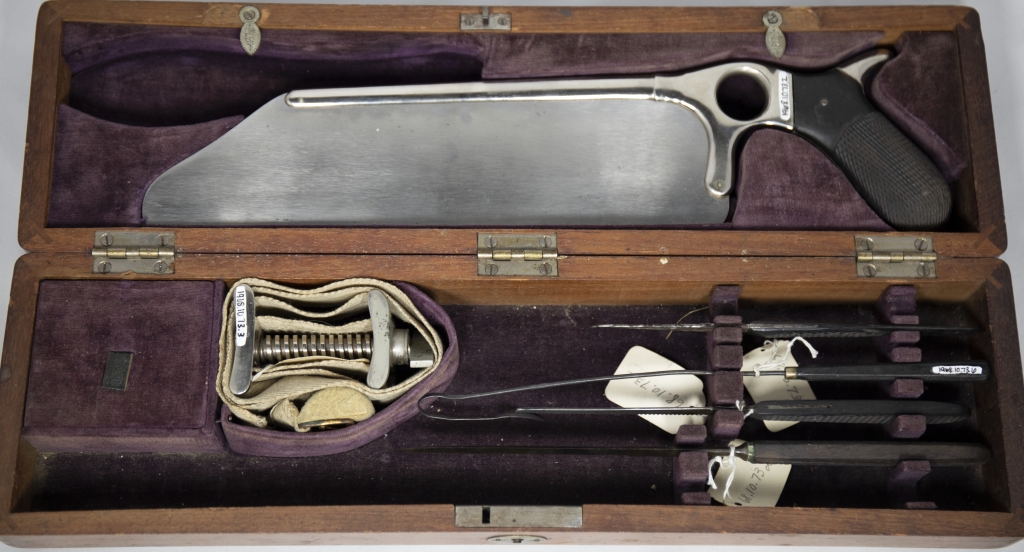
As for the Ruth Lilly Medical Library at the IU School of Medicine, there’s a third floor that holds the History of Medicine Room, which contains some of the oldest books on campus including a copy of Vesalius’s Fabrica made with the original woodblocks from Titian’s studio that were destroyed during World War II.

The Ruth Lilly Medical Library’s History of Medicine Room. One of the most interesting books in this collection is a copy of Vesalius’s De humani corporis fabrica. 

HOM Fabrica

HOM Amputation saw

Loudmouth Books carries an amazing selection of BIPOC and LGBTQ+ literature, and Indy Reads in Fountain Square (Indianapolis) offers a large selection of works by local Indiana authors, including those of us who are self-published.

5. What do you have to say on the importance of sustaining bookstores and libraries?

Well functioning libraries are evidence of and necessary to a well functioning democracy. They democratize knowledge, by creating an environment in which knowledge is open to everyone. This is accomplished not merely through the availability of books, but through the additional resources that libraries provide, most notably computers with internet, which allow individuals to do everything from research a term paper, to apply for a job, to read the newspaper. Simultaneously, they are also repositories of the “institutional memory” of human culture. In a world that is becoming increasingly digital, and where that digital space is not always easily verifiable, libraries provide the tangible sources that allow one to confirm or verify what is available in virtual formats. They are also just nice spaces that encourage community and gathering. I am, in fact, sitting in a library right now (on the campus of Marian University), while my older kiddo meets with their geometry tutor. 

Bookstores can function similarly as community spaces, and particularly independent bookstores often do. As a self-published author, it is independent bookstores that have made it easiest to shelve my book. Similarly, bookstores seem to have a sense of service to their community. I am thinking particularly of Loudmouth Books, which I mentioned previously and which engages deliberately with the LGBTQ and BIPOC community. Indy Reads is another bookstore that immediately comes to mind and provides both access to books, and has invested itself in the surrounding community through programs that assist with literacy, job training and certification, and high school equivalency exams.

6. Do you have any projects that your current and future readers can look forward to?

I am almost always writing something. My current projects include a paper on David Hume’s ethics as represented by Claire’s approach to the practice of medicine in Diana Gabaldon’s novel Outlander. I presented this paper at a conference in the summer of ’23 and that conference’s papers are now being anthologized by the University of Glasgow;

My fiction writing group is putting out a Halloween anthology for which I’ve contributed a short story–an homage to Mellencamp’s song Rain on the Scarecrow. That will be released in October of 2024.

My research partner Colin Halverson and I are working on a biography of the father-daughter team who were the first to produce an English language translation of the Ebers Papyrus (one of the oldest and most complete of the Ancient Egyptian medical papyri), we’ve had requests from two journals for smaller pieces on this bit of history;

I self-published a novel, Load Bearing, in March of 2024, and have loosely outlined two prequels to that novel;

and I’m writing another novel that I plan to release in March of 2025.

7. Lastly, what platforms can we find you?

My public-facing social media include: Threads(@janeahartsock) and goodreads (https://www.goodreads.com/author/show/48820514.Jane_Hartsock), and my website which I update periodically: https://janehartsock.com/. I am always happy to talk books (along with movies, music, and coffee). Feel free to follow, friend, or like. I’ll follow back.

Well, that’s Jane Hartsock from Indiana, everyone! We’re still meeting another author in this state so stay posted!

Preorder UnCensored Ink at Barnes & Noble

Preorder UnCensored Ink at Amazon

UnCensored Ink Interview – S.E. Reed

UnCensored Ink Interview – S.E. Reed

Hey everyone, 

Ian Tan here, lead editor and project coordinator of UnCensored Ink: A Banned Book Inspired Anthology, set to release this October 29. Here is the UnCensored Ink interview series to introduce you all to the incredible writers, as well as the local bookstores and libraries that gave them safe creative spaces. Hopefully you can put these incredible places on your to-visit list, and feel inspired to support your own local bookstore, library and indie authors.

Today I am with S. E. Reed. She writes strange, haunting, real stories of people and places along old highways. Winner of the 2024 Florida Book Awards and the 2024 Paterson Prize for Books for Young People.Additionally, she’s been nominated for a Pushcart Prize and won honorable mention twice in L. Ron Hubbard’s Writers of the Future Contest.

Her short stories have been featured by The Writer’s Workout, SEMO Press, Parhelion Lit, The Writers’ Co-op, Wild Ink Publishing, Hey Hey Books, and Tempered Rune’s Press. 

1. You’ve written a fine piece for UnCensored Ink: A Banned Book Inspired Anthology. Can you give us a synopsis? How did the idea for this piece come about?

Thank you! Sure thing! So my story, Swamp Religion, is set in the Florida Everglades during the Great Depression at a religious tent revival. Christian Evangelism was rampant during the late 1920’s and 30’s, as people were desperate to find meaning and hope when they’d lost everything. I’ve always been fascinated with this time period, and thought to explore the zealous nature of it in conjunction with banning books, also exploring how time repeats itself. What was happening a hundred years ago is eerily familiar to today.  

2. Now, we would love to know you more! What do you enjoy doing in your free time, what is your favorite book quote, and how did you get into reading and writing?

To be honest, I spend most of my free time reading and writing or watching interesting shows on TV. One of my guilty pleasure shows is Survivor, so I’m anxiously awaiting for the new season to start. I think my favorite book quote is from J.R.R. Tolkien, the Riddle of Strider, specifically the line, ‘not all those who wander are lost.’ I actually use that quote in my novel, My Heart is Hurting

3. Do you have a favorite local library or bookstore? Also can you remember bookstores and libraries from your childhood, if they are not the same as the ones now? 

I love all libraries and bookstores!! I search them out wherever I go. But, one of my favorite finds are books at antique stores. As a child I loved collecting vintage first edition Bobbsey Twins books by Laura Lee Hope. Interesting fact, Laura Lee Hope was a pseudonym for a group of authors that wrote the series created by Edward Stratemeyer. Stratemeyer also wrote the Hardy Boys and Nancy Drew and sold over 500 million books (yes, really). 

4. Tell us more about this bookstore/library. What do you love most about it? 

Well, I just love all bookstores and libraries as I mentioned above. So I don’t have any one specifically to share. I’ve lived in 8 states across the U.S. and been to many, many bookstores and libraries. I will say, as a teenager, I was fortunate enough to go on a school trip to England. This was back in the late 90’s. And when I was there, I fell in love with Hatchards bookshop on Piccadilly, which is the oldest bookseller in London. 

5. What do you have to say on the importance of sustaining bookstores and libraries?

I’ve always found bookstores and libraries places to spend time, not just to walk in, quickly conduct the business of finding what I want and leaving. Generally, they are warm and cozy and inviting, staffed by other bibliophiles. I’ve spent hundreds of hours in libraries. While studying at college, or using the computers, or researching history, or listening to author chats. In my opinion, the loss of physical spaces for books would be a tragedy and we should do everything in our power to maintain them. 

6. Do you have any projects that your current and future readers can look forward to?

Yes, well, I have three books out now that readers can purchase. And upcoming, I have five novels set to release during ‘25 and ‘26. My books can be found anywhere books are sold online, or you can request a copy at your local library. 

7. Lastly, what platforms can we find you? (Social media and websites are all encouraged, this is to highlight and champion you guys)

My website is www.writingwithreed.com and I’m on X @writingwithreed 

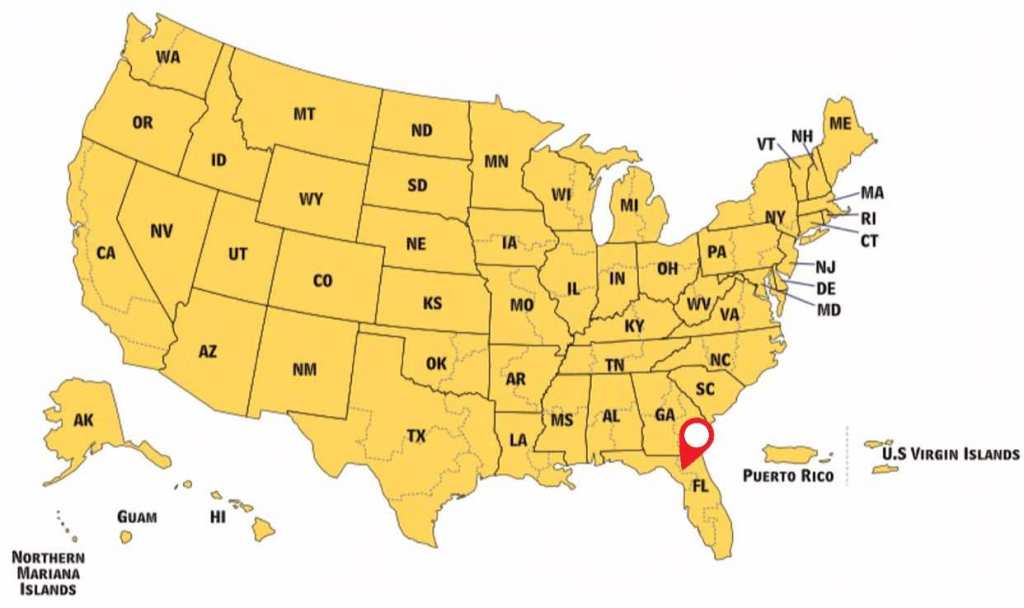
Map indicating Florida

Well, that’s S. E. Reed, everyone! We have one last author to meet before we head out of Florida and the East Coast, and this one is responsible for coming up with the idea for the anthology, so I’m pumped! Stay tuned!

Preorder UnCensored Ink at Barnes & Noble

Preorder UnCensored Ink at Amazon

UnCensored Ink Interview – Johnny Francis Wolf

UnCensored Ink Interview – Johnny Francis Wolf

Hey everyone, 

Ian Tan here, lead editor and project coordinator of UnCensored Ink: A Banned Book Inspired Anthology, set to release this October 29. Here is the UnCensored Ink interview series to introduce you all to the incredible writers, as well as the local bookstores and libraries that gave them safe creative spaces. Hopefully you can put these incredible places on your to-visit list, and feel inspired to support your own local bookstore, library and indie authors.

Today I am with Johnny Francis Wolf, from Key West, Florida. Homeless for the better part of these past 10 years, he has surfed friends’ couches, shared the offered bed, relied on the kindness of strangers — paying whenever possible, performing odd jobs. Johnny has been all over the place, from NY to LA, Taos and Santa Fe, Mojave Desert, Coast of North Carolina, points South and Southeast, back North to PA, hiking the hills, and looking for home. Still, he considers himself blessed. 

And yes, he’s found such a home in Key West, with rug and bed and pictures on the wall.

1. You’ve written a fine piece for UnCensored Ink: A Banned Book Inspired Anthology. Can you give us a synopsis? How did the idea for this piece come about?

It’s a simple tale about a picnic. There are two friends soon to move from the small town they grew up together in. One to a University.. I’m imagining the East Coast. One to LA to seek stardom.

Their friendship is simple, a story about like and unlike kids. It is a moment examined where their innocent love, something no one in their circles has ever mentioned as wrong, coalesces in a kiss.

It is the kind of fable that those who ban books are especially keen on — making the loathsome specter of homosexuality, pure and natural. How distinctly wretched of me, feeding readers’ minds with the notion that love is love.

This song from “South Pacific” sums it up for me.

2. Now, we would love to know you more! What do you enjoy doing in your free time, what is your favorite book quote, and how did you get into reading and writing?

I love to write more than anything else. Lately, however, I’ve added more art to my repertoire. And although my art is digital, with some AI assist, I come from an art and design background. I think of digital and AI as new brushes.

Still, one needs to know how to wield them. A gorgeous and real sable brush can only make a canvas lovely if the artist guiding it knows what the heck they’re doing.

Favourite book quote is not a quote at all, but a moment with no words. Funny that, for a writer. 

I’ve queued this up to where the scene gets iconic for me. It is when a little boy in a wheelchair looks up and sees our angel (invisible to everyone else). For children and animals see angels all the time.

We seem to learn our way out of such things.

Library scene (Wings Of Desire 1987)

I first came to writing when, as an actor wannabee, I was aging out of leading man roles and into character actor territory. I was determined to make it as a thespian (still living in LA).

I began to right my own star vehicle.. a script written specifically for me, by me, as Billy Bob Thornton did with his film, SLINGBLADE.

Oddly enough, I saw nothing whatsoever wrong with adding poetry to my screenplay.. a notion that any ‘real’ screenwriter who I discussed it with lambasted me for.. among other things, like adding links to songs I thought would go well with a scene, and photos I thought would be nice for the set designer.

Anyway… that’s where it all began, many moons ago.

Always a pariah, seems.

3. Do you have a favorite local library or bookstore? Also can you remember bookstores and libraries from your childhood, if they are not the same as the ones now?

The local library (god, I loved the xerox machine) was a favourite of mine growing up in Woodhaven, Queens, NYC..  First book I can recall checking out is Snow Treasure by Marie McSwigan.

My favourite two bookstores, today, are Books & Books owned and run by Judy Blume (yes, HER). And around the corner, Key West Island Books, owned and run by Suzanne Orchard. I adore both ladies and have a story about each.

I’ll recount them below.

4. Tell us more about this bookstore/library. What do you love most about it? 

One day, my Fausto’s supermarket jacket still on, I was looking around (both bookstores carry my books) at recent arrivals, and there is Ms. Blume at my feet.

“Am I in your way?” she queried looking up at the disheveled, uniform-wearing stockboy (who ALSO sits on the floor to neaten up the bottom shelves on aisle four in Fausto’s).

“I don’t know how many times a day I say the same thing,” I said, pointing to the store’s embroidered name on my jacket.

She smiled knowingly.

My very first day on Key West, almost a year ago to the day, I walked into Suzanne’s Island Books. Hot and tired from a day of travelling and travailing, I launched into (without my internal editor working all that well), “Do you have a job? Know of an room share? I’m a writer. I have two books out and hope to have a third soon….”

I prattled on praying I had made the right decision in coming to this new place to live.

She continued to type on her laptop while listening to me. I thought it kind of rude with this hot, sweaty man pouring his soul out for her consumption, hoping for, at the very least, her attention.

She swiveled the laptop around and announced..

“I just ordered your books for the shop.”

5. What do you have to say on the importance of sustaining bookstores and libraries?

Places to peruse, sit, sample, dream, learn, learn, learn..

Essential.

6. Do you have any projects that your current and future readers can look forward to?

Always poems and poetry books in the offing.

I’m also writing a sort of “Tales of the City” (the original by Armistead Maupin, a series beginning in 1978, written for the San Francisco Chronicle). I am writing it for Key West… “Key West Stories”. 

And although I write prose regularly, I’m still getting my sea legs with this episodic format.

And hoping, maybe, perhaps, perchance, could be, imaginably might become a book?

7. Lastly, what platforms can we find you? (Social media and websites are all encouraged, this is to highlight and champion you guys)

Facebook is my fave. The only one that lets a writer ramble on (and on), and inspires a myriad of others to comment.

Well, that’s Johnny Francis Wolf, everyone. We’re still in Florida for a while, stay posted! Two more amazing authors while we’re here!

Preorder UnCensored Ink on Barnes & Noble

Preorder UnCensored Ink on Amazon

UnCensored Ink Interview – Kim Plasket

UnCensored Ink Interview – Kim Plasket

Hey everyone, 

Ian Tan here, lead editor and project coordinator of UnCensored Ink: A Banned Book Inspired Anthology, set to release this October 29. Here is the UnCensored Ink interview series to introduce you all to the incredible writers, as well as the local bookstores and libraries that gave them safe creative spaces. Hopefully you can put these incredible places on your to-visit list, and feel inspired to support your own local bookstore, library and indie authors.

Today I am with Kim Plasket. She enjoys writing horror and paranormal and romance. She has various stories in different anthologies of varying genres, such as The Thrill of the Hunt: Cabin Fever (Thrill of the Hunt Anthology Book 6), Scary Snippets: A Halloween Microfiction Anthology, and Blood From a Tombstone Volume 2: Fear

She released her debut novel this past year, called The Forgotten Ones.

1. You’ve written a fine piece for UnCensored Ink: A Banned Book Inspired Anthology. Can you give us a synopsis? How did the idea for this piece come about?

The story is about Emmaline’s wish to find a Church she feels comfortable in after having dealt with her mother’s obsession with the Church as a child. Emmaline went to many churches before she came upon this one.  I wondered how it would feel to find a church to accept you for you. They would love you no matter what and accept you even if you were different than they were or thought differently. 

2. Now, we would love to know you more! What do you enjoy doing in your free time, what is your favorite book quote, and how did you get into reading and writing?

In my free time, I enjoy listening to all kinds of music. My favorite book quote is “Happiness can be found even in the darkest of times, if one only remembers to turn on the light.”- Harry Potter Prisoner of Azkaban.

I know it’s silly but if you think about it does make sense. One cannot be happy if all one can see is darkness but when you turn on the light then can happiness be found.  I’ve been reading and writing for as long as I can remember. I started out writing short little stories when I was a kid then started doing poetry in high school. I didn’t start writing novels or submitting my short stories until I was an adult.

3. Do you have a favorite local library or bookstore? Also, can you remember bookstores and libraries from your childhood, if they are not the same as the ones now?  

I used to go to Books a Million for some writer events when I lived up North, in Deptford Township NJ. Unfortunately, it is no longer there.  It was nice. We would take over a few tables and drink coffee and write for a few hours just losing track of time. 

4. Tell us more about this bookstore/library. What do you love most about it?

I loved that they didn’t rush us out like some places would do if they thought you were taking up too much space and time. We would be there for a couple of hours but they never chased us out. It was nice. 

5. What do you have to say on the importance of sustaining bookstores and libraries?

We must keep them alive because it’s great to see books in print and to be able to go to bookstores and libraries to get books. 

6. Do you have any projects that your current and future readers can look forward to?

I’m currently working on a novel about a cult just started to do the research on it and jot down a couple of things.

7. Lastly, what platforms can we find you?

Twitter (X) @KimPlasket   

My Amazon profile

Map indicating Florida

Well, that’s Kim Plasket, everyone! Stay tuned till the next one! We’re going to be down here for a while because there are three other authors to meet!

Preorder UnCensored Ink at Barnes & Noble

Preorder UnCensored Ink at Amazon

UnCensored Ink Interview – Bruce Buchanan

UnCensored Ink Interview – Bruce Buchanan

Hey everyone, 

Ian Tan here, lead editor and project coordinator of UnCensored Ink: A Banned Book Inspired Anthology, set to release this October 29. Here is the UnCensored Ink interview series to introduce you all to the incredible writers, as well as the local bookstores and libraries that gave them safe creative spaces. Hopefully you can put these incredible places on your to-visit list, and feel inspired to support your own local bookstore, library and indie authors.

Today I am with Bruce Buchanan from Greensboro, North Carolina. He has been a professional writer for more than 25 years, as both an Associated Press award-winning newspaper reporter and, currently, the senior communications writer for an international law firm. He is the author of two previously published books and his debut YA fantasy novel, THE BLACKSMITH’S BOY.

1. You’ve written a fine piece for UnCensored Ink: A Banned Book Inspired Anthology. Can you give us a synopsis? How did the idea for this piece come about?

Genevieve Burleson is a young, educated woman living in the Appalachian Mountains in 1853. In “The Doctor of Bear Creek,” she uses her knowledge of the still-controversial science surrounding germ theory to help a deathly ill young child, But that puts her at odds with the community doctor, who still believes the ancient (and dangerous) practice of bloodletting is the child’s only hope. Can Genevieve persuade the boy’s parents not only to believe the science, but also to defy a respected community leader? 

And if you are thinking the story was inspired by the COVID-19 pandemic, you would be right. There was so much misinformation going around. The doctors and scientists doing their best to help were the targets of blame, while opportunists spread false information for their own purposes. 

2. Now, we would love to know you more! What do you enjoy doing in your free time, what is your favorite book quote, and how did you get into reading and writing?

No matter what I do in my free time, I prefer to spend it with my wife, Amy, and teenage son, Jackson. But I love reading (no surprise!) and make time to read every day. 

I love this quote from Ernest Hemingway: “If the reader prefers, this book may be regarded as fiction. But there is always the chance that such a book of fiction may throw some light on what has been written as fact.” 

And how did I get into reading and writing? You would have to ask my Mom about that! I’ve always enjoyed stories. Even when I was a small child, I loved reading kids’ books and making up my own stories.

3. Do you have a favorite local library or bookstore? Also can you remember bookstores and libraries from your childhood, if they are not the same as the ones now? 

Here in Greensboro, North Carolina, we have a great independent bookstore, Scuppernong Books. I’m also a huge comic book fan and we have several great comics shops in town. My favorite is Acme Comics, which has been around for 40 years.

But I fell in love with books at the Cleveland County Library, in my hometown of Shelby, N.C.

4. Tell us more about this bookstore/library. What do you love most about it? 

The public library honestly was a magical place when I was a kid. And for good reason! They had more books than I could count. And my Dad loved it as much as I did. Our library trips were special time together–I’ll always cherish the memories of those library visits.

5. What do you have to say on the importance of sustaining bookstores and libraries?

The open exchange of ideas and information is essential to democracy. Bookstores and libraries are the hubs where those exchanges take place. Plus, they are magical places where we can get lost in stories. What’s not to love?

6. Do you have any projects that your current and future readers can look forward to?

Yes! I have two novels coming from Wild Ink Publishing. In 2025, my New Adult fantasy tale THE BLACKSMITH’S BOY will be published. Then, in 2026, my adult superhero novel THE RETURN OF THE CERULEAN BLUR gets its time to shine. I can’t wait to share these two novels with the world!

7. Lastly, what platforms can we find you?

I’d love to connect with readers on Twitter/X: @BBuchananWomble, and on Instagram: @brucebuchanan7710.

Map indicating North Carolina

Well, that’s Bruce Buchanan from Greensboro, North Carolina, everyone! Stay posted till the next one! Next we’re heading on down to Florida on the last leg of our East Coast journey.  

Preorder UnCensored Ink at Barnes & Noble

Preorder UnCensored Ink at Amazon

UnCensored Ink Interview – Thom Hawkins

UnCensored Ink Interview – Thom Hawkins

Hey everyone, 

Ian Tan here, lead editor and project coordinator of UnCensored Ink: A Banned Book Inspired Anthology, set to release this October 29. Here is the UnCensored Ink interview series to introduce you all to the incredible writers, as well as the local bookstores and libraries that gave them safe creative spaces. Hopefully you can put these incredible places on your to-visit list, and feel inspired to support your own local bookstore, library and indie authors.

Today I am with Thom Hawkins from Maryland. He has written books soliciting anecdotes from people on a particular topic (In Name Only, A First Time for Anything, Alphabetical Orders, Musical Madeleines)—as well as children’s books (The Yeti Made Me Do It, Baldwin, Two Kings, Claudine)—and has co-authored several poetry books (Thirty Placebos; O, DeJoy; Slight Refreshments). His video art and drawings have been displayed at exhibitions or in performances in Baltimore, Wilmington (DE), Philadelphia, and New York. Thom has also appeared with the Baltimore Improv Group, Ignite Baltimore, Ignite DC, and on The Stoop Storytelling podcast.

1. You’ve written a fine piece for UnCensored Ink: A Banned Book Inspired Anthology. Can you give us a synopsis? How did the idea for this piece come about?

I have four poems in the anthology. “New Policies” is extrapolated from a real incident where I tried to ban hugging across the department at work. “On Reading Bukowski to a Baby” is also based on a real-life situation where I tried to combine reading with soothing an infant (my son, who is now sixteen!). “The True Word” was inspired by something I read about history and culture; history is so strange and magnificent, it is often the point of departure for things I write. Finally, “Being and All” combines stories of aggressive policing with the philosophy of being. I think of myself primarily as a storyteller, whether in prose or poetic form.

2. Now, we would love to know you more! What do you enjoy doing in your free time, what is your favorite book quote, and how did you get into reading and writing?

As soon as I learned how to read I was hooked. My interest in writing didn’t come along until high school. I went to a Jesuit high school, and the priest who taught the religion class my sophomore year said that he liked my class reflections and offered that I could write a short story in lieu of taking an exam. So, really, I was just trying to get out of work. For my undergraduate degree, I went to Washington College in Chestertown, MD, known for the U.S., largest undergraduate writing prize. I didn’t win, but I did earn the school’s very first minor in creative writing. I later got a master’s of library and information science at Drexel University in Philadelphia, PA, and I’m now enrolled in an information sciences PhD program at a school in California. I’m fortunate that there’s a lot of overlap between my job (which is technical in nature), my education, my research, and my writing. It’s often difficult to know whether I’m doing something for work or personal reasons!

3. Do you have a favorite local library or bookstore? Also can you remember bookstores and libraries from your childhood, if they are not the same as the ones now? 

If I’m looking for a specific book just to read or reference temporarily, I first try my local public library. If I’m looking for a book I might want to keep, I go to bookshop.org, where I order through Washington DC’s Solid State Books. With my busy schedule, it’s much easier for me to read short books, so I’ll often pick short books from another culture to be exposed to different times and places. It’s hard to pick just one favorite store, but to represent my home town of Baltimore, I have to go with Normals Books and Records. I’ve bought so much from there over the past twenty-five years, I joke with the owner about acting as their offsite storage facility. I’ll give shout-outs as well to some other fine used bookstores I frequent: Baldwin’s Book Barn in West Chester, PA; Second Story Books and Capitol Hill Books in Washington, DC, Midtown Scholar in Harrisburg, PA, and Bookhaven in Philadelphia, PA, where the owner described his buying strategy as “when someone buys a book, I buy more books by that author”–the result being that I often find books I didn’t know about by authors I love.  

4. Tell us more about this bookstore/library. What do you love most about it? 

I love to browse used bookstores–especially for the magic of finding something I didn’t know existed. If it’s not in their inventory, librarians will always help you find what you need. 

5. What do you have to say on the importance of sustaining bookstores and libraries?

It’s wonderful to see, in what certainly seems like a time of adversarial conditions, a resurgence of independent bookstores, including co-ops, and a diversity of owners and employees. One of my favorite things to do is ask an employee for recommendations–books that they find exciting and well-written. It’s a great conversation-starter with someone you know also loves books. Libraries and librarians are also a wonderful resource. I taught my kids at a young age to go to the information desk to talk to a librarian about what they were looking for, or for recommendations. Using the catalog is like using GPS–it will take you right to where you need to go, but you will miss a lot along the way.

6. Do you have any projects that your current and future readers can look forward to?

I’m currently writing a book about people who do jobs related to music–critics, DJs, engineers, teachers–and how their work impacts their relationship to music. At the moment, I’m studying the structure of oral histories to inform how I’ll develop the interviews into a cohesive book.

Map indicating Maryland

Well, that’s Thom Hawkins from Maryland, everyone! Stay posted till the next one, we’re heading further south into North Carolina!

Preorder UnCensored Ink at Barnes & Noble

Preorder UnCensored Ink at Amazon