By Rev. John Manzo
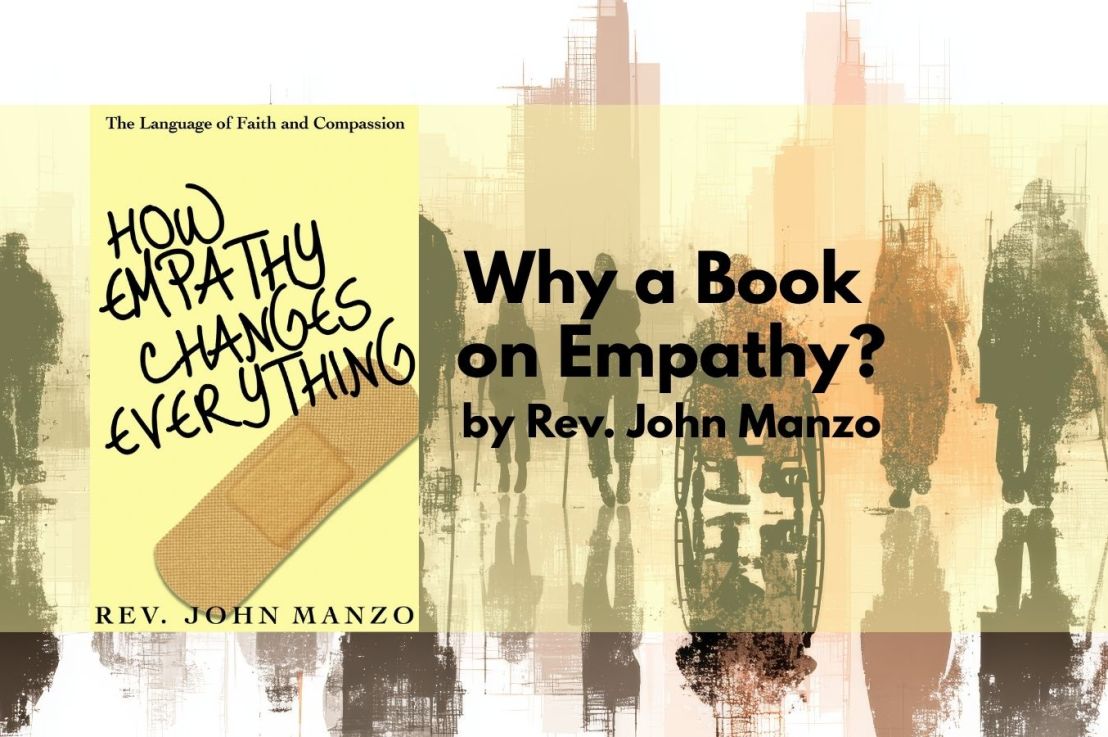
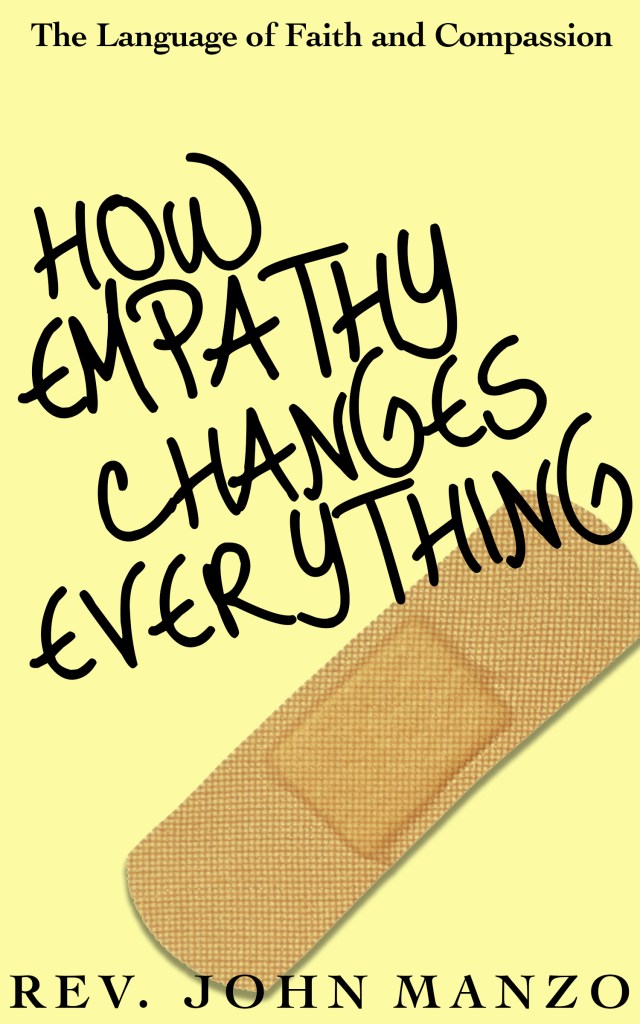
I recently authored a book, How Empathy Changes Everything. So, you might ask, why did you write a book on empathy?
The short answer is that I was asked to do so, but that really doesn’t explain it. I love to write. I write a weekly column, and I do it because I like doing it. It’s sort of my contribution to what I call public theology and ethics. I love writing. I gave sermons for forty years in churches, which means I have probably written over two thousand sermons. Very few of them were reruns because I enjoyed writing the sermons even more than preaching them. It was not unlike writing a ten-page term paper every week, and I loved the writing process. When I was in school, I gravitated towards classes where writing papers was the key element. I love to write.
I always wanted to author a book but there was one roadblock. I could not decide what to write about. Then I was asked to write a book about empathy, and the roadblock was gone.
Here is the reality: nn terms of politics, there is a movement away from empathy. One of the most brilliant nomination acceptance speeches was delivered by George H. W. Bush when he called for the nation to be ‘a kinder, gentler nation.’ His son, George W. Bush ran as what he called a ‘compassionate conservative.’ I’m not going to make any judgments on either man’s ability to live up to their goal or how this demonstrated itself, but I think the premises were wonderful. When Donald Trump stepped in, he didn’t follow the path set by his predecessors. It might be argued, quite the opposite. I would love for our leaders to promote empathy but nowhere in our founding documents is that listed as a priority. We elect, we elect, and we are free to make that choice.
My book, however, is not a political book. That said, what has transpired is that the political idea of not leading with empathy has led many religious leaders to discuss empathy as toxic. They are not referring to empathy as some sort of fatigue, but that empathy is and of itself is toxic because it promotes sin. This generally involves a list of what they perceive of the social ills of society. Interestingly enough, most of their social ills involved human sexuality and equality. If one has too much empathy, they argue, we are accepting what, at least they perceive, as bad.
What they most typically avoid however, are the teachings of Jesus. Much of what passes for Christianity right now is a set of grievances about society with little to no willingness to embrace the actual teachings of Jesus. They like to cite St. Paul, but they usually do so out of context and miss the fact that underpinning the Letters of Paul is that he, Paul, embraces the teachings of Jesus and that empathy leads to compassion, and this is the core of the teachings of Jesus.
Of course, Biblical arguments are used. Sort of.
The books of the Bible were written as full documents. Books were not broken into chapters until the 13th century, and the verses were not added until the 15th and 16th centuries. When we pull verses out of the Bible without the wider context in which they were written and meant to be read, Bible verses can be used as a weapon that was never written or meant to be read as a weapon. I enjoy eating at Chinese Restaurants and I like getting a fortune cookie. I always read my fortune and eat the cookie. I do not direct my life to live by the fortune because it’s a random comment not really meant to be taken seriously. Sadly, many people read the Bible like that. When one does this, it distorts the overall message.
While people often refer to this as ‘Biblical Christianity,’ I see it as anything but. While some individual verses are fabulous nuggets the Bible was written and meant to be read with a strong level of context. When people actually do the work and read full books, full stories, full narratives, in the context in which they are written, one would find that empathy is not only not toxic and not bad, but the foundation of Biblical teachings.
I believe it was the central message of the Hebrew prophets, often called the conscience of Israel. It was the central message of Jesus as conveyed by Mark, Matthew, Luke, and John. It was a foundational principle of Paul. Standing up to this group of people who refer to empathy as toxic, at least to me, is important. Many perceive Christianity to be judgmental and cruel. I understand that. The sad reality is what people hear from many Christians, is exactly that. Missing from this is where Jesus lived. Jesus lived, preached and did his ministry in the margins and the shadows of society. Empathy was hard to come by in the Roman Empire and Jesus offered hope by actually caring for what many referred to as the hopeless.
I thought someone needed to say it. So, I did.

John Manzo is a retired minister in the United Church of Christ and currently a community college adjunct professor. He grew up in New Jersey and has taught high school in New Jersey and has served churches in Pennsylvania, Ohio, and Indiana. He writes a column focusing on religion, ethics, and other social trends in a local newspaper. His columns can be found on his blog.
He is married and has two grown children, three grand dogs, and two grand cats. He is an avid fan of the New York Mets and New York Giants and loves to read intrigue and adventure novels. He loves to engage in conversation on progressive theological thought as well as moral philosophy. He loves humor and puns and is frequently sharing his strange sense of humor with those he meets.
You can find John Manzo at:
https://punnypastor.wordpress.com/

