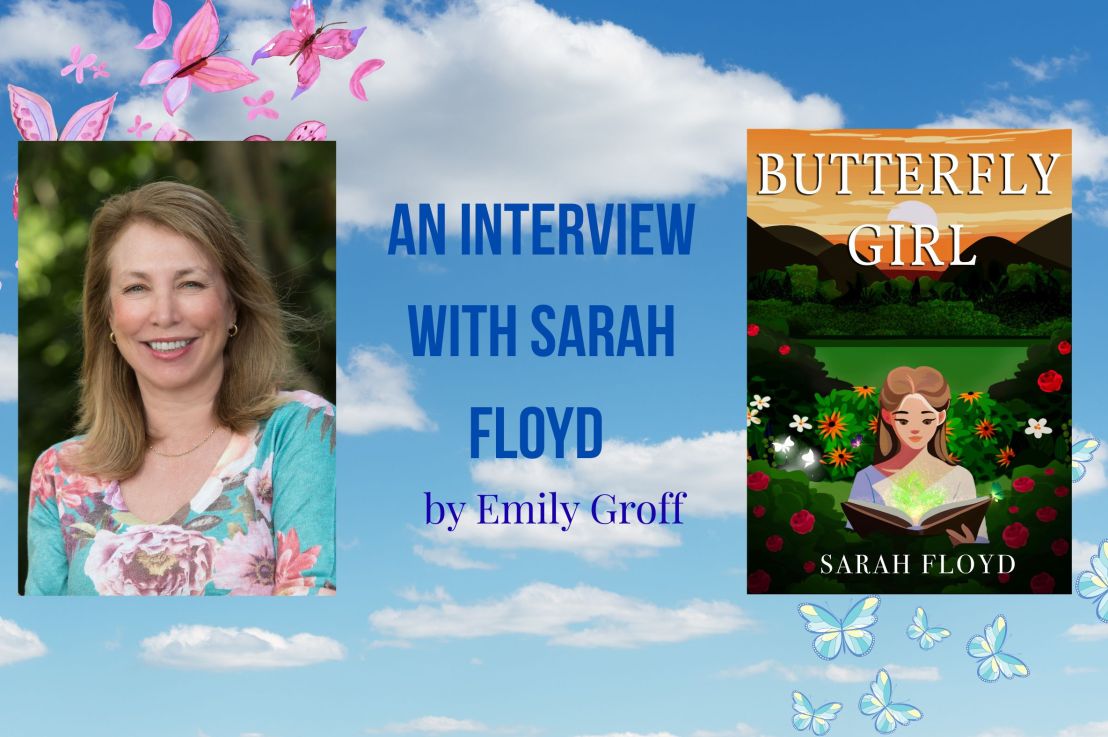
By Emily Groff
Publishing your work means putting your heart and soul out into the world for everyone to read. It’s a scary process, but it is also a fantastic process that brings connection and joy. But what happens if your publisher shuts down and can no longer sell the book you worked so hard on? Sarah Floyd experienced this and feared what this meant for her book. Would no one get to read it anymore?
Our favorite publisher, Wild Ink Publishing, made sure this would never happen. Securing the rights for Floyd’s Butterfly Girl, they made sure the re-release was even more special. With what seemed like all hope lost, Butterfly Girl made its comeback and is ready to hit the shelves of stores near you. Learn more about Butterfly Girl and its author in this interview with Sarah Floyd.
When did you first know you wanted to start writing?
My dream of becoming a writer started in childhood. I loved to read, and if you had asked eight-year-old me what I wanted to be when I grew up, my response would have been “a children’s book author!” But, I landed in Communication Studies instead of English Lit and moved into professional sales after graduating from college. I have always loved to write, and I wrote ads and brochures for my real estate career. However, I didn’t start writing books until after my son was born, when I began reading to him. At that point, I took a break from real estate and started helping my husband part-time with administrative tasks in his home office, a flexible job that allows a lot of free time for writing. My first published book was a children’s picture book, Ten Clever Ninjas. Butterfly Girl came next, and my new novel, Survivor Mountain, will be released later this year.
Tell me about your book Butterfly Girl.
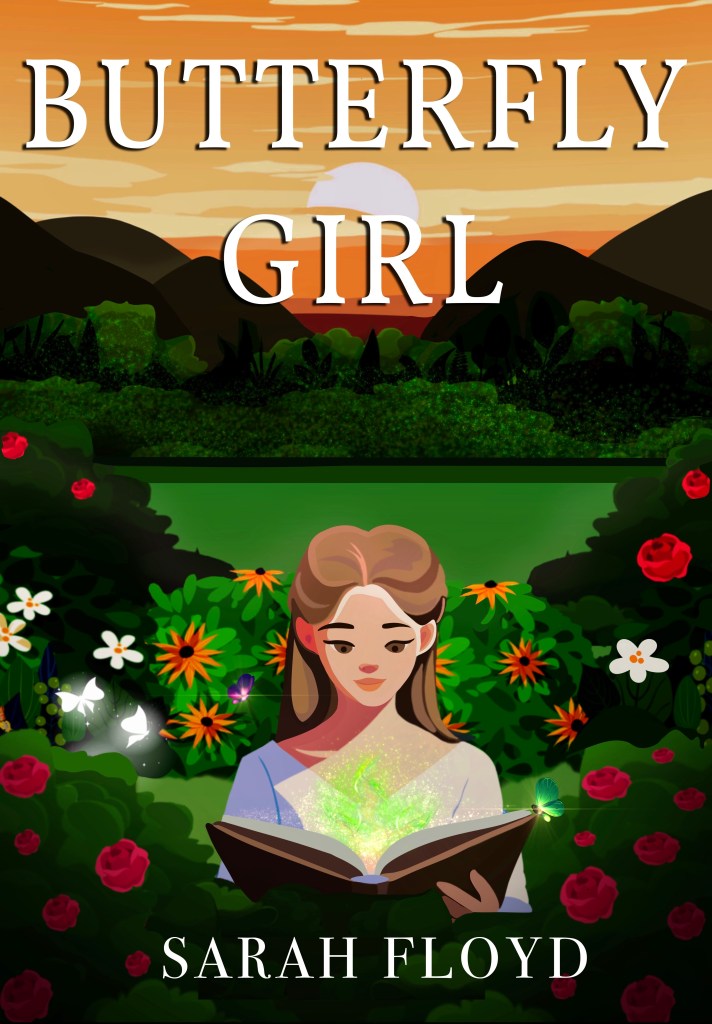
Butterfly Girl is a coming-of-age, middle-grade novel about family, friendship, and finding the courage to chart your own course.
In the summer before seventh grade, Oregon farm girl Meghan McCoy-Lee discovers there’s magic in the sap of her family tree. She follows instructions in her great-grandmother’s journal… and grows leathery wings! When Meghan’s story goes viral, her absentee mother swoops back into town with superstar plans for her Winged Wonder Girl. Grandpa says stay on the farm and ignore the paparazzi, but her charismatic mom wants her to leave for Hollywood and start a new life together. The popular girls at school wouldn’t miss her– they want her gone, like yesterday– she’s getting way more attention than they are. One thing is certain: Meghan is going to make up her own mind, and with the help of her friends, she may even find a way to bring the popular girls down a peg or two. Then Meghan must decide if a Hollywood life with the mother she longed for is worth leaving the friends who stood by her, and Grandpa, who loved her before the whole world knew her name.
How did you get the idea for this book?
Butterfly Girl, or at least the idea of flying, has percolated in my mind for as long as I can remember. As a child I often dreamed of flying, and on one particularly windy day in kindergarten, I ran across the playground with my umbrella open and lifted myself two feet off the ground! It was thrilling, but my teacher didn’t think it was a great idea. Later, as a fourth grader, my friends and I tried to levitate. During lunch period, we would sit cross-legged on our school’s tall lab tables, eyes closed in meditation, whispering “light as a feather” and waiting to float toward the ceiling, mind over matter. And in sixth grade, we created wings out of cardboard and duct tape and ran down the hills of San Francisco, where I grew up, flapping our arms and trying to fly. None of our attempts were successful, but there was a delicious sense of almost flying, that the secret was ever so slightly out of reach. That secret, that mysterious missing ingredient, is magic—and magic is the secret ingredient that gives Meghan wings in Butterfly Girl.
Why should readers read your book? What is your target reader?
I think many of us wish we could fly, and Butterfly Girl takes us there… but it’s a deeper story too, of self-acceptance, courage, and finding the strength to be your authentic self. The target audience is ages 9-13, but many of my readers are adults. I think one of my reviewers, YA author Bruce Buchanan, said it best: “Kids of any age will love it– even those of us who haven’t technically been kids in quite a while!”
What are you most excited about with your release of Butterfly Girl?
Butterfly Girl was actually released by a smaller publisher back in 2019, but that publisher experienced a distribution collapse and was unable to consistently fulfill orders. I was thrilled when Wild Ink acquired the rights! They have now republished Butterfly Girl with an editing update and a beautiful new cover, created by one of Wild Ink’s talented artists, the amazing Melanie Mar. It’s a wonderful feeling to see this story, the book of my heart, find such a strong and dynamic publisher.
What books/genres do you tend to read? Do these books/genres influence the genre that you write?
I mostly read YA and MG, but I like adult books too, as long as there’s no graphic horror or extreme violence. I don’t read fiction at all when I’m writing, to keep my own voice and themes clear in my mind. Instead, I re-read my favorite books on craft, such as Blake Snyder’s Save the Cat, Orson Scott Card’s Characters & Viewpoint, or Donald Maass’ The Emotional Craft of Fiction. If I need inspiration, I re-read Stephen King’s On Writing, Anne Lamott’s Bird by Bird, or I revisit Julia Cameron’s The Artist’s Way. When I’m reading these books, my subconscious somehow merges “craft” with “story” and I’m able to deepen my own characters, ramp up the stakes, and tighten the turning points.
What is your writing process like? Do you have any particular tips, methods, or writing strategies that help you?
My writing process is slightly bonkers. When I have a great idea in the works, it starts to take over my life and I work hard to find balance. Butterfly Girl literally woke me up at 5:00 every morning, demanding to be written. I navigated daily life distracted by thoughts of magic spells, wings, frenemies, farming, paparazzi, and first crushes. I became a master list-maker and relied on timers to pry myself away from the manuscript to take care of my family and other responsibilities. Some days my head was so full of characters chatting with each other and plot points twisting and turning that I could hardly fall asleep at night!
For writing strategies, I’m a combination of “plotter” (plotting with an outline) and “panster” (writing by the seat of my pants and letting the story develop spontaneously). I write a long narrative summary to capture the overall story (“plotting”), and then I dive in and free write the first draft (“pants-ing”). When the first draft is complete, I refer to screenwriter Blake Snyder’s Save the Cat beat sheet to make sure the pacing is on target.

Tell me a fun fact about yourself.
I’m a certified scuba diver! It’s the closest I can get to the sensation of flying. There’s a line from Butterfly Girl that says, “It’s like swimming on the wind. Easy once you get the hang of it.” Scuba diving is fun and challenging, and it’s the closest I can get to the sensation of flying. But instead of birds and butterflies, there are dolphins and tropical fish. I love it!

To learn more about Sarah Floyd, visit https://wild-ink-publishing.com/sarah-floyd/, sarahfloydbooks.com, or connect on X/Twitter: @kidlitSarah.
 Wild Ink Publishing