
By Bruce Buchanan

Abigail F. Taylor is an award-winning author who leans into her roots to craft unforgettable and spine-tingling stories. Her next two books are both signed to Wild Ink Publishing, with MARYNEAL, 1962 coming in June and currently available for pre-orders. Her subsequent novel, A HOME IN TISHOMINGO, is soon to follow.
In the following interview, Abigail shares more about her books, her approach to writing, and how her heritage shapes her work:
1. What got you interested in writing fiction? When did you first know you wanted to tell stories?
My family is full of storytellers. So, in a lot of ways it was a natural progression. I enjoyed writing ever since first grade but only began to see it seriously as an option in high school when a creative writing program was offered for seniors.
2. Much of your work falls under the horror umbrella. What is it about horror that appeals to you? And why do you think readers love scary stories?
Horror is a safe space to explore the intrusive thoughts, the grim and gory, and the unknown. I think that’s why it appeals to so many people, both writers and readers. It’s a chance to have revenge when the system fails victims and it’s an opportunity to explore different perspectives and cultures. Horror is one of those genres that has been inclusive for a long time. Its subgenres, like splatterpunk, were created as a push back and a form of rebellion against the status quo. Most of all, horror is a genre of hope. No matter how grim the outcome, the trials and tribulations of the main characters, there is always the fight for survival and to persevere through the darkest hours.
3. So tell us about MARYNEAL, 1962, your Wild Ink Publishing debut novel! What is this book about, and how did you come up with this story?
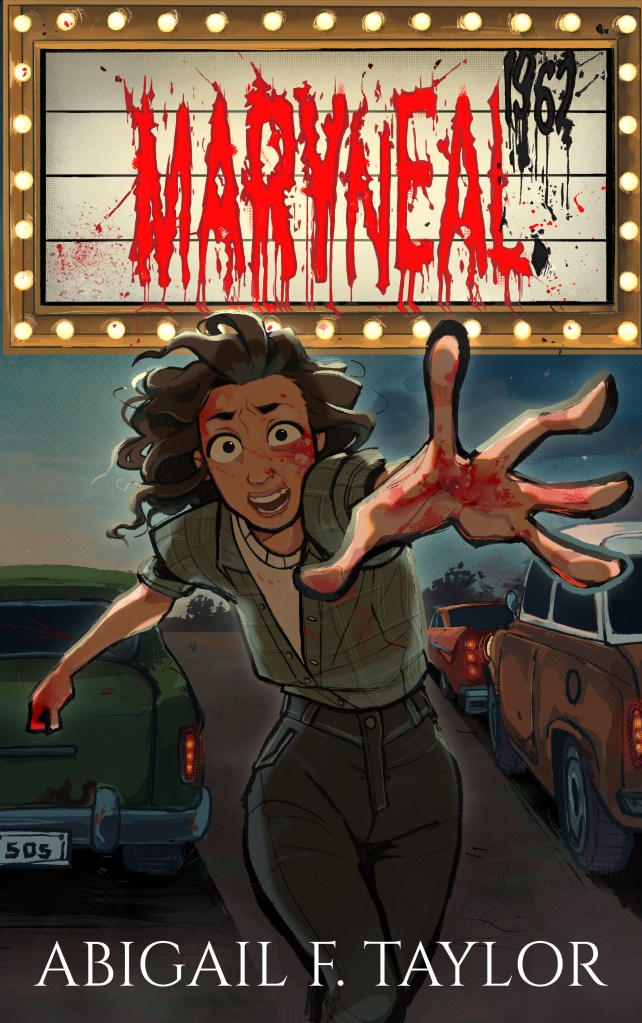
I basically came up with the story because I wanted to challenge myself to write for Young Adults. For about a decade I’d been working and querying in adult spaces with little to no traction. So, I decided to take a pivot. Then coming up with the story itself was an amalgamation of events. The setting was the hardest part to figure out. How do I write a horror without cellphones and without the crutch of ‘the no cell service’ excuse to fall back on. I also wanted to explore the reasons a thriving city would suddenly become a ghost town. I wanted a story where the protagonist was like the women I grew up with. There wasn’t a lot of representation when I was writing the first draft for tall girls with a mixed race background. I didn’t want it to be an ‘issues’ book either. I wanted my protagonist to exist in a space as a whole and complicated person without having to preach to the choir on a soapbox. This isn’t to say that Maryneal doesn’t explore these things. Throughout the book Delah is challenged by her own small town prejudices. Topics like sundown towns, interracial relationships, and the Indian Relocation Act are integrated as part of the wider narrative. Lastly, I knew I wanted to have a monster book that inverted the tropes that had been on the rise in paranormal and urban fantasy. The monster is not cute and cannot be saved by a single kiss.
A portion of pre-order sales will be donated to The Family Place, an organization that has been helping Texas families escape domestic violence since the 1970s.
4. Your first book, a horror novella titled THE NIGHT BEGINS, received a great deal of acclaim. What did you learn from that experience that you applied to writing MARYNEAL, 1962?
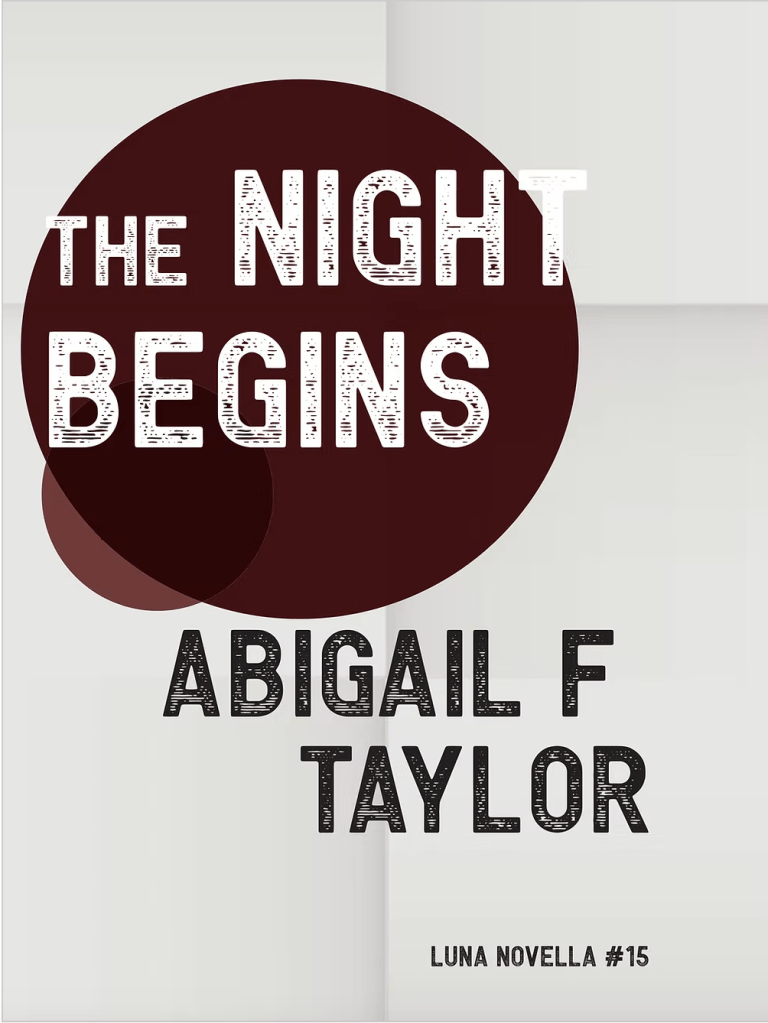
Actually, I wrote Maryneal first! The Night Begins came several years later. I’d shelved Maryneal and wrote A Home in Tishomingo, then had to shelve that as well. A few friends and mentors encouraged me to try short stories, which made me nervous. I hadn’t excelled at that in my college courses but in the same way I knew I could challenge myself to write YA and I knew I had to try short stories again. I thought Maryneal wasn’t getting picked up because it wasn’t ‘horror’ enough. So I took those same themes: Mixed families, small town, Indigenous and Irish folklore, and I put a real effort into exploring what frightens me. It’s not exactly a short story (I’m still working on mastering those!) but I wrote it in December and was signed in February. My first book signed and the sixth one written! It was horror and it was a success. So, I knew the time had come to dust off Maryneal, 1962 and try again.
5. Your family’s indigenous heritage and your roots in rural Texas are threads that run through your work. Tell us about that and why this is so important to you.
What it boils down to is the old adage, “write what you know”. Although, I will admit that I struggled for a long time (and still do to a lesser degree) about whether or not I had a place in talking about indigenous issues and I avoided it for a long time because I didn’t feel ‘enough’ but as I got older and more seasoned in my writing, I realized how important the discussion of ‘what is enough?’ is. Once I started putting that in my writing, I started getting seriously published. I’m white because my grandmother passed and decided to live and marry white. She didn’t see an outcome of successful living for her children and I think if there had been better representation for her when she was young, she wouldn’t have been so afraid to exist in the world as she was. That’s why it was so important for me to have characters who looked like her and the rest of my family.
Native Americans have a long and complicated relationship with the entertainment industry. The way tribes are depicted on films often had a direct correlation with what was happening with the US Government. The ‘uncultured terrorists’ of the Wild West became the ‘noble savage’ of the 1960s. In men’s adventure books, you’ll often find that one Apache guy who can see in the dark and hear hoofbeats from one hundred miles away. Nowadays, indigenous characters are treated too preciously. It is important for me to write about raw and dirty and complicated people who aren’t mystical or villainous. They’re just trying to collect their paycheck like all the other characters. In the decade since I first wrote Maryneal, there has been a golden era of indigenous stories. So many wonderful books and shows have come out into the mainstream. It’s wonderful to see!
6. You also are a prolific short story writer, including writing a story for Wild Ink’s PROM PERFECT and BANNED anthologies. Why do you enjoy short fiction, and does it help you as a novelist?
Short fiction is a challenge for sure! When I first started writing seriously, the advice often given was that a first chapter should be a strong first story. I don’t know if that’s still being taught but I think about it often. When it comes to writing shorts, it’s almost like puzzling out a math equation. The more characters and settings you have, the longer the story, and if you only have 250 words to create an entire narrative? Forget about it! As a novelist, shorts help me find characters quickly. I’m somewhat of a gardener when it comes to writing. I have a brief idea of where structure and plot should be seeded, but everything else develops as the story grows. With shorts you have to establish characterization and world building fast so that the rest of the story can breathe on its own.
7. You’ve signed a second novel with Wild Ink, A HOME IN TISHOMINGO! What is this book about? It represents a departure from horror, correct?
Maryneal, 1962 is actually my departure. I’d been writing poetry and contemporary paranormal fiction long before I decided to pivot into Young Adult. When It comes to A HOME IN TISHOMINGO, it was like coming back to an old friend. This is a book I’ve been wanting to write since I was sixteen but, as mentioned above, I didn’t know if I was the right person to do it. I also didn’t have the skillset to take on the challenge.
It is a novel heavily inspired by my paternal great-grandparents and the challenges they faced and choices they made as a mixed race, polyamorous family surviving during The Great Depression. It dips into magical realism, although some of the outcomes and situations in their lives definitely lean towards horror, it’s a horror of reality and not of genre. The book spans from 1915-1935 and centers itself around Skunk Lowery, an Irish-American sharecropper, and the magic that he uses to gain the system. He’s run out of town for being a witch and settles in Choctaw Territory where he meets his wives, re-invents himself to become a person of influence. Eventually, his past catches up to him and once again he has to use the magic he swore from doing to protect his family, even if that means killing the ones he loves.
 Wild Ink Publishing