Hey everyone,
Ian Tan here, lead editor and project coordinator of UnCensored Ink: A Banned Book Inspired Anthology, set to release this October 29. Here is the UnCensored Ink interview series to introduce you all to the incredible writers, as well as the local bookstores and libraries that gave them safe creative spaces. Hopefully you can put these incredible places on your to-visit list, and feel inspired to support your own local bookstore, library and indie authors.
Today I am with Jane Hartsock from Indiana. She wears a lot of hats, such as the Director of Clinical and Organizational Ethics for Indiana University Health, the Co-Director of the Scholarly Concentration in Medical Humanities at the Indiana University School of Medicine, and an Adjunct Assistant Professor of Medical Humanities at the Indiana University School of Liberal Arts. She also holds a B.A. in English (creative writing), an M.A. in Philosophy (bioethics), and a J.D. and has published and presented at national and international conferences on the use of fiction to develop ethical sensitivity. She resides with her husband, two children, and one poorly behaved, but well-meaning Irish Terrier.
1. You’ve written a fine piece for UnCensored Ink: A Banned Book Inspired Anthology. Can you give us a synopsis? How did the idea for this piece come about?
My piece was a response to the efforts of conservatives in Hamilton County, Indiana to “reshelve” some young adult literature in the adult section of the public libraries. This campaign was clearly intended to target LGBTQ+ YA literature, which I found utterly repugnant, but other books were being pulled in as well including titles by beloved Hoosier author John Green. The reshelving project seemed to me to be the efforts of people who generally don’t use the library, and probably rarely read fiction. Certainly, if they were genuinely worried about young people accessing sexually explicit material in a library, putting that material next to the adult books is not a great plan and, I think, speaks to the absurdity of these people’s worldview. The language that was being used around this reshelving project–describing the books as “pornography”, referring to any book that was sexually suggestive as “erotica”–was intended to stigmatize the books and the people who read them. I don’t think erotica should be stigmatized, and pornography has First Amendment protections, but the books being targeted weren’t either erotica or pornography, so the whole project reeked of a kind of pseudo-censorship by people who don’t even read enough to properly genre a book.
Anyway, as a humanities professor and writer myself, and as the daughter of a literature professor and a history professor, I do know that the people trying to make it harder for other people to read are never the good guys. So my piece was a way to express that.
2. Now, we would love to know you more! What do you enjoy doing in your free time, what is your favorite book quote, and how did you get into reading and writing?
I talk a little about this in my essay on Forever, but I grew up in a house with books everywhere (my father was an historian and my mother was a literature professor). I was allowed to read anything I could get my hands on, and have early memories both of being read to and of being taught to read. I started writing little stories as a young child and in first grade won a Young Authors award in Bloomington, Indiana for a story I wrote about barn owls. In college, I pursued an English degree with a concentration in creative writing, and worked as a counselor at Butler University’s Creative Writing summer camp. I moved away from creative writing while I was practicing law, but rediscovered it during COVID and wrote a novel I self-published (Load Bearing). I am almost always writing something.
3. Do you have a favorite local library or bookstore? Also can you remember bookstores and libraries from your childhood, if they are not the same as the ones now?
My favorite library in Indianapolis is the Fort. Benjamin Harrison library, the only one in Indiana that is a Certified Autism Center.
I am also partial to the Ruth Lilly Medical Library at the IU School of Medicine.
Favorite bookstores, hands down, are Loudmouth Books on 16th Street (in Indianapolis), and Indy Reads in Fountain Square (Indianapolis)..

Fort Ben Branch of The Indianapolis Public Library
4. Tell us more about this bookstore/library. What do you love most about it?
The Ft. Benjamin Harrison library contains an entire section of neurodiverse literature and the thoughtfulness that has gone into making a library space that is diversely accessible is something to be admired.
As for the Ruth Lilly Medical Library at the IU School of Medicine, there’s a third floor that holds the History of Medicine Room, which contains some of the oldest books on campus including a copy of Vesalius’s Fabrica made with the original woodblocks from Titian’s studio that were destroyed during World War II.

The Ruth Lilly Medical Library’s History of Medicine Room. One of the most interesting books in this collection is a copy of Vesalius’s De humani corporis fabrica.
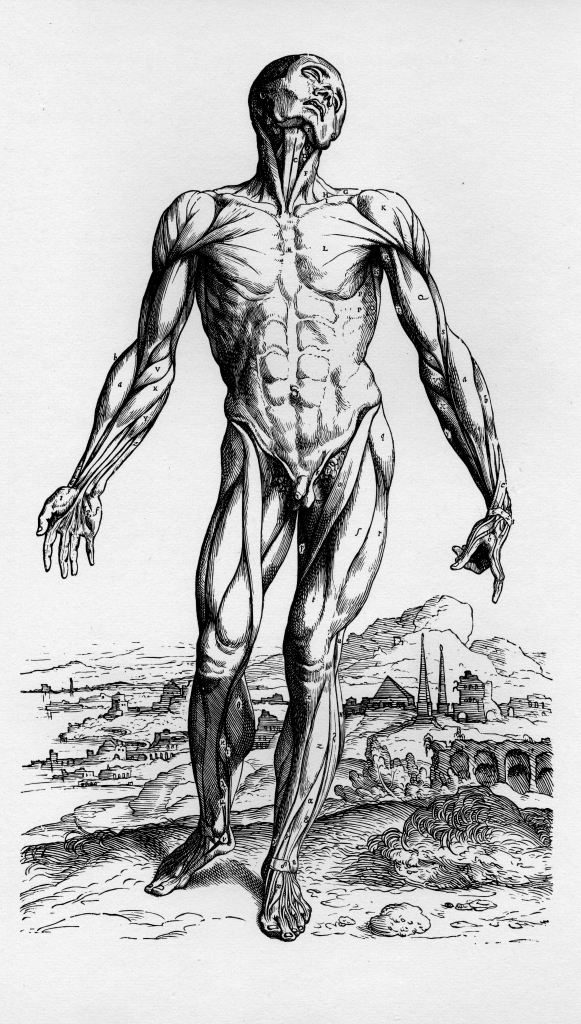
HOM Fabrica
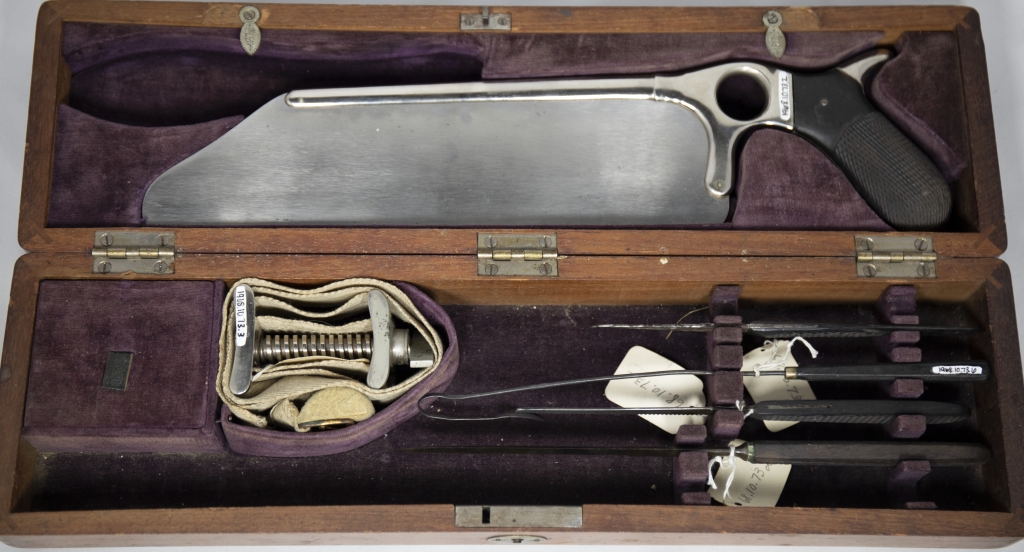
HOM Amputation saw
Loudmouth Books carries an amazing selection of BIPOC and LGBTQ+ literature, and Indy Reads in Fountain Square (Indianapolis) offers a large selection of works by local Indiana authors, including those of us who are self-published.
5. What do you have to say on the importance of sustaining bookstores and libraries?
Well functioning libraries are evidence of and necessary to a well functioning democracy. They democratize knowledge, by creating an environment in which knowledge is open to everyone. This is accomplished not merely through the availability of books, but through the additional resources that libraries provide, most notably computers with internet, which allow individuals to do everything from research a term paper, to apply for a job, to read the newspaper. Simultaneously, they are also repositories of the “institutional memory” of human culture. In a world that is becoming increasingly digital, and where that digital space is not always easily verifiable, libraries provide the tangible sources that allow one to confirm or verify what is available in virtual formats. They are also just nice spaces that encourage community and gathering. I am, in fact, sitting in a library right now (on the campus of Marian University), while my older kiddo meets with their geometry tutor.
Bookstores can function similarly as community spaces, and particularly independent bookstores often do. As a self-published author, it is independent bookstores that have made it easiest to shelve my book. Similarly, bookstores seem to have a sense of service to their community. I am thinking particularly of Loudmouth Books, which I mentioned previously and which engages deliberately with the LGBTQ and BIPOC community. Indy Reads is another bookstore that immediately comes to mind and provides both access to books, and has invested itself in the surrounding community through programs that assist with literacy, job training and certification, and high school equivalency exams.
6. Do you have any projects that your current and future readers can look forward to?
I am almost always writing something. My current projects include a paper on David Hume’s ethics as represented by Claire’s approach to the practice of medicine in Diana Gabaldon’s novel Outlander. I presented this paper at a conference in the summer of ’23 and that conference’s papers are now being anthologized by the University of Glasgow;
My fiction writing group is putting out a Halloween anthology for which I’ve contributed a short story–an homage to Mellencamp’s song Rain on the Scarecrow. That will be released in October of 2024.
My research partner Colin Halverson and I are working on a biography of the father-daughter team who were the first to produce an English language translation of the Ebers Papyrus (one of the oldest and most complete of the Ancient Egyptian medical papyri), we’ve had requests from two journals for smaller pieces on this bit of history;
I self-published a novel, Load Bearing, in March of 2024, and have loosely outlined two prequels to that novel;
and I’m writing another novel that I plan to release in March of 2025.
7. Lastly, what platforms can we find you?
My public-facing social media include: Threads(@janeahartsock) and goodreads (https://www.goodreads.com/author/show/48820514.Jane_Hartsock), and my website which I update periodically: https://janehartsock.com/. I am always happy to talk books (along with movies, music, and coffee). Feel free to follow, friend, or like. I’ll follow back.
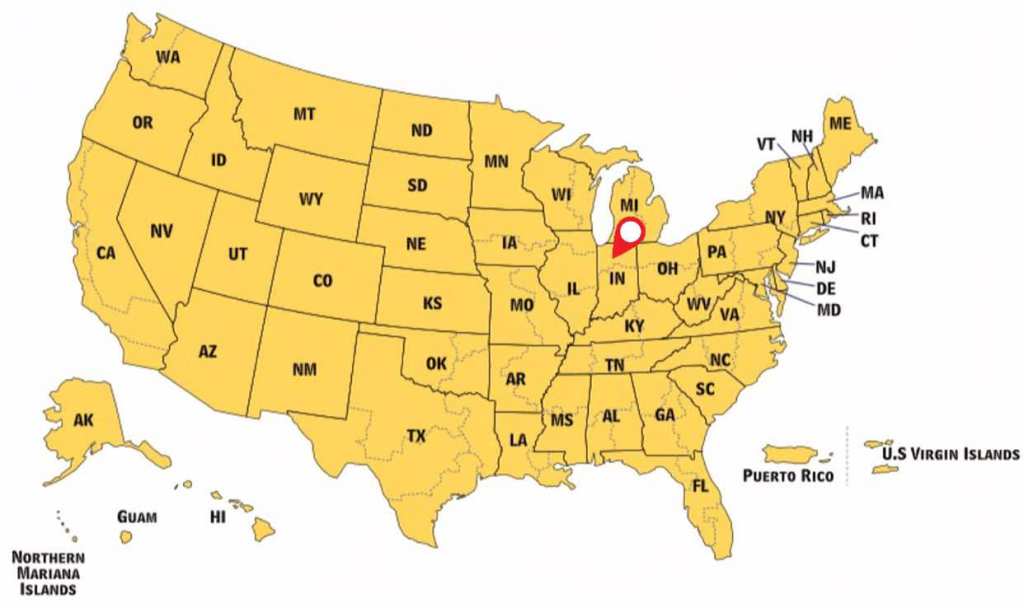
Well, that’s Jane Hartsock from Indiana, everyone! We’re still meeting another author in this state so stay posted!
 Wild Ink Publishing
One thought on “UnCensored Ink Interview – Jane Hartsock”