Tag: horror

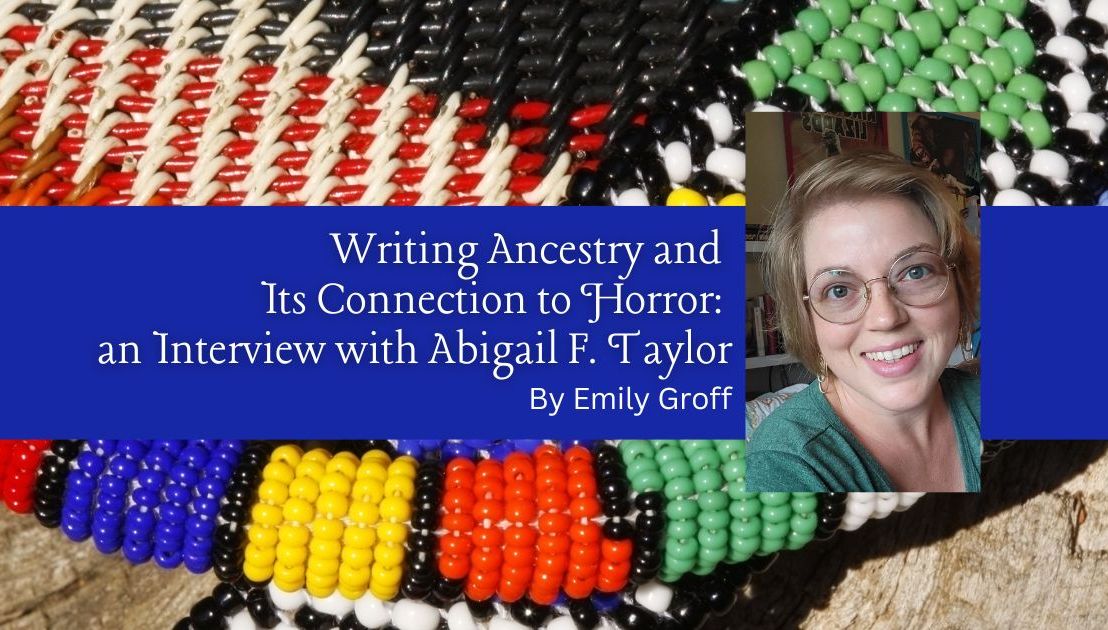
Writing Ancestry and its Connection to Horror

Writing Ancestry and its Connection to Horror

By Emily Groff

We all have a family heritage and a need to share our culture. But are we allowed to? Abigail F. Taylor wondered the same thing when she began writing. She still struggles with overcoming whether she is fit enough to write about her culture, but she’s tried, and she shares why it is important to write about her culture, and how to do it. Abigail shares her story through horror, a genre that is important to her and most compelling.

You say, “It’s (horror) a chance to have revenge when the system fails victims and it’s an opportunity to explore different perspectives and cultures.” You are from an indigenous heritage. Do you write in horror to specifically explore your cultural background and make readers more aware of your culture?

    It’s not that I set out to make readers aware of native stories. It’s simply that I grew up with them and didn’t see a lot of it represented in the media when I was younger. We have our hallmark, such as Smoke Signals, but for a long time, we didn’t have native stories written by native people. So, diving into more of the folk side of horror was really about me wanting to share things I thought other people might find as interesting as I found them. The “exploration” doesn’t come so much from me, the author, as it does from the reader. Horror is a lot more inclusive and widespread with its genres. So, readers will come across backgrounds and communities of characters that they wouldn’t necessarily see on the mainstream. Growing up in a conservative household myself, horror was a place where I could find progressive thoughts and ideas that weren’t readily available.

    You say you struggled for a long time about whether or not you had a place in talking about indigenous issues and avoided it for a long time because you didn’t feel ‘enough’. Can you explain why you felt this way and how you overcame it?

      It’s something I’m still working on, and I don’t think I’ll ever overcome it. Much of the reason is because of culture. As a child of divorce, I was deprived from half of my family. When visits are far and few between, the focus is really on the immediacy of things, the in-the-moment experiences, because you don’t know when that chance will come again. Diving into family and genealogy took a backseat. I would live and exist around my Mexican and Choctaw-Chickasaw relatives a handful of times throughout the year. I didn’t realize there were things that were culturally unique to us until I was much older. I was raised predominantly by my white, Southern Baptist family, in a middle-class neighborhood, and not on or near the rez. I am blonde and blue-eyed. So, I’m not really the first person on (literally) face value that people would want to hear from when they want what they think of all things indigenous. There are many things in this community where it isn’t my place to talk but to simply listen, learn, and be an ally. Yet there are also aspects unique to me and my family that I feel more encouraged to write and discuss as I get older. Finding that balance is where the ‘am I enough?’ comes into play.

      How do you show your ancestry in Maryneal and in A Home in Tishomingo? Do you express it in different ways?

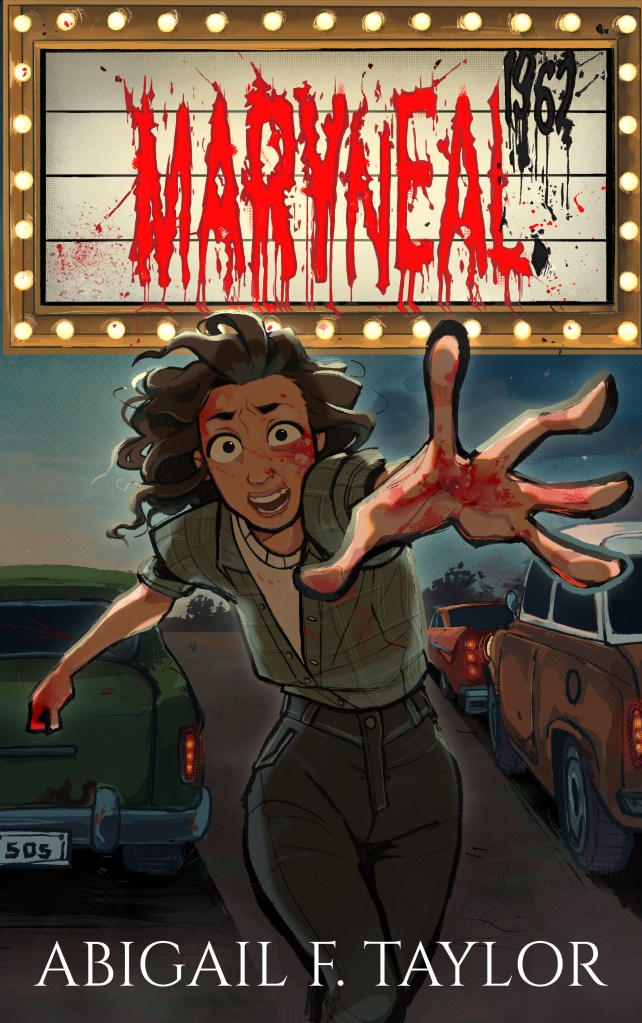
        In Maryneal, 1962, I hint that my main character, Delah, and her sister, Kitty, are mixed. There are several easter eggs hidden throughout to suggest this. She herself, however, believes she is white because her mother is gone and her father is all she has. This is a choice he has made for his children to help them advance in a divided society. In doing so, he protects his children, but he robs them from an important aspect of their identity. This was not uncommon for a lot of children growing up in that era. They lost language, culture, and a sense of self because so many people were worried about their children being taken away from them and thrown into Indian Boarding Schools or murdered (often both).

        For A Home in Tishomingo, I dig in deeper since there is no hiding the identity of these characters. It was a chance for me to explore old traditions and languages that are no longer used or hard to come by. More importantly, I had a chance to use the materials we have today that provide explanations of mental health and generational trauma that weren’t accessible in the 1920 & 30s. I could give better understanding and reasoning to the behaviors displayed that inspired the more difficult scenes in this book. One of my favorite things was creating ‘the other woman’. My main character, Skunk Lowery, is heavily inspired by my great-grandfather. Corinth is inspired by my great-grandmother, but she had a tumultuous sister-wife relationship with an unknown woman. Between the two of them were roughly 24 children that survived. I don’t know about this other woman or who her family might be other than a few scant details. So I created Madeline Roberts and stitched together ideas and theories of how everyone might get along or why this polyamourous relationship was established in the first place.

        How do you ensure that today we have better representation of the indigenous culture and make those from that cultural descent feel safe to be who they are and keep who they are in the family, unlike your grandmother, while maintaining an entertaining fictional story?

          The best way to ensure we have better representation is to invest and indulge in what the community provides. Read the greats, watch the shows, listen to the music, find the influencers on TikTok, and ask these things of your library to order and to hold. Share these with friends and relatives. Go to powwows (most are open to the public) and support the local artists there. Outreach and volunteer, or bring your kids/ fund a school trip to cultural centers. As far as drawing from real life and putting it into fiction? If you feel that you have a good story but are worried about the safety of someone you care about, discuss it with them. Then, look into your own motivations as to why this story must be told and be told by you specifically.

          Why is it important to you that your ancestry is represented in both literature and film, properly?

            It’s important because culture isn’t a monolith. There are a wide variety of peoples who come from the same ethnic backgrounds but can be polar opposites of each other. Even in the same household. It’s also important to not deprive someone of their heritage while also maintaining that you can have vastly different experiences navigating life than you do because of how you present yourself. We don’t get as many mixed main characters as we should. There are at least 20% of Americans who are in interracial relationships and we are starting to see that more in the media but we aren’t seeing as much of these fictional children as we should. Discovering one’s own identity is a difficult process during the teen years. It’s important to have strong and uplifting characters that a child or teen could see themselves in to feel less alone.

            Learn more about Abigail F. Taylor and her books here: https://abigailftaylor.wordpress.com/.

            Getting to Know Wild Ink Author Abigail F. Taylor

            Getting to Know Wild Ink Author Abigail F. Taylor

            By Bruce Buchanan

            Abigail F. Taylor is an award-winning author who leans into her roots to craft unforgettable and spine-tingling stories. Her next two books are both signed to Wild Ink Publishing, with MARYNEAL, 1962 coming in June and currently available for pre-orders. Her subsequent novel, A HOME IN TISHOMINGO, is soon to follow.

            In the following interview, Abigail shares more about her books, her approach to writing, and how her heritage shapes her work:

            1. What got you interested in writing fiction? When did you first know you wanted to tell stories?

            My family is full of storytellers. So, in a lot of ways it was a natural progression. I enjoyed writing ever since first grade but only began to see it seriously as an option in high school when a creative writing program was offered for seniors. 

            2. Much of your work falls under the horror umbrella. What is it about horror that appeals to you? And why do you think readers love scary stories?

            Horror is a safe space to explore the intrusive thoughts, the grim and gory, and the unknown. I think that’s why it appeals to so many people, both writers and readers. It’s a chance to have revenge when the system fails victims and it’s an opportunity to explore different perspectives and cultures. Horror is one of those genres that has been inclusive for a long time. Its subgenres, like splatterpunk, were created as a push back and a form of rebellion against the status quo. Most of all, horror is a genre of hope. No matter how grim the outcome, the trials and tribulations of the main characters, there is always the fight for survival and to persevere through the darkest hours.   

            3. So tell us about MARYNEAL, 1962, your Wild Ink Publishing debut novel! What is this book about, and how did you come up with this story?

            I basically came up with the story because I wanted to challenge myself to write for Young Adults. For about a decade I’d been working and querying in adult spaces with little to no traction. So, I decided to take a pivot. Then coming up with the story itself was an amalgamation of events. The setting was the hardest part to figure out. How do I write a horror without cellphones and without the crutch of ‘the no cell service’ excuse to fall back on. I also wanted to explore the reasons a thriving city would suddenly become a ghost town. I wanted a story where the protagonist was like the women I grew up with. There wasn’t a lot of representation when I was writing the first draft for tall girls with a mixed race background. I didn’t want it to be an ‘issues’ book either. I wanted my protagonist to exist in a space as a whole and complicated person without having to preach to the choir on a soapbox. This isn’t to say that Maryneal doesn’t explore these things. Throughout the book Delah is challenged by her own small town prejudices. Topics like sundown towns, interracial relationships, and the Indian Relocation Act are integrated as part of the wider narrative. Lastly, I knew I wanted to have a monster book that inverted the tropes that had been on the rise in paranormal and urban fantasy. The monster is not cute and cannot be saved by a single kiss. 

            A portion of pre-order sales will be donated to The Family Place, an organization that has been helping Texas families escape domestic violence since the 1970s.

            4. Your first book, a horror novella titled THE NIGHT BEGINS, received a great deal of acclaim. What did you learn from that experience that you applied to writing MARYNEAL, 1962?

            Actually, I wrote Maryneal first! The Night Begins came several years later. I’d shelved Maryneal and wrote A Home in Tishomingo, then had to shelve that as well. A few friends and mentors encouraged me to try short stories, which made me nervous. I hadn’t excelled at that in my college courses but in the same way I knew I could challenge myself to write YA and I knew I had to try short stories again. I thought Maryneal wasn’t getting picked up because it wasn’t ‘horror’ enough. So I took those same themes: Mixed families, small town, Indigenous and Irish folklore, and I put a real effort into exploring what frightens me. It’s not exactly a short story (I’m still working on mastering those!) but I wrote it in December and was signed in February. My first book signed and the sixth one written! It was horror and it was a success. So, I knew the time had come to dust off Maryneal, 1962 and try again. 

            5. Your family’s indigenous heritage and your roots in rural Texas are threads that run through your work. Tell us about that and why this is so important to you.

            What it boils down to is the old adage, “write what you know”. Although, I will admit that I struggled for a long time (and still do to a lesser degree) about whether or not I had a place in talking about indigenous issues and I avoided it for a long time because I didn’t feel ‘enough’ but as I got older and more seasoned in my writing, I realized how important the discussion of ‘what is enough?’ is. Once I started putting that in my writing, I started getting seriously published. I’m white because my grandmother passed and decided to live and marry white. She didn’t see an outcome of successful living for her children and I think if there had been better representation for her when she was young, she wouldn’t have been so afraid to exist in the world as she was. That’s why it was so important for me to have characters who looked like her and the rest of my family. 

            Native Americans have a long and complicated relationship with the entertainment industry. The way tribes are depicted on films often had a direct correlation with what was happening with the US Government. The ‘uncultured terrorists’ of the Wild West became the ‘noble savage’ of the 1960s. In men’s adventure books, you’ll often find that one Apache guy who can see in the dark and hear hoofbeats from one hundred miles away. Nowadays, indigenous characters are treated too preciously. It is important for me to write about raw and dirty and complicated people who aren’t mystical or villainous. They’re just trying to collect their paycheck like all the other characters. In the decade since I first wrote Maryneal, there has been a golden era of indigenous stories. So many wonderful books and shows have come out into the mainstream. It’s wonderful to see!   

            6. You also are a prolific short story writer, including writing a story for Wild Ink’s PROM PERFECT and BANNED anthologies. Why do you enjoy short fiction, and does it help you as a novelist? 

            Short fiction is a challenge for sure! When I first started writing seriously, the advice often given was that a first chapter should be a strong first story. I don’t know if that’s still being taught but I think about it often. When it comes to writing shorts, it’s almost like puzzling out a math equation. The more characters and settings you have, the longer the story, and if you only have 250 words to create an entire narrative? Forget about it! As a novelist, shorts help me find characters quickly. I’m somewhat of a gardener when it comes to writing. I have a brief idea of where structure and plot should be seeded, but everything else develops as the story grows. With shorts you have to establish characterization and world building fast so that the rest of the story can breathe on its own. 

            7. You’ve signed a second novel with Wild Ink, A HOME IN TISHOMINGO! What is this book about? It represents a departure from horror, correct?

            Maryneal, 1962 is actually my departure. I’d been writing poetry and contemporary paranormal fiction long before I decided to pivot into Young Adult. When It comes to A HOME IN TISHOMINGO, it was like coming back to an old friend. This is a book I’ve been wanting to write since I was sixteen but, as mentioned above, I didn’t know if I was the right person to do it. I also didn’t have the skillset to take on the challenge. 

            It is a novel heavily inspired by my paternal great-grandparents and the challenges they faced and choices they made as a mixed race, polyamorous family surviving during The Great Depression. It dips into magical realism, although some of the outcomes and situations in their lives definitely lean towards horror, it’s a horror of reality and not of genre. The book spans from 1915-1935 and centers itself around Skunk Lowery, an Irish-American sharecropper, and the magic that he uses to gain the system. He’s run out of town for being a witch and settles in Choctaw Territory where he meets his wives, re-invents himself to become a person of influence. Eventually, his past catches up to him and once again he has to use the magic he swore from doing to protect his family, even if that means killing the ones he loves.    

            Visit Abigail F. Taylor’s website to learn more.

            Getting to Know Wild Ink Author William J. Connell

            Getting to Know Wild Ink Author William J. Connell

            by Bruce Buchanan

            To the legal community, William J. Connell is an experienced attorney who works within the education and government sectors throughout Rhode Island and Massachusetts. To his students, he’s an adjunct professor at the Roger Williams University School of Law, where he shares his real-world legal experience with other aspiring attorneys.  To his home community, he is a member of the School Committee.

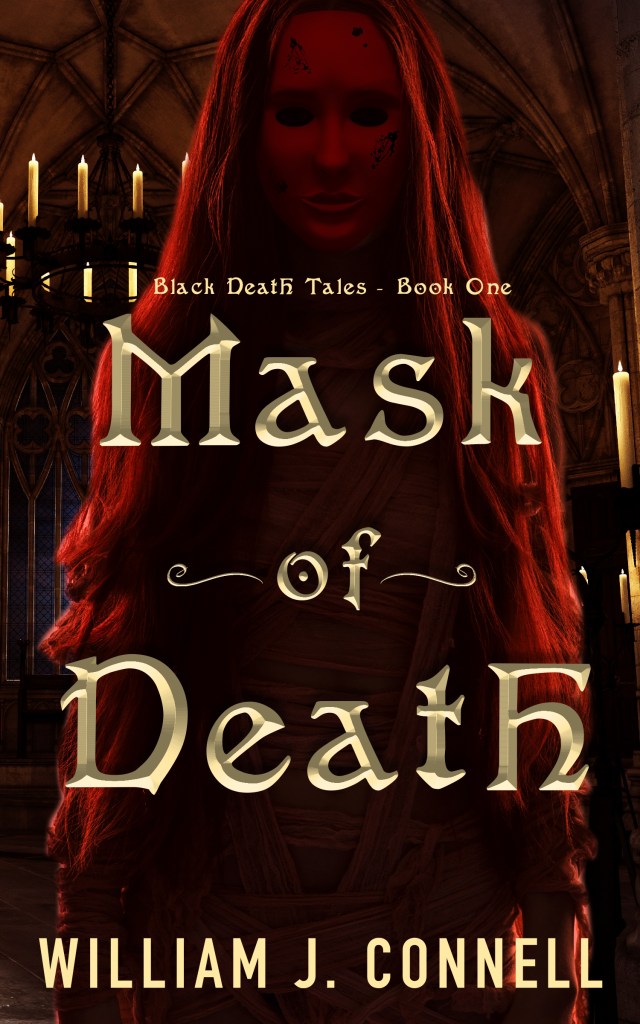
            But readers know another side of William: The author. Despite his busy career, he has become a prolific short story writer and on November 27, 2024, , his debut novel, MASK OF DEATH, will be released by Wild Ink Publishing.

            Set during Europe’s Middle Ages, MASK OF DEATH reexamines and expands upon the classic Edgar Allan Poe Short story “The Masque of the Red Death”. Prince Prospero. his wife, Elizabeth, and Clarinda, Prospero’s younger mistress, already face the real-life horrors of the black plague and widespread famine. Now, add supernatural terrors to that list in the form of “fleshers”—undead creatures who feast on the living – and you have the start of the novel.

            1. When did you first get interested in writing? And what got you interested?

            “I’ve always liked to write. In high school, I wrote a book, but didn’t publish it. But I enjoy writing. I’ve done writing for law journals, but  I really like fiction.

            When I’m writing, I’m in the moment, just thinking about the characters and plot. It helps me focus and I find it engaging. For example, I spent last Sunday working on a complaint for a client. It’s rewarding, of course, but it’s not as energizing as writing a story.

            2. Tell us a bit about Mask of Death. You say, “It’s not the story you think you know” – in what way (without giving too much away, of course!)

            I have to thank Wild Ink Publishing for that line (and also give a reminder to my students, proper attribution is important). This story grew not only out of the Edgar Allan Poe story, but also my love for Clint Eastwood westerns and old zombie movies. I also used to teach world history, and I’ve long been interested in the Black Plague period, particularly in Europe. How did mankind survive? How hard must life have been then.

            I thought, ‘What a fascinating time to set a novel. You could tell a lot of stories set during that time.” In my book, Clarinda is Prospero’s mistress.  She and plants some of ideas that set the main action in motion. But what to do with Prospero’s wife, Elizabeth? That’s a key question. I take some elements from “The Masque of the Red Death” and expand on them. I also read fiction written during or shortly after the Black Death period, particularly “The Decameron “by Giovanni Boccaccio.  My novel tells about the events leading up to and beyond Prospero’s story.  We also might glimpse what started this plague. The story is complete, but it also leads right into another. 

            Also, this will be a three-book series. I’m already working on the sequels.  

            3. You are an attorney as well as a writer. How do you balance such a demanding career with your passion for writing fiction?

            It’s hard—you have to be committed to writing. Sometimes, I feel like I’m spread thinner than I want to me. But I want to write, and I enjoy it.

            4. What is your writing process like? Do you have any particular tips or methods that help you?

            “My writing process really depends on my schedule, but I like to get ideas from reading and watching movies, or just running outside. I see something I like, and I’ll take it in a different direction. Some of my horror stories have come after reading Poe or Lovecraft—I’ll take an element from one of those stories and flip it around.  I try to create the stories I’d like to see and read.”

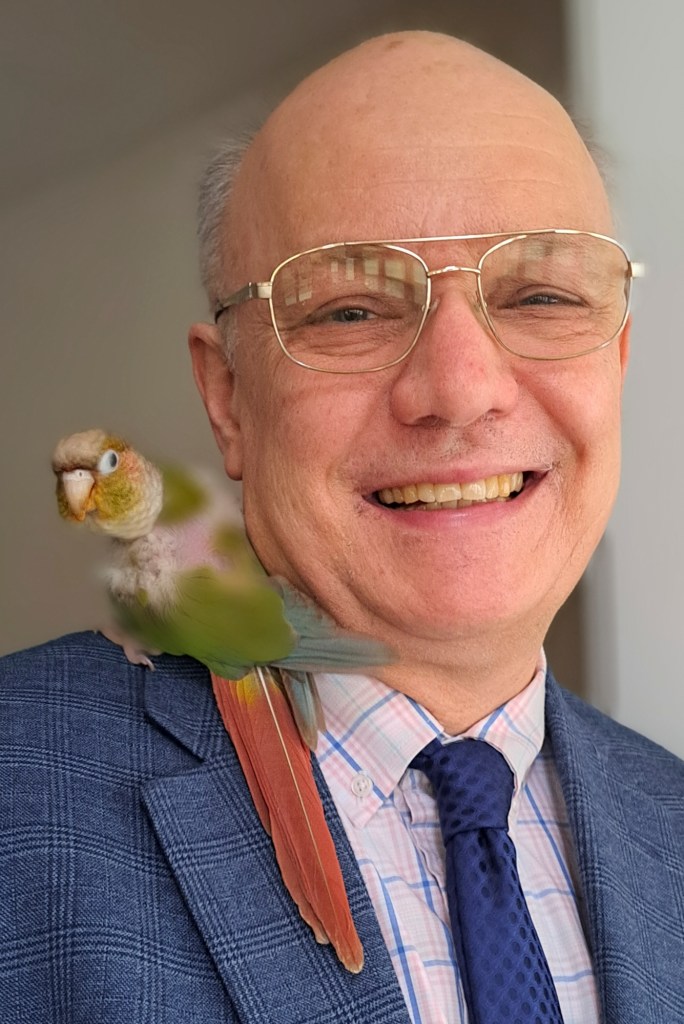
            5. Finally, tell us about Lulu, the ped bird in your author photo!

            My daughter Amanda has always been a bird person, and she adopted Lulu as a rescue bird from the Rhode Island Parrot Rescue. For anyone looking for a pet, I’d encourage you to consider adopting a rescue animal. Lulu is a handful, but she loves attention and being on camera.  We can’t get over how fast she adjusted to us!

            Click here to pre-order Mask of Death