Tag: Fantasy

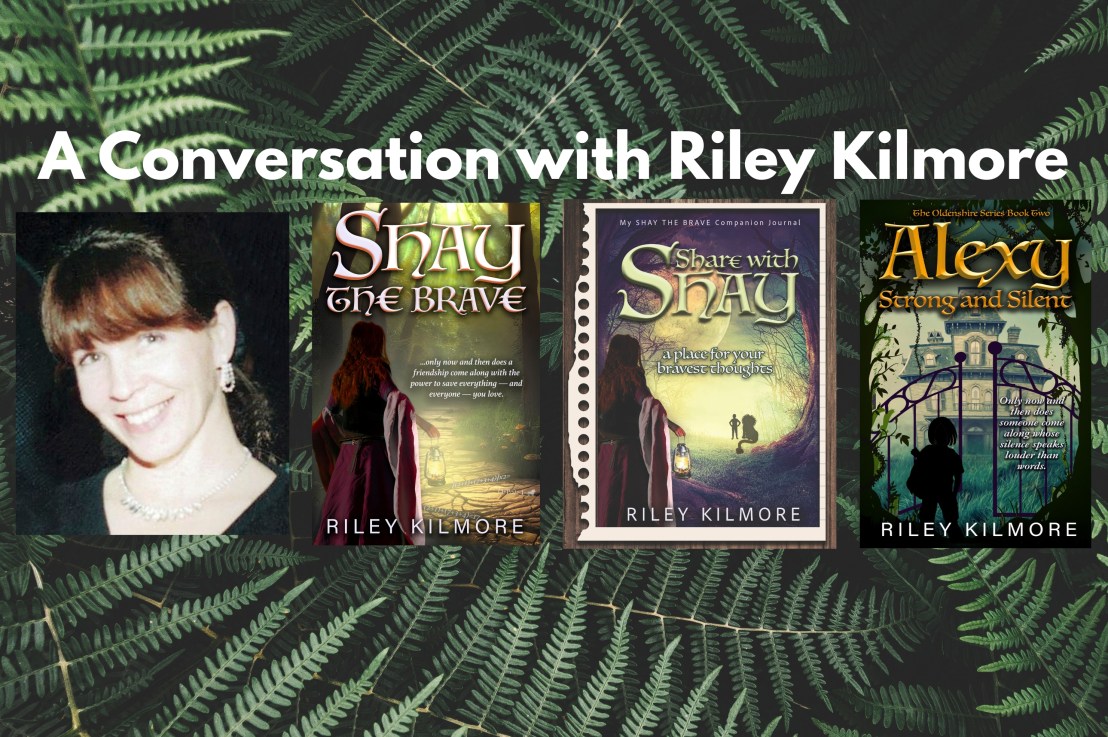
A Conversation with Riley Kilmore

A Conversation with Riley Kilmore

By Emily Groff

While a wide variety of hats have topped Riley Kilmore’s head across the years, the only one you’ll see these days is that of an author. Kilmore has worked as a police officer, as an EMT and firefighter, has driven a forklift in a flooring factory, and even served as the Administrative Assistant to the president of a chemical waste management firm. Still, throughout the years and changing jobs, Kilmore was always writing.

“I don’t think there’s any kind of work that doesn’t ‘mix’ with a career as a writer,” Kilmore told me. “People driven to write will find ways to fit it into their lives no matter what else they do.” Kilmore went on to express the belief that varied employment experiences can inform an author’s writing—often in ways not always apparent on the page.

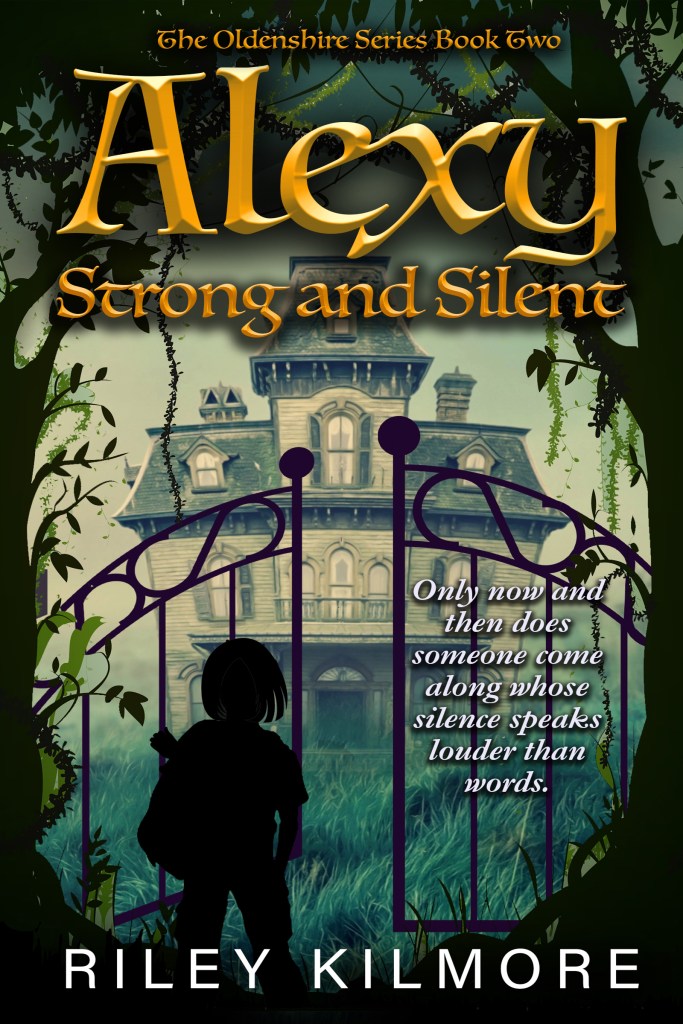
The published author of award-winning poetry, essays, and short stories in multiple genres, Kilmore also served as a regular columnist for several online publications, including The Illuminata, a Sci-fi/Fantasy webzine. These days, Kilmore is most recognized as author of our particular favorites, Shay The Brave, a middle grade fantasy, and its newly released sequel, Alexy, Strong And Silent. We want them to be your favorites too, so let’s dive into this interview to learn more about the author and these fantastical books.

When did you first know you wanted to start writing? What got you interested?

Most authors are going to tell you they knew they wanted to be writers from the moment they picked up a pencil and learned to scratch out letters on a piece of wide-ruled paper in grade school. It’s a common refrain, but it’s really not an origin story. I think perhaps there are more pointed ways to ask this question. Maybe, “What was the first story you attempted to write as a child?” and “What was the triggering incident that drove you to try to recount it as a story?”

I’m pretty sure I still have some of those earliest writings—opening chapters to books that ended up stillborn—but the lives of the lost remain with us and continue to inform our work. One early story, Sada of Onada, featured a lonely kid convinced she was an adopted alien. Another story, Shibboleth, was inspired by a biblical tale about a fortress that recognized enemies by their inability to pronounce carefully crafted passwords. My spin  on it was that the “enemies” had a lisp. The story was going to be an allegory about discrimination.

Recalling these early attempts at storytelling, I’m able to draw a thread through to today and see that most of my writing throughout my life has centered on themes of not fitting in. Prevailingly, across genres, my stories feature characters who, in one way or another, couldn’t (or wouldn’t) toe the lines societies draw for their (accepted) members.

Tell me about each of your books: Shay The Brave, Share With Shay, and Alexy, Strong And Silent.

All three books are part of the Oldenshire Series, a set of quirky middle-grade fantasies that, while clearly not set on Earth, take place in a pre-industrialized time reflective of our own Medieval period.

Shay The Brave takes place in the village fortress of Oldenshire itself, and features a feisty protagonist animal lover (young Shay) who wants everyone to stop eating meat. Hers is a family of means, but she is against classism and ablism—her pal is Alexy, the laundress’s son, who also happens to be mute. The story is an allegory promoting animal rights, intercultural friendship, and trans dignity: a small book filled with big ideas.

The Share With Shay Workbook invites young readers to project their own ideas and creativity over the world of Oldenshire, especially as it reflects social issues at play in the real world. The workbook is a great companion to Shay The Brave, offering hundreds of prompts that encourage kids to ignite their imaginations and delve into their own origin stories—both cultural and individual.

Alexy, Strong And Silent is the second installment in the Oldenshire Series. The story follows the sidekick from Shay The Brave as he must venture afield from the only home he’s ever known and face a larger, crueler world. This second story takes place in the town of Indusdorp. Perhaps think of it as an Oldenshire take on Oliver Twist meets Jumanji. While Shay isn’t featured in the second book, she does appear, as do other beloved characters from Book One.

How did you get the idea for each of these books?

Shay was a filler book to engage my spare time during my MFA program. My thesis novel was a sweeping 400-page Sci-Fantasy family saga with anticolonial themes, so I wanted to try something different. Honestly, I didn’t know what, so I just sat down at my computer, pulled up a blank page, and decided to write whatever occurred to me. No plan. No outline. I ended up writing a chapter a day, and in three weeks Shay The Brave was born. In a way, it felt more like a channeled story than one I wrote. The workbook was the brainchild of Abby Wild, owner of Wild Ink Publishing. The idea for Alexy came from Shay. It was Abby’s idea to expand Shay The Brave into a series. How I approached that was up to me, so I decided there was more to Alexy’s story to be told, more of his character to unfold. He deserved a book of his own.

Why should readers read your book? What is your target reader for each book? Why did you choose to write for this audience?

I’ve written eleven books, yet Shay The Brave was my middle grade debut. My other works are geared  more for young adult, adult, or YA-crossover readers. That said, I do market Shay The Brave as having been written for “kids from nine to ninety-nine,” because it appeals to readers of all ages, especially fans of books like Lewis Carroll’s Through The Looking Glass or Lemony Snicket’s A Series Of Unfortunate Events.

I think I eventually gravitated toward writing for younger readers by realizing how deeply influential books were in my own formative years. Authors who most influenced me include Mark Twain, Louisa May Alcott, Marguerite Henry, Lewis Carroll, and Helen Garrett. By reaching out to younger readers, authors have an opportunity to plant seeds of better and broader thinking in the coming generations. Writing for young audiences is an act of hope, an investment in the future, and a declaration that young minds are the fertile landscape whereon our entire world’s survival hinges. Writing for young readers (and for the adults who will be reading our works to them) is a way to pass on tidbits of wisdom we’ve garnered along the way.

Do you have a specific genre that you write in? Why this genre? Do the books you read tend to influence this?

Throughout my teens and early adulthood, I did read a lot of sci-fi and fantasy, so yes, the books I read definitely influenced my writing. I’d say the bulk of what I’ve written through the years could be considered one or another sub-category of fantasy. I’ve written novels in other genres as well; they simply haven’t found their way to publication yet (i.e.: romance, family drama, western). In more recent years, I’ve actually been reading fewer and fewer works of fantasy or sci-fi—probably because I feel I can simply imagine more engaging stories on my own. For instance, I’m no fan of dystopian or vampire or zombie stories, and nowadays a lot of work seems to center on those sorts of things. Frankly, my first and lasting love has always been non-fiction, especially history and biography, yet I have no driving desire to write non-fiction like I do fiction. Go figure!

You write in multiple different formats—poetry, short stories, novels, etc. Which format is your favorite and why?

I can’t claim a favorite. Each form of storytelling fills a different need, in the writer and poet as well as for the reader. One can’t replace another. Poems that are most memorable pack a strong emotional punch; they leave us feeling something. You might call them “emotional snapshots.” Short stories that stick with us the longest tend to have unexpected endings, twists that leave us thinking something. I’d categorize them as “cognitive snapshots.” But novels are entire photographic albums in word form. The most memorable ones run us all up and down an emotional flagpole while at the same time making us think—usually about things we didn’t show up prepared to think about at all.

What is your writing process like? Do you have any particular tips, methods, or writing strategies that help you?

My personal “process,” if one can call anything I do a process (Inner monologue: Is flying by the seat of your pants a process?), is to walk a lot. I used to run a lot, but now it’s mostly walking. This is my development time, the space and place where my stories and poems are seeded and begin to grow. Then, at night, that sweet twilight between lying down and falling asleep becomes the fertile ground wherein those seeds shoot up, spread out, and blossom. Finally, the following day, I sit at my computer or take pen in hand and gather the harvest, weaving it into words on a page that garden of ideas, smells, sensations, emotions, images, events, and conversations.

As for tips or strategies, my take is pretty straightforward: you do you. Do whatever works best for you as a writer. I’d suggest the way to discover that is by sampling many different approaches. Try writing at different times of the day. Write in different kinds of light. Write in different rooms and locations. Explore a variety of mediums (pen and paper; computer; audio recordings). Maybe try writing to music, then while wearing sound-cancelling headphones. Eventually, you’ll discover your personal writing sphere, which will lessen your writings fear.

Tell me a fun fact about yourself.

As a teen I was once runner-up to the Chicken Corn Soup Queen in my hometown. That’s probably a pretty small club. Also, at both my wedding and my police academy graduation—unbeknownst to me until it was all over—I had my hat on backward. That’s embarrassing (you’d have thought someone might say something, but no!). Also, I have some vision issues, so I’ve pulled a number of what I call my “Mr. Magoo” stunts. I once mistook a fellow shopper for a mannequin and began feeling up her outfit, admiring it; I nearly had a heart attack when she moved. Another time I gave an extended lecture to an up-ended mop in the corner of my kitchen till I realized it wasn’t my daughter quietly sulking there.

To learn more about Riley Kilmore visit https://rileykilmore.com/.
Meet Bruce Buchanan

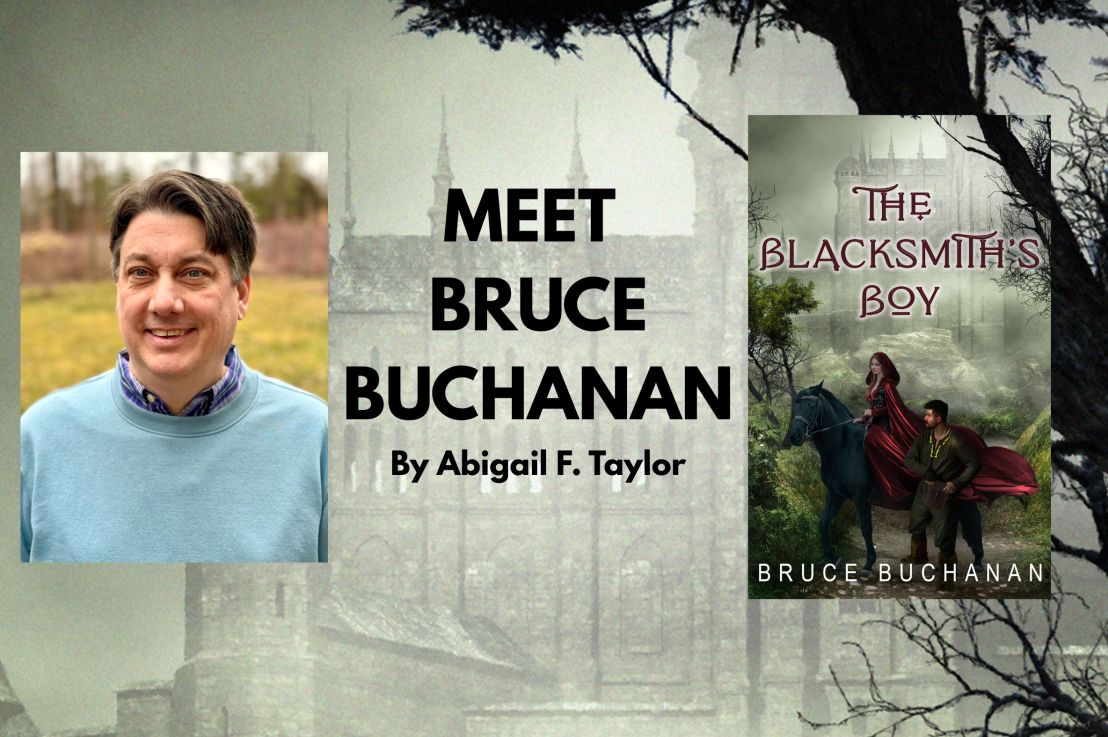
Meet Bruce Buchanan

By Abigail F. Taylor

In anticipation of his upcoming YA debut, I sat down with Bruce Buchanan, an Associated Press award-winning author. What unfolded was a fascinating chat into his process, the characters & worlds he creates, and how he made his start. His next two books, THE BLACKSMITH’S BOY and THE CERULEAN BLUR are both signed to Wild Ink Publishing.

1. Do you remember the first story you wrote? How old were you?

I’ve always loved making up stories as well as reading them. When I was in elementary school, I used to write and draw my own comics. Now, I’m a terrible artist, so I named my hero “Stickman” to explain why he and everyone in his world were stick figures. That’s all I could draw!

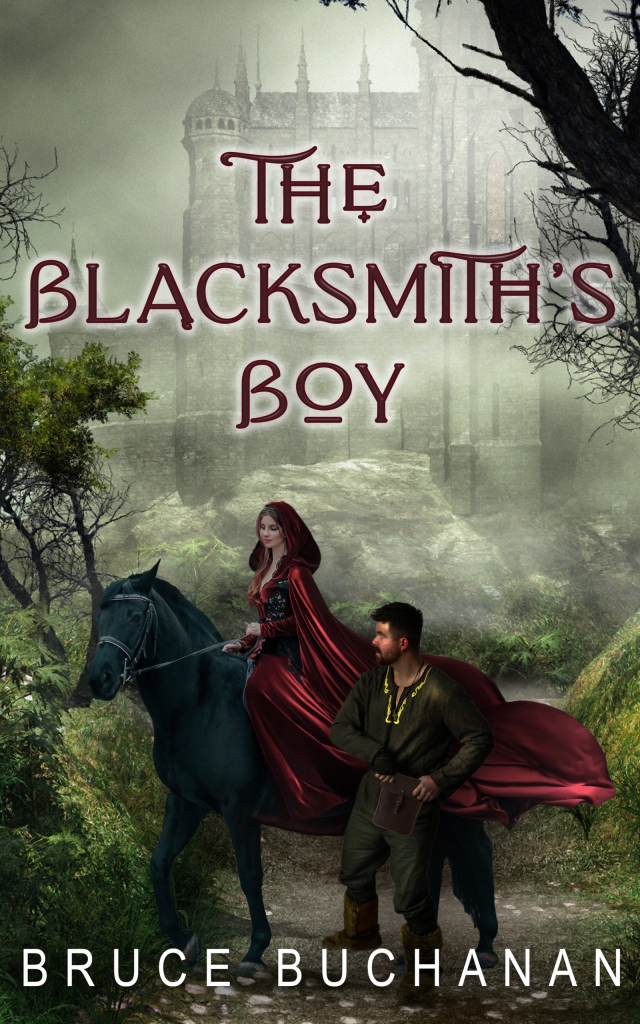
2. In your upcoming novel, The Blacksmith’s Boy, Bok comes from the peasant class and later meets a friend in Isabella, who is a member of the royal family. How important does class play in the narrative, and how do you think it mirrors the growing divide in today’s society? 

Class divisions are both a big plot point and a key theme of The Blacksmith’s Boy. In the fictional country of Imarina, people are born into one of three social classes: Noble, Landowning, or Serving. According to Imarina’s centuries-old laws, people in the Serving Class can only hold certain jobs and only own a small amount of land. Most notably, only members of the Noble Class can be born with the ability to perform High Magic—sorcery, in other words. At least, that’s what everyone in Imarina has been taught to believe.

Bok comes from the lowest point on the social ladder. Isabella is literally at the top—she’s the Crown Princess. But circumstances throw them together, and they develop a deep and strong friendship. However, Bok is always aware of those class differences.

Isabella is a reformer at heart. But her desire to make Imarina a fairer place for the Serving Class isn’t as easy to make real as she’d hoped. I’ve always thought that speculative fiction works best when it says something about the real world, and I think readers will understand those parallels when they read the book.

But The Blacksmith’s Boy is first and foremost a fantasy adventure! The other stuff is there for those who want to think about it. But if you just want an exciting adventure, you’ll (hopefully!) find it here.

3. Are there places in The Blacksmith’s Boy that you found difficult to write? How did you push through?

Not so much scenes, but I originally had the idea for this book years ago! I started a draft when my son was young, and life got in the way. More to the point, I didn’t have the time management skills I needed to be a novelist then. I wrote a few chapters and some notes back then and put it aside.

I came back to my unfinished (very) rough draft and notes in early 2023. I kept a little bit, changed a lot, and added a ton. This book has been through so many drafts and revisions, but I finally got it to where I’m happy with it. After all these years, I’m going to share my debut novel with the world. It honestly doesn’t seem real sometimes.

4. You’ve written a fair few short stories as well. How do you know when a story will end up as a short or as a novel? 

Good question! I don’t have a formula, really. It’s more of a gut feeling of, “How many words do I need to tell this story?” I do outlines before I start writing either a short story or a novel. But my novel outlines are much more detailed, for the simple fact there’s so much more to write.

I like writing short stories as a break between bigger projects. You get that satisfying feeling of finishing a piece in just a few days, whereas a novel will take months (or longer).

5. Your next novel, The Return of the Cerulean Blur, is set to hit the shelves next year! What challenges did you have transitioning from a high fantasy world to a modern-day one with superheroes? Would Bok and Isabella ever catch a drink with Susan Murphy, or would it be like Oil and Water?

For starters, The Blacksmith’s Boy is written in third person past tense, while The Return of the Cerulean Blur is in first person present. So that was a change – as I wrote the second novel, I found myself slipping back into third person past because I’m so used to it.

But The Return of the Cerulean Blur was a lot easier to write, because it is rooted in the real world. Susan Murphy is a parent, works at an office job, has to pay the bills, etc. These are things I certainly can relate to a lot more than being a Serving Class healer or a crown princess! 

And I love the idea of Bok and Isabella meeting Susan for a drink. Despite the age gap (Susan is mid-40s, while Bok and Isabella are both 19), they’ve all had to look deeply inside themselves to figure out what they’re made of. And all three are genuinely good people who want to do right by others.

6. The protagonists in your books are fighting against impossible odds. What would you like readers to take away from the experiences they’ll face? 

To me, what makes a hero is their willingness to try to do the right thing, even when it is hard. Whether they succeed isn’t as important as the effort. Bok and his friends get put to the test. They fall short sometimes, but they learn and grow. Hopefully, readers will enjoy and appreciate the ride!

7. What writing advice did you receive at a young age that has stayed with you throughout your journey?

Keep writing. You only get better at writing by writing. It’s so easy to get discouraged, but don’t give up. You have stories to tell, and only you can tell them.

Abigail F. Taylor, Texas Poet & Novelist.

abigailftaylor.wordpress.com

Getting to Know Wild Ink Author C.R. Reece

Getting to Know Wild Ink Author C.R. Reece

By Emily Groff

Knowing you want to be a writer but fearing that you may not be good enough is exactly the thought that ran through Courtney (C.R.) Reece’s mind. While it took time to overcome her fear, she has officially become not only a writer, but a published author (one of the three things she loves). The other two are spending time outdoors and with her family.

Courtney has three dogs, two beautiful daughters, and a loving husband. Her world is writing and being a stay-at-home mom. She was gifted in teaching high schoolers English, but loved spending time with her kids and writing more. It felt only right to be doing the things she loved most. Meet Me in the Woods is her first YA novel, and we can’t wait for you to read it.

Tell us what your book Meet Me in the Woods is about.

    Meet Me in the Woods is about a teen girl, Lowen, who accidentally breaks an ancient curse that brings quite a few supernatural beings to her doorstep, including Sebastian and Wesley–two faces found in nineteenth-century photographs. She, along with two of her best friends, using alchemy, telepathy, and witchcraft, must figure out who is following Lowen and murdering teen girls who look just like her, before Lowen becomes the next victim. 

    How did you begin writing Meet Me in the Woods, and what gave you the idea?

      The idea came to me while hiking in the woods with my dog, Teddy. Being alone on the trails can be a little unsettling, so I let my mind play out my most outlandish daydreams. I would spend hours plotting while walking through the woods, and then would go home and draft those ideas.

      Why should readers read your book? What is your target reader for each book?

        I think readers will be surprised by the depth each of these characters encompasses. It truly is an ensemble cast of vulnerable, slightly broken souls who are still finding their own unique ways to care for others. This book is meant for young adults, 13-18. 

        What are you most excited about with the release of Meet Me in the Woods?

          I’m excited for readers to (hopefully) experience the quaint and slightly creepy town of Moon Creek the way I imagine it in my head. My hope is that someone will connect with one of these characters and feel a sense of being seen and valued in the process.

          When did you first know you wanted to start writing? What got you interested?

            If you ask my mother, she’d say I’ve known my entire life. As for me, it’s taken me a while to believe in myself enough to go for it. I’ve always had my nose in a book and have always written for myself, but only in the last few years have I pushed myself to write novels.

            What genre do you tend to write in? Does it differ from what you typically read?

              Meet Me in the Woods is a YA Paranormal Romance, but my second manuscript is Women’s Fiction with Speculative elements, and my third is an Adult Crossworlds Fantasy. All three may seem very different, but they all contain magic and all focus on women facing their literal and metaphorical ghosts. I love to read everything, but I am drawn to Fantasy and Women’s Fiction the most.

              What is your writing process like? Do you have any particular tips, methods, or writing strategies that help you?

                I am definitely a panster, no matter how much I want to be a plotter. Even if I create an outline, I inevitably end up veering so far off course, so I’ve learned to embrace the magic of surprise. The method that works best for me is to write from beginning to end, giving myself a word goal each day. I use Save the Cat Beat Sheets to make sure I stay on course with a sound structure, and then I let ideas flow.

                Tell me a fun fact about you.

                  I have eleven tattoos, and the orca on my arm is my favorite. 

                  Click here to find locations to purchase Meet Me in the Woods.

                  Learn more about Courtney (C.R.) Reece here, https://wild-ink-publishing.com/courtney-reece/

                  Pride at Wild Ink and Conquest

                  Pride at Wild Ink and Conquest

                  By S.E. Reed

                  Celebrating Pride Month by sharing some of our favorite Wild Ink and Conquest books that feature LGBTQ+ characters.

                  Adorned in Ice by Kylie Wiggins

                  Fear was not for the weak but for the intelligent who knew they were up against an unpredictable foe.

                  Eliza Hawke, the ice-wielding Princess of Keruna, has been married off to Will, the earth-wielding Prince of Mineros. The cruel and unfeeling place that is Mineros cares about power over anything else. As Eliza’s days of forced betrothal go by, Will leaves his mark with bruises and veiled threats. Yet, through Eliza’s misery, she finds solace within thePrincess of Mineros, Nissa.

                  Nissa, is a beam of light even on Eliza’s darkest days. It is not until Will’s coronation is almost in his grasp, Eliza and Nissa hatch a daring plan of escape. If the Prince is allowed control over the largest army in Catalina, then all will surely be lost.

                  As the two fight desperately to unite the kingdoms in their war against the Prince, a tale of danger and betrayal unfolds every step of the way.

                  Fate’s Fury by Shaelynn Long

                  Pansexual Olivia Beckett has lived through thousands of lifetimes, dispatching miscreant supernatural creatures alongside her sisters as the mythological trio of Furies. Memories of her past lives begin to appear and haunt her, and she starts questioning everything she thought she knew about her life and her duty. In the midst of a brewing war between the factions of Creatures, Olivia goes against all the rules and falls in love with a human, only to realize he may be connected to her mysterious past. Can she have it all, or will she have to make the ultimate sacrifice in order to stop the war?

                  The Funeral Director’s Wife by Lindsay Schraad Keeling

                  Brooklyn Blatrix takes on a new job at the local funeral home after being dumped and fired in the same week. She strikes up a relationship with her supervisor, Brantley McAffey, in a hopeful attempt to make her ex-boyfriend jealous. However, Brantley has a secret he’s been keeping from everyone – a secret he’s willing to kill for. Brooklyn is about to find herself in the trenches of a trial by media before the year is over.

                  Infinite Mass by J.K. Raymond

                  “Hi there kittens, It’s Karma. I just helped Morna save the Omniverse from yet another impending apocalypse. It wasn’t my first, but funny thing about this turn on the merry go round, it was in fact my last! I’ve been at this game a long while. I’m not a stranger to these lands, I’d go so far as to say most of you lovelies know me. But do you? Karma is neither male nor female, she is whatever he wants to be, whenever they choose to be…get it? Got it? Good! But I’ve retired and now I’m just plain old Jane the bisexual human. A human that gets ravaged every night by their transgender boyfriend Loki.  Don’t get your runes in a twist. How did you expect a shapeshifter to identify? I bet you never even thought about it did you…just a trickster was all, right? Anyhoo, since it’s technically my first Pride Month as a queer human, I thought I’d wish you darlings a happy Pride! And let you in on a little secret…Karma’s always been on your side.”

                  Of Stars and Lightning by Melanie Mar

                  Sol Yarrow didn’t ask for much. A nice day for hunting. A peaceful shift at her gods-awful job. A steaming bowl of her aunt’s famous stew. Easy. Simple.


                  After twenty-five years of simplicity, everything she thought to be true is rewritten when four strangers come to Yavenharrow and take her back to the kingdom of Rimemere, a shielded land inhabited by ruthless Elemental Magic Wielders. A land only known through rumors and bedtime stories.


                  A kingdom where her mother was Queen. A kingdom, by order of succession, now belonged to her. What would a human with no magic and a short temper have to offer the Wielders? Sol didn’t think much.


                  Her Court thought otherwise.

                  Old Palmetto Drive by S.E. Reed

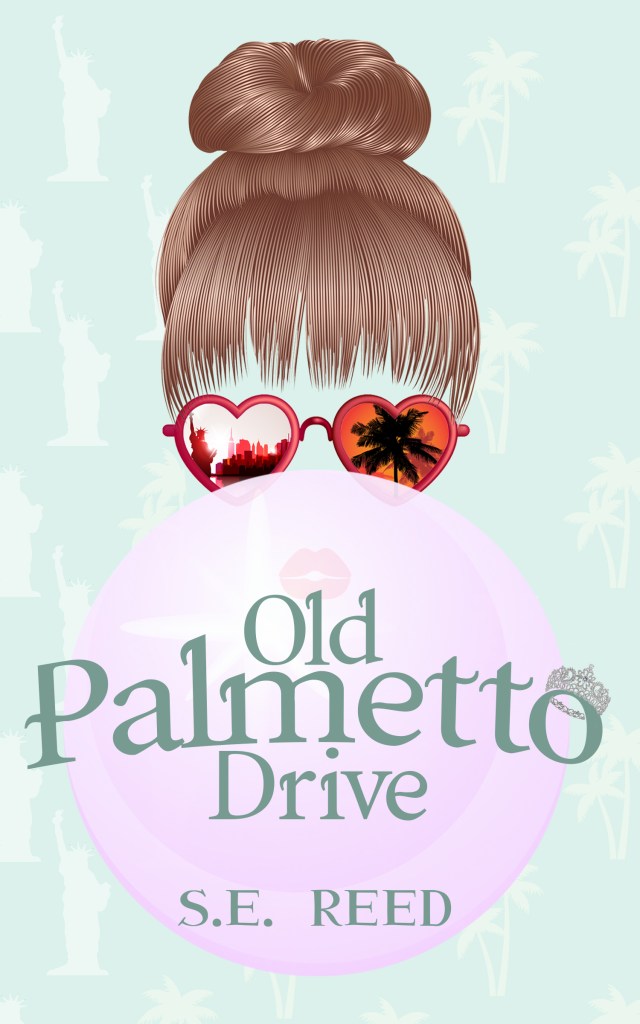
                  LGBTQ+ teen socialite Rian Callusa’s privileged NY life is over! Following her parent’s nasty divorce, and the death of her aunt & uncle, Rian’s mom drags her kicking and screaming all the way to Everglades City. Who cares if her new home is a mansion when it’s in the middle of nowhere without a nail salon or shopping mall in sight? And friends? Hell might as well freeze over before Rian would hang out with her hillbilly cousins.

                  The news that her Dad won’t be returning to New York after his job abroad crushes any hope Rian had of moving back to the Big Apple. So without a plan B, Rian explores the swamp and learns her cousins aren’t as backward as they first appeared. She even falls head over heels for a cute vintage-loving local girl named Justine. Now that she thinks about it, this might turn out to be the best summer of Rian’s life! Until her cousin Travis gets drunk at a party and confesses the dark truth about what really happened on Old Palmetto Drive, sending Rian into a tailspin of fear and self-doubt.

                  The Physician by Magdalene Dietchka

                  Jake Perlman’s fate changed forever as a child when a dam broke on the way to school, washing his bus over a bridge. Before the Angel of Death could claim him, a Shepherd named Omiel stole Jake from his fate. Now as a Stolen in his adulthood, Jake uses his powers under Omiel’s guidance to assemble his coterie, a group of Stolen with abilities like his.

                  Yael Taube learned in her youth she would become a Companion, the soulmate to a Stolen. After an unfortunate event finds Yael in the presence of her Stolen, Jake, things take motion.

                  Jake and Yael learn of their fates and see hope for their future. However, pulling the coterie together is anything but easy. Between their shared trauma, doubt in their fate, and evil beings called Sirens trying to harm them, the coterie’s future is anything but certain. Despite the Shepherds’ direction, there are dangers ahead. If the Stolen and their Companions come together too soon, it could lead to their undoing, but the world and the coterie are counting on their success.

                  Episode Seven: An Interview with Emily St. Marie about the Magical Muse Library

                  Episode Seven: An Interview with Emily St. Marie about the Magical Muse Library

                  In this episode, Abigail sits down with Emily St. Marie, illustrator / author, to discuss the Magical Muse Library.

                  You can find Calliope’s Collection of Magical Mayhem here.

                  You can find Ourania’s Orrery of Imagination here.

                  To learn more about Emily St. Marie, visit her website.