Tag: books

UnCensored Ink Interview – Johnny Francis Wolf

UnCensored Ink Interview – Johnny Francis Wolf

Hey everyone, 

Ian Tan here, lead editor and project coordinator of UnCensored Ink: A Banned Book Inspired Anthology, set to release this October 29. Here is the UnCensored Ink interview series to introduce you all to the incredible writers, as well as the local bookstores and libraries that gave them safe creative spaces. Hopefully you can put these incredible places on your to-visit list, and feel inspired to support your own local bookstore, library and indie authors.

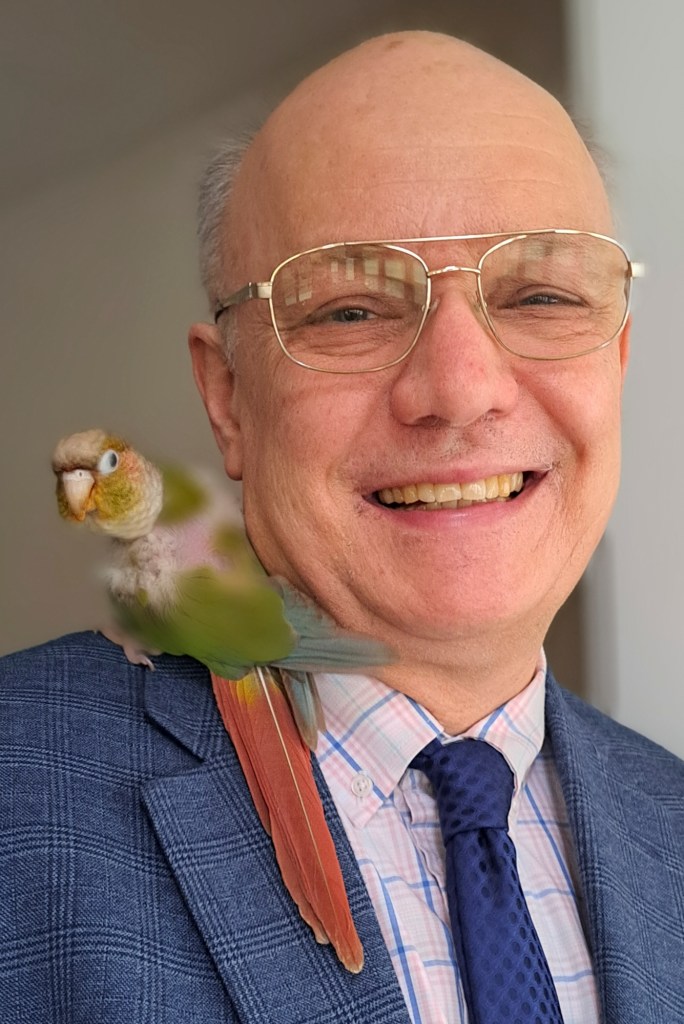
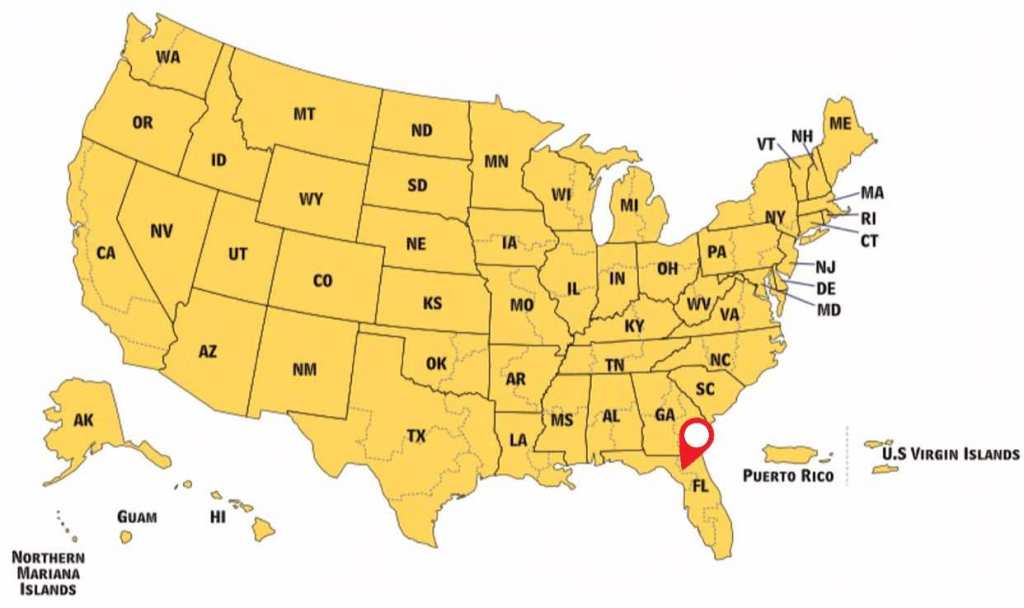
Today I am with Johnny Francis Wolf, from Key West, Florida. Homeless for the better part of these past 10 years, he has surfed friends’ couches, shared the offered bed, relied on the kindness of strangers — paying whenever possible, performing odd jobs. Johnny has been all over the place, from NY to LA, Taos and Santa Fe, Mojave Desert, Coast of North Carolina, points South and Southeast, back North to PA, hiking the hills, and looking for home. Still, he considers himself blessed. 

And yes, he’s found such a home in Key West, with rug and bed and pictures on the wall.

1. You’ve written a fine piece for UnCensored Ink: A Banned Book Inspired Anthology. Can you give us a synopsis? How did the idea for this piece come about?

It’s a simple tale about a picnic. There are two friends soon to move from the small town they grew up together in. One to a University.. I’m imagining the East Coast. One to LA to seek stardom.

Their friendship is simple, a story about like and unlike kids. It is a moment examined where their innocent love, something no one in their circles has ever mentioned as wrong, coalesces in a kiss.

It is the kind of fable that those who ban books are especially keen on — making the loathsome specter of homosexuality, pure and natural. How distinctly wretched of me, feeding readers’ minds with the notion that love is love.

This song from “South Pacific” sums it up for me.

2. Now, we would love to know you more! What do you enjoy doing in your free time, what is your favorite book quote, and how did you get into reading and writing?

I love to write more than anything else. Lately, however, I’ve added more art to my repertoire. And although my art is digital, with some AI assist, I come from an art and design background. I think of digital and AI as new brushes.

Still, one needs to know how to wield them. A gorgeous and real sable brush can only make a canvas lovely if the artist guiding it knows what the heck they’re doing.

Favourite book quote is not a quote at all, but a moment with no words. Funny that, for a writer. 

I’ve queued this up to where the scene gets iconic for me. It is when a little boy in a wheelchair looks up and sees our angel (invisible to everyone else). For children and animals see angels all the time.

We seem to learn our way out of such things.

Library scene (Wings Of Desire 1987)

I first came to writing when, as an actor wannabee, I was aging out of leading man roles and into character actor territory. I was determined to make it as a thespian (still living in LA).

I began to right my own star vehicle.. a script written specifically for me, by me, as Billy Bob Thornton did with his film, SLINGBLADE.

Oddly enough, I saw nothing whatsoever wrong with adding poetry to my screenplay.. a notion that any ‘real’ screenwriter who I discussed it with lambasted me for.. among other things, like adding links to songs I thought would go well with a scene, and photos I thought would be nice for the set designer.

Anyway… that’s where it all began, many moons ago.

Always a pariah, seems.

3. Do you have a favorite local library or bookstore? Also can you remember bookstores and libraries from your childhood, if they are not the same as the ones now?

The local library (god, I loved the xerox machine) was a favourite of mine growing up in Woodhaven, Queens, NYC..  First book I can recall checking out is Snow Treasure by Marie McSwigan.

My favourite two bookstores, today, are Books & Books owned and run by Judy Blume (yes, HER). And around the corner, Key West Island Books, owned and run by Suzanne Orchard. I adore both ladies and have a story about each.

I’ll recount them below.

4. Tell us more about this bookstore/library. What do you love most about it? 

One day, my Fausto’s supermarket jacket still on, I was looking around (both bookstores carry my books) at recent arrivals, and there is Ms. Blume at my feet.

“Am I in your way?” she queried looking up at the disheveled, uniform-wearing stockboy (who ALSO sits on the floor to neaten up the bottom shelves on aisle four in Fausto’s).

“I don’t know how many times a day I say the same thing,” I said, pointing to the store’s embroidered name on my jacket.

She smiled knowingly.

My very first day on Key West, almost a year ago to the day, I walked into Suzanne’s Island Books. Hot and tired from a day of travelling and travailing, I launched into (without my internal editor working all that well), “Do you have a job? Know of an room share? I’m a writer. I have two books out and hope to have a third soon….”

I prattled on praying I had made the right decision in coming to this new place to live.

She continued to type on her laptop while listening to me. I thought it kind of rude with this hot, sweaty man pouring his soul out for her consumption, hoping for, at the very least, her attention.

She swiveled the laptop around and announced..

“I just ordered your books for the shop.”

5. What do you have to say on the importance of sustaining bookstores and libraries?

Places to peruse, sit, sample, dream, learn, learn, learn..

Essential.

6. Do you have any projects that your current and future readers can look forward to?

Always poems and poetry books in the offing.

I’m also writing a sort of “Tales of the City” (the original by Armistead Maupin, a series beginning in 1978, written for the San Francisco Chronicle). I am writing it for Key West… “Key West Stories”. 

And although I write prose regularly, I’m still getting my sea legs with this episodic format.

And hoping, maybe, perhaps, perchance, could be, imaginably might become a book?

7. Lastly, what platforms can we find you? (Social media and websites are all encouraged, this is to highlight and champion you guys)

Facebook is my fave. The only one that lets a writer ramble on (and on), and inspires a myriad of others to comment.

Well, that’s Johnny Francis Wolf, everyone. We’re still in Florida for a while, stay posted! Two more amazing authors while we’re here!

Preorder UnCensored Ink on Barnes & Noble

Preorder UnCensored Ink on Amazon

UnCensored Ink Interview – Kim Plasket

UnCensored Ink Interview – Kim Plasket

Hey everyone, 

Ian Tan here, lead editor and project coordinator of UnCensored Ink: A Banned Book Inspired Anthology, set to release this October 29. Here is the UnCensored Ink interview series to introduce you all to the incredible writers, as well as the local bookstores and libraries that gave them safe creative spaces. Hopefully you can put these incredible places on your to-visit list, and feel inspired to support your own local bookstore, library and indie authors.

Today I am with Kim Plasket. She enjoys writing horror and paranormal and romance. She has various stories in different anthologies of varying genres, such as The Thrill of the Hunt: Cabin Fever (Thrill of the Hunt Anthology Book 6), Scary Snippets: A Halloween Microfiction Anthology, and Blood From a Tombstone Volume 2: Fear

She released her debut novel this past year, called The Forgotten Ones.

1. You’ve written a fine piece for UnCensored Ink: A Banned Book Inspired Anthology. Can you give us a synopsis? How did the idea for this piece come about?

The story is about Emmaline’s wish to find a Church she feels comfortable in after having dealt with her mother’s obsession with the Church as a child. Emmaline went to many churches before she came upon this one.  I wondered how it would feel to find a church to accept you for you. They would love you no matter what and accept you even if you were different than they were or thought differently. 

2. Now, we would love to know you more! What do you enjoy doing in your free time, what is your favorite book quote, and how did you get into reading and writing?

In my free time, I enjoy listening to all kinds of music. My favorite book quote is “Happiness can be found even in the darkest of times, if one only remembers to turn on the light.”- Harry Potter Prisoner of Azkaban.

I know it’s silly but if you think about it does make sense. One cannot be happy if all one can see is darkness but when you turn on the light then can happiness be found.  I’ve been reading and writing for as long as I can remember. I started out writing short little stories when I was a kid then started doing poetry in high school. I didn’t start writing novels or submitting my short stories until I was an adult.

3. Do you have a favorite local library or bookstore? Also, can you remember bookstores and libraries from your childhood, if they are not the same as the ones now?  

I used to go to Books a Million for some writer events when I lived up North, in Deptford Township NJ. Unfortunately, it is no longer there.  It was nice. We would take over a few tables and drink coffee and write for a few hours just losing track of time. 

4. Tell us more about this bookstore/library. What do you love most about it?

I loved that they didn’t rush us out like some places would do if they thought you were taking up too much space and time. We would be there for a couple of hours but they never chased us out. It was nice. 

5. What do you have to say on the importance of sustaining bookstores and libraries?

We must keep them alive because it’s great to see books in print and to be able to go to bookstores and libraries to get books. 

6. Do you have any projects that your current and future readers can look forward to?

I’m currently working on a novel about a cult just started to do the research on it and jot down a couple of things.

7. Lastly, what platforms can we find you?

Twitter (X) @KimPlasket   

My Amazon profile

Map indicating Florida

Well, that’s Kim Plasket, everyone! Stay tuned till the next one! We’re going to be down here for a while because there are three other authors to meet!

Preorder UnCensored Ink at Barnes & Noble

Preorder UnCensored Ink at Amazon

UnCensored Ink Interview – Bruce Buchanan

UnCensored Ink Interview – Bruce Buchanan

Hey everyone, 

Ian Tan here, lead editor and project coordinator of UnCensored Ink: A Banned Book Inspired Anthology, set to release this October 29. Here is the UnCensored Ink interview series to introduce you all to the incredible writers, as well as the local bookstores and libraries that gave them safe creative spaces. Hopefully you can put these incredible places on your to-visit list, and feel inspired to support your own local bookstore, library and indie authors.

Today I am with Bruce Buchanan from Greensboro, North Carolina. He has been a professional writer for more than 25 years, as both an Associated Press award-winning newspaper reporter and, currently, the senior communications writer for an international law firm. He is the author of two previously published books and his debut YA fantasy novel, THE BLACKSMITH’S BOY.

1. You’ve written a fine piece for UnCensored Ink: A Banned Book Inspired Anthology. Can you give us a synopsis? How did the idea for this piece come about?

Genevieve Burleson is a young, educated woman living in the Appalachian Mountains in 1853. In “The Doctor of Bear Creek,” she uses her knowledge of the still-controversial science surrounding germ theory to help a deathly ill young child, But that puts her at odds with the community doctor, who still believes the ancient (and dangerous) practice of bloodletting is the child’s only hope. Can Genevieve persuade the boy’s parents not only to believe the science, but also to defy a respected community leader? 

And if you are thinking the story was inspired by the COVID-19 pandemic, you would be right. There was so much misinformation going around. The doctors and scientists doing their best to help were the targets of blame, while opportunists spread false information for their own purposes. 

2. Now, we would love to know you more! What do you enjoy doing in your free time, what is your favorite book quote, and how did you get into reading and writing?

No matter what I do in my free time, I prefer to spend it with my wife, Amy, and teenage son, Jackson. But I love reading (no surprise!) and make time to read every day. 

I love this quote from Ernest Hemingway: “If the reader prefers, this book may be regarded as fiction. But there is always the chance that such a book of fiction may throw some light on what has been written as fact.” 

And how did I get into reading and writing? You would have to ask my Mom about that! I’ve always enjoyed stories. Even when I was a small child, I loved reading kids’ books and making up my own stories.

3. Do you have a favorite local library or bookstore? Also can you remember bookstores and libraries from your childhood, if they are not the same as the ones now? 

Here in Greensboro, North Carolina, we have a great independent bookstore, Scuppernong Books. I’m also a huge comic book fan and we have several great comics shops in town. My favorite is Acme Comics, which has been around for 40 years.

But I fell in love with books at the Cleveland County Library, in my hometown of Shelby, N.C.

4. Tell us more about this bookstore/library. What do you love most about it? 

The public library honestly was a magical place when I was a kid. And for good reason! They had more books than I could count. And my Dad loved it as much as I did. Our library trips were special time together–I’ll always cherish the memories of those library visits.

5. What do you have to say on the importance of sustaining bookstores and libraries?

The open exchange of ideas and information is essential to democracy. Bookstores and libraries are the hubs where those exchanges take place. Plus, they are magical places where we can get lost in stories. What’s not to love?

6. Do you have any projects that your current and future readers can look forward to?

Yes! I have two novels coming from Wild Ink Publishing. In 2025, my New Adult fantasy tale THE BLACKSMITH’S BOY will be published. Then, in 2026, my adult superhero novel THE RETURN OF THE CERULEAN BLUR gets its time to shine. I can’t wait to share these two novels with the world!

7. Lastly, what platforms can we find you?

I’d love to connect with readers on Twitter/X: @BBuchananWomble, and on Instagram: @brucebuchanan7710.

Map indicating North Carolina

Well, that’s Bruce Buchanan from Greensboro, North Carolina, everyone! Stay posted till the next one! Next we’re heading on down to Florida on the last leg of our East Coast journey.  

Preorder UnCensored Ink at Barnes & Noble

Preorder UnCensored Ink at Amazon

UnCensored Ink Interview – Thom Hawkins

UnCensored Ink Interview – Thom Hawkins

Hey everyone, 

Ian Tan here, lead editor and project coordinator of UnCensored Ink: A Banned Book Inspired Anthology, set to release this October 29. Here is the UnCensored Ink interview series to introduce you all to the incredible writers, as well as the local bookstores and libraries that gave them safe creative spaces. Hopefully you can put these incredible places on your to-visit list, and feel inspired to support your own local bookstore, library and indie authors.

Today I am with Thom Hawkins from Maryland. He has written books soliciting anecdotes from people on a particular topic (In Name Only, A First Time for Anything, Alphabetical Orders, Musical Madeleines)—as well as children’s books (The Yeti Made Me Do It, Baldwin, Two Kings, Claudine)—and has co-authored several poetry books (Thirty Placebos; O, DeJoy; Slight Refreshments). His video art and drawings have been displayed at exhibitions or in performances in Baltimore, Wilmington (DE), Philadelphia, and New York. Thom has also appeared with the Baltimore Improv Group, Ignite Baltimore, Ignite DC, and on The Stoop Storytelling podcast.

1. You’ve written a fine piece for UnCensored Ink: A Banned Book Inspired Anthology. Can you give us a synopsis? How did the idea for this piece come about?

I have four poems in the anthology. “New Policies” is extrapolated from a real incident where I tried to ban hugging across the department at work. “On Reading Bukowski to a Baby” is also based on a real-life situation where I tried to combine reading with soothing an infant (my son, who is now sixteen!). “The True Word” was inspired by something I read about history and culture; history is so strange and magnificent, it is often the point of departure for things I write. Finally, “Being and All” combines stories of aggressive policing with the philosophy of being. I think of myself primarily as a storyteller, whether in prose or poetic form.

2. Now, we would love to know you more! What do you enjoy doing in your free time, what is your favorite book quote, and how did you get into reading and writing?

As soon as I learned how to read I was hooked. My interest in writing didn’t come along until high school. I went to a Jesuit high school, and the priest who taught the religion class my sophomore year said that he liked my class reflections and offered that I could write a short story in lieu of taking an exam. So, really, I was just trying to get out of work. For my undergraduate degree, I went to Washington College in Chestertown, MD, known for the U.S., largest undergraduate writing prize. I didn’t win, but I did earn the school’s very first minor in creative writing. I later got a master’s of library and information science at Drexel University in Philadelphia, PA, and I’m now enrolled in an information sciences PhD program at a school in California. I’m fortunate that there’s a lot of overlap between my job (which is technical in nature), my education, my research, and my writing. It’s often difficult to know whether I’m doing something for work or personal reasons!

3. Do you have a favorite local library or bookstore? Also can you remember bookstores and libraries from your childhood, if they are not the same as the ones now? 

If I’m looking for a specific book just to read or reference temporarily, I first try my local public library. If I’m looking for a book I might want to keep, I go to bookshop.org, where I order through Washington DC’s Solid State Books. With my busy schedule, it’s much easier for me to read short books, so I’ll often pick short books from another culture to be exposed to different times and places. It’s hard to pick just one favorite store, but to represent my home town of Baltimore, I have to go with Normals Books and Records. I’ve bought so much from there over the past twenty-five years, I joke with the owner about acting as their offsite storage facility. I’ll give shout-outs as well to some other fine used bookstores I frequent: Baldwin’s Book Barn in West Chester, PA; Second Story Books and Capitol Hill Books in Washington, DC, Midtown Scholar in Harrisburg, PA, and Bookhaven in Philadelphia, PA, where the owner described his buying strategy as “when someone buys a book, I buy more books by that author”–the result being that I often find books I didn’t know about by authors I love.  

4. Tell us more about this bookstore/library. What do you love most about it? 

I love to browse used bookstores–especially for the magic of finding something I didn’t know existed. If it’s not in their inventory, librarians will always help you find what you need. 

5. What do you have to say on the importance of sustaining bookstores and libraries?

It’s wonderful to see, in what certainly seems like a time of adversarial conditions, a resurgence of independent bookstores, including co-ops, and a diversity of owners and employees. One of my favorite things to do is ask an employee for recommendations–books that they find exciting and well-written. It’s a great conversation-starter with someone you know also loves books. Libraries and librarians are also a wonderful resource. I taught my kids at a young age to go to the information desk to talk to a librarian about what they were looking for, or for recommendations. Using the catalog is like using GPS–it will take you right to where you need to go, but you will miss a lot along the way.

6. Do you have any projects that your current and future readers can look forward to?

I’m currently writing a book about people who do jobs related to music–critics, DJs, engineers, teachers–and how their work impacts their relationship to music. At the moment, I’m studying the structure of oral histories to inform how I’ll develop the interviews into a cohesive book.

Map indicating Maryland

Well, that’s Thom Hawkins from Maryland, everyone! Stay posted till the next one, we’re heading further south into North Carolina!

Preorder UnCensored Ink at Barnes & Noble

Preorder UnCensored Ink at Amazon

Everything Is Copy: Nora Ephron Inspires Taylor Swift and Me.

Everything Is Copy: Nora Ephron Inspires Taylor Swift and Me.

By Maria Miller

       Though I didn’t become a published writer until my late 30’s, those voices inside my head, voices we writers tend to hear, have kept me company since childhood. Because I can’t climb inside other writers’ minds, I have no way of knowing how much of what they put on the page is rooted in their own experiences, I just know that almost everything I’ve ever written, fiction and nonfiction, is rooted in mine.

                    I believe I’m in good company. A longtime devotee of Nora Ephron and more recently, Taylor Swift, on the Dedication page of my novel debuting in Fall, 2024, SweetSpot: Now and Then, I wrote these words:

. … Ms. Ephron’s body of work includes a novel she wrote, HEARTBURN, that by her own admission  was as much memoir as work of fiction. Taylor Swift, a lyrical poet, writes songs rooted in her life experiences, too. Both writers have given this writer courage to publish a novel with roots in my own reality and crafted into fiction… .’

    I’m not the only writer of a certain age inspired by Taylor Swift. Part of her magic?  Capturing the hearts of fans of all ages. Why? Lyrics she writes, while specific to her, have a universal appeal. The same can be said about fans of Nora Ephron’s works, whether in novel, essay, memoir or film form.  On the day of Taylor Swift’s ‘Tortured Poets Department’ debut, April 2024, I happened upon a video snippet  of Taylor honoring Nora. Until I listened, I did not know that Taylor Swift views Nora Ephron as a mentor, too.

My Mentors and Me

Like Taylor Swift and Nora Ephron, I have always drawn from my life experiences. I don’t know how to tell a story any other way. If the roots of storytelling are not grounded in one’s life, where does inspiration come from? Taylor Swift’s short video, her love letter to Nora Ephron, is a reminder of storytelling’s deep roots. I have wondered if perhaps those who studied the craft at the MFA level learned how to excavate inspiration elsewhere, perhaps by having more tools their toolboxes? But that was not my experience. Like Darlene Robinson, my protagonist in SweetSpot: Now and Then, I began my freelance writing career during my kids’ wonder years and after a successful career as a psych nurse practitioner. I write what I know or yearn to know more about. That’s the process I share with writers in my workshops, those who didn’t matriculate through the ranks of academia as well as those who have.

Me and My Tribe

I hang with writers and have for decades. They are my tribe though I can’t say we have spent much time discussing story origins and/or inspirations, et al. Maybe we have but it wasn’t until Taylor Swift came under severe scrutiny for writing what she knows that I really wished Nora Ephron was still with us. Throughout her career, Ms. Ephron faced significant backlash in the press for Heartburn, her novel rooted in a transforming time of her life, a time when she discovered (in her third trimester of pregnancy) that her hubby had a girlfriend, and a serious one at that. Now writers, I ask you, had that happened and you had Nora Ephron’s writing chops, what would you do? Perhaps you would take to the page, too.  

The Evolution of Story

About those voices mentioned at the top of this piece, when Sweetspot was in its infancy, NOW and THEN was not part of my protagonist’s narrative arc. But that was then and by the time this novel was ready for reading, this writer and her protagonist had logged many more miles and along the way, learned a thing or two. The addition of NOW was born at my protagonist’s insistence. Really. Darlene Robinson’s dang voice would not quiet down and since this story includes in its telling the birth of a published author, her career jumpstarted in 1999 by attending her first writers conference, I decided to listen to Darlene and added a present-day NOW told in first person.  While the NOW section, sprinkled sparsely throughout, delivers a perspective of an older and wiser woman who achieved a modicum of literary success in her hot flashing years, the NOW addition is also meant to inspire and who among us couldn’t uses a jolt of inspiration from time to time?

Getting Ready for Publication

I’m doing what writers preparing to publish must do, expand my platform that includes finding writing sites that welcome freelancers. Wild Ink Publishing published one of my pieces a few months ago. My thanks to Abigail Wild for publishing this one, too.

Write On,

Marla Miller

SweetSpot: Now and Then debuts FALL, 2024. Marla can be reached through her social media sites and/or marketingthemuse@gmail.com

https://linktr.ee/Writersmama

MarlaMiller.com 

TikTok Twitter & Instagram:@writersmama

Medium

Facebook: Hooking Readers

Substack: writersmamasubstack

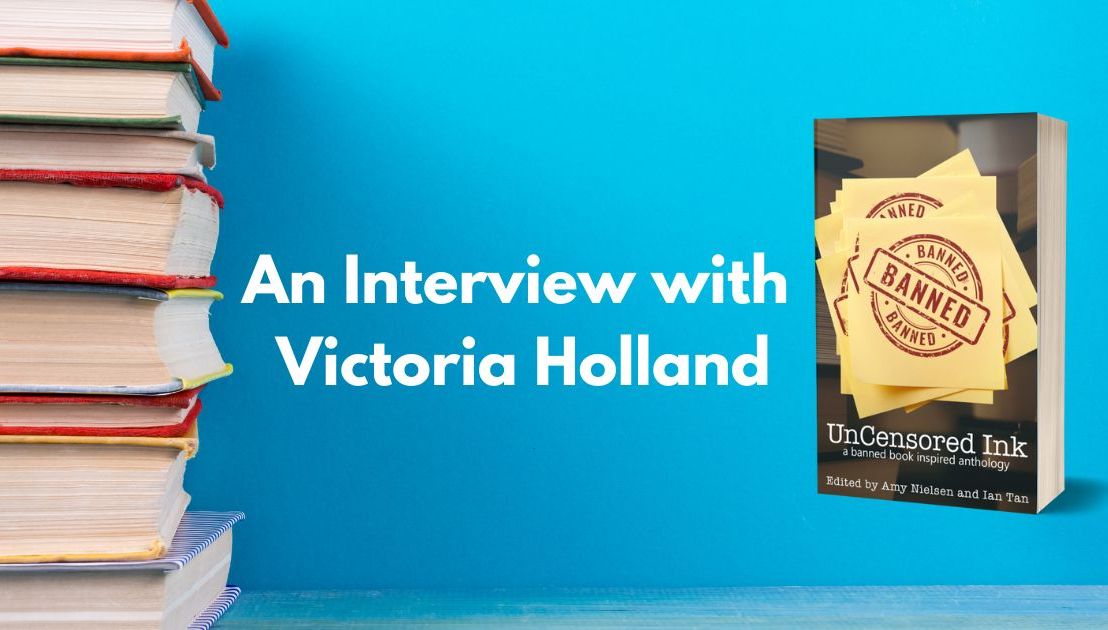
UnCensored Ink Interview – Victoria Holland

UnCensored Ink Interview – Victoria Holland

Hey everyone, 

Ian Tan here, lead editor and project coordinator of UnCensored Ink: A Banned Book Inspired Anthology, set to release this October 29. Here is the UnCensored Ink interview series to introduce you all to the incredible writers, as well as the local bookstores and libraries that gave them safe creative spaces. Hopefully you can put these incredible places on your to-visit list, and feel inspired to support your own local bookstore, library and indie authors.

Today I am with Victoria Holland from Massachusetts. She is a Pushcart Prize-Nominated Author for her work in I’m Not the Villain, I’m Misunderstood, as well as Lead Anthologist for The Carnation Collection. She has also published in multiple other collections including Into the Mirror and The Magical Muse Library Vol. 1 & 2. She is a romantic, daylighting as an activist and moonlighting as a witch and healer.

1. You’ve written a fine piece for UnCensored Ink: a banned book anthology. Can you give us a synopsis? How did the idea for this piece come about?

My piece is actually an essay! It gives a frank explanation of my belief that to censor the arts is to censor the human heart. The idea for this piece came along because when it comes to topics of activism, I don’t believe in beating around the bush. Expression of oneself and the creation therein is such an important part of the human experience. To censor that is to limit authenticity. In my life, I have experienced a time without authenticity and it just… not worth it. 

2. Now, we would love to know you more! What do you enjoy doing in your free time, what is your favorite book quote, and how did you get into reading and writing?

In my free time, I enjoy storytelling in all its forms (books, films, tv, video games, theater, etc.), studying magic and mythology, taking walks in nature, traveling, and hanging out with my friends at my local bar!

My favorite book quote… I don’t have one, as of present. Sorry to disappoint.

I got into reading and writing at 7-years-old after I saw the first Harry Potter movie and read the  novel it as based on shortly after. That took me all year! Then I wrote my first story, which was essentially Harry Potter fanfiction. It was called Emma Kenya and the Cursed Owl, which was basically a retelling of the first HP book lol
Since then, storytelling has become like a soul journey for me. All the stories I love have breathed life into my own stories, and vice-versa. My own imagination and inner world grew, and so did my skills as a writer. It became my escape and my happy place. I figured making it my vocation was the next logical step lol

3. Do you have a favorite local library or bookstore? Also can you remember bookstores and libraries from your childhood, if they are not the same as the ones now?

I don’t really. I was a big Barnes & Noble kid. I remember on my tenth birthday, my dad gave me $100 and said “Buy as many books as you can to fill up that bill.” It was one of the best birthdays I ever had!
I also have incredibly fond memories of the Scholastic Books Fairs at my school every year. It was one of the best days of the year and to be honest, I think I’d have even more fun at them today then I did then. 

4. Tell us more about this bookstore/library. What do you love most about it? 

The Barnes & Noble I attend is one of the bigger ones with multiple floors. When you walk in and look up, there is a balcony above that wraps around the whole store. The balcony in front of you is where the kids section is and they have it set up so that you always feel like you are walking into another world up there. There were other stuff at the store, fiction for adults, music, a café, and other stuff that a bookstore would usually have. But that kid’s section had bean bag chairs and a reading nook surrounded by paper-cut-out trees and a space where one of the booksellers would read new books to children in the area. I loved it there… such good memories.

5. What do you have to say on the importance of sustaining bookstores and libraries?

Despite the fact that I haven’t engaged much with my local bookstore scene, I have quite a lot to say on this topic. One of the better things about America is the public distribution of knowledge that at one time in human history was kept exclusively only to the higher classes. This concept—knowledge belonging to all—is exactly why we need to sustain local bookstores and libraries. 

Libraries, in particular, allow the every-person to be able to learn so much about the world in a way that emphasizes that basic right to knowledge. It being free is absolutely key. The more a person knows, the more they can empathize with the world around them. That is how healing happens. That is how positive changes happens! Libraries are one of the most beautiful things modern society has to offer.

As for independent bookstores, the sustenance of them is necessary because if some corporate behemoth comes along and consolidates all book sales for only their store, it sets a dangerous precedent for what could come next. Corporate bookstores have a direct link to very affluent, powerful people who could very well decide one day to police what books these stores sell. That would impact the general public, the publishing world, and little old writers like me in a really debilitating way! 

Power to the people is why sustaining bookstores and libraries is important. 

6. Do you have any projects that your current and future readers can look forward to?

On sale now is a Greek Mythology-inspired literary collection called The Carnation Collection; a lot of Goddess power in that book. I also just finished up a fandom project for the Frozen 10th Anniversary, a fanzine called Water Has Memory: A Frozen Decade and it is so good. I had such an incredible team for that and if I hadn’t, there was no way it could have been finished.

And as for now? I’m finally working on my novel again after a year-and-a-half. Without giving too much away, it is a spiritual fantasy novel following a young artist as she discovers the world of magic… and how it impacts, well, everything. Including her own life.

7. Lastly, what platforms can we find you? (Social media and websites are all encouraged, this is to highlight and champion you guys)

Well for a full list, people can check my linktree:
linktr.ee/victoriaholland

I can be found at @toriofthetrees on all my socials, but please check especially Instagram and Tumblr (where I have posted all my creativity and writing).

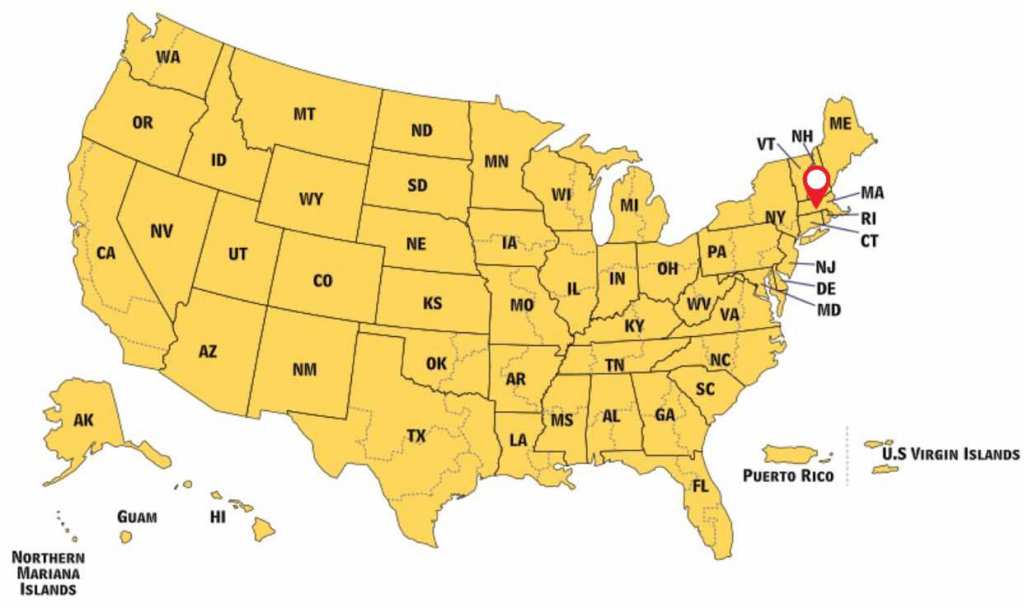
A map indicating Massachusetts

Well, that’s Victoria Holland from Massachusetts, everyone! Stay posted till the next one, a little lower in New Jersey.

Barnes & Noble

Amazon

The Hidden Gems of the Publishing World: Why Indie Publishers Might Be Your Best Bet

The Hidden Gems of the Publishing World: Why Indie Publishers Might Be Your Best Bet

By Torina Kingsley

In the ever-evolving publishing industry, authors have more choices than ever before. One option that has gained significant traction recently is working with an indie publisher. Independent publishers, often smaller than their traditional counterparts, offer a range of benefits that can make them a great option for lots of authors. Whether you’re a first-time writer or a seasoned author looking for a more personalized experience, an indie publisher might be the perfect fit.

Here’s why indie publishers are great:

1. Niches Don’t Scare Them

One of the most significant advantages of working with an indie publisher is the level of creative control you retain over your work. Unlike traditional publishers, who may ask for changes to make a book more commercially viable in the wide marketplace, indie publishers aren’t afraid of niches. Books that might be overlooked by larger publishers due to their niche appeal often find a passionate audience when published by an indie publisher with expertise in that area.

Many authors who’ve partnered with indie publishers have praised the freedom to maintain the integrity of their story, especially when it comes to niche genres or unconventional narratives.

If your book caters to a specific niche or a less mainstream audience, an indie publisher might be better equipped to market your work effectively. Indie publishers often specialize in particular genres or market segments, allowing them to target and reach the right readers more effectively.

2. You’re Not Just a Number

Indie publishers typically work with a smaller number of authors, which means you’re more likely to receive personalized attention throughout the publishing process. From editorial feedback to marketing support, indie publishers often provide a more tailored experience.

Authors frequently cite the close working relationship with their indie publisher as a key factor in their book’s success.

3. Faster Turnaround Times

The traditional publishing route can be notoriously slow, with timelines stretching from months to even years before a book sees the light of day. Indie publishers, on the other hand, are often able to move more quickly, getting your book to market faster.

Many indie publishers operate with streamlined processes, allowing for quicker decision-making and fewer bureaucratic delays. This efficiency can be particularly beneficial if your book is time-sensitive or if you’re eager to start building your author brand.

4. More Author-Friendly Terms

Indie publishers often offer more flexible and author-friendly contracts compared to traditional publishing houses. This might include better royalty rates, shorter contract terms, and the ability to retain certain rights to your work, such as audio or foreign rights.

Indie Publisher vs. Vanity Press: How to Tell the Difference

Not all publishers are created equal, and it’s important to understand the difference between an indie publisher and a vanity press.

What is an Indie Publisher?

An indie publisher, short for independent publisher, is a small, often niche-focused publishing house that operates independently of the major publishing conglomerates. Indie publishers typically offer traditional publishing contracts, meaning they don’t charge authors to publish their work. Instead, they invest in the production, marketing, and distribution of the book, earning their profit from book sales.

  • Key Characteristics:
    • No Upfront Costs: Indie publishers do not charge authors to publish their books.
    • Editorial Support: They provide professional editing, cover design, and other services as part of the publishing process.
    • Revenue Sharing: Authors typically receive royalties from book sales, and the publisher covers the production costs.

What is a Vanity Press?

A vanity press, on the other hand, is a company that charges authors to publish their books. Unlike indie publishers, vanity presses often make their profit from the fees paid by authors, rather than from book sales. While vanity presses may offer similar services to indie publishers—such as editing, cover design, and marketing—these services come at a cost, often with no guarantee of quality or distribution.

  • Key Characteristics:
    • Upfront Fees: Vanity presses require authors to pay for the publishing process, often with significant costs involved.
    • Limited Distribution: Books published by vanity presses may not have the same reach or distribution as those published by traditional or indie publishers.
    • Quality Concerns: Since vanity presses make their money from authors rather than book sales, there may be less incentive to ensure the book’s success in the market.

How to Tell the Difference:

To distinguish between an indie publisher and a vanity press, pay attention to the submission process and the financial arrangements.

  • Submission Process: Indie publishers typically have a selective submission process and do not require any payment from the author. Vanity presses, however, often accept all manuscripts—provided the author is willing to pay.
  • Contract Terms: Review the contract carefully. Indie publishers offer traditional contracts with royalties paid from book sales. Vanity presses, on the other hand, will likely include fees for services like editing, design, or marketing.
  • Reputation and Reviews: Research the publisher’s reputation within the industry. Indie publishers often have a track record of producing quality books and supporting their authors. Vanity presses may have mixed or negative reviews, particularly regarding the value of the services provided.

Do You Need a Literary Agent to Work with an Indie Publisher?

One of the first questions many authors ask when considering publishing options is whether they need a literary agent to work with an indie publisher. The answer isn’t always straightforward and largely depends on the specific publisher and your own goals.

When a Literary Agent is Beneficial:

While it’s true that many indie publishers accept direct submissions from authors, there are still benefits to having a literary agent. An agent can help negotiate the best possible contract terms, ensuring you retain valuable rights and receive favorable royalties. Additionally, agents bring industry expertise and connections that can open doors to marketing and promotional opportunities you might not access on your own. If you’re new to publishing or unsure about the nuances of publishing contracts, having an agent can provide peace of mind and ensure you’re not missing any key opportunities.

When You Might Not Need an Agent:

Many indie publishers pride themselves on being accessible to authors without representation, offering straightforward contracts that don’t require extensive negotiation. If you’re confident in your ability to evaluate a contract or if you’re working with a smaller press that offers fair and transparent terms, you might choose to go it alone.

Having a literary agent has advantages, but it’s not always necessary when working with an indie publisher. Evaluate your own comfort level with contract negotiations and consider the specific publisher’s reputation and submission process before deciding whether to seek representation.

While there’s no one-size-fits-all answer to the question of how to publish, the benefits of working with an indie publisher are clear. From retaining creative control to enjoying personalized attention and flexible contracts, indie publishers offer a compelling alternative to the traditional publishing route. If you’re looking for a partner who values your vision and is committed to your success, an indie publisher might just be the perfect choice.

Torina Kingsley has always dreamed of becoming a published writer. By the time high school came around, her mind was swirling with tales ready to be told. She finds inspiration for her stories from viewing things from a different perspective, including THE KING’S DECREE, a spin on the well-known Russian folktale, The Princess Who Never Laughed.

Kingsley believes that a great story needs to be relatable and completely captivating, dropping the reader into a whole new world. When she isn’t writing thought-provoking and socially conscious young adult stories, Kingsley teaches music and loves working with her students. She lives with her husband, two kids, and two rescue dogs in the Chicago area where she enjoys reading and spending time with her family.

Spooky Season is Upon Us: An Interview with Greg Jones

Spooky Season is Upon Us: An Interview with Greg Jones

by Bruce Buchanan

Not every good fright comes from phonebook-length novels. Horror poetry can deliver goosebumps and jump scares in just a few words.

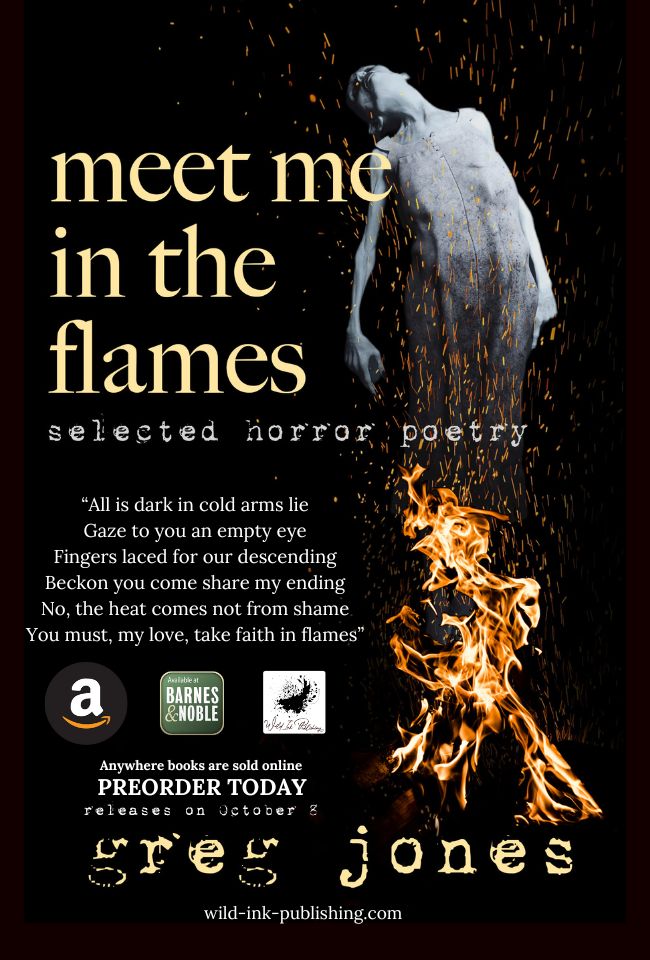
Take “Meet Me in the Flames,” an upcoming collection of dark poetry written by poet/author Greg Jones. In this Wild Ink Publishing collection, Jones not only taps into inspiration from such legendary horror authors as Edgar Allen Poe, H.P. Lovecraft, and Clive Barker, but he also draws upon the movies, comic books, music, and TV shows of his childhood.

The result is a tantalizingly terrifying book of poems.

1. Tell me about the stories and art that inspired you (or maybe gave you a scare!) growing up in the ’80s. What types of books/art/movies/music, etc. were you into?

I was fortunate enough to have parents that weren’t too strict on the content I was consuming. In this day and age, maybe social services would have been involved, but this was the 80’s. Anything went.

We were the first family to have a VHS player so our house was very popular. I grew up with John Carpenter, Wes Craven, early Spielberg and Lucas. I still remember seeing the second Friday the 13th at the drive in and having my dad move the car when I went to the bathroom. Saw Jaws when I was 7. The Thing blew me away. I think The Howling is the best werewolf movie ever made. I was seven when Star Wars came out. Ten for Empire. What an absolute perfect time to be a little boy.

The comics that were being published were incredible. Springsteen was on the radio. I would tape Spider-Man cartoons and Dr. Demento shows on my Kmart cassette recorder and listen to them until they wore out. My first concert was Weird Al.

I am still basically 12 years old. You ask me what inspired me back then?  Everything was an inspiration.

2. Why do people love horror so much? What is the appeal of a well-written scary poem or story, in your opinion?

What do we do right after we get scared and scream? We laugh. It’s a release. I think that is a big part of it . People like being scared and taken out of their comfort zones. They like being titillated. It’s fun.

If you can write a scene where people have to turn away or put their book down and turn off the light, you have achieved something. If you can elicit an emotional response like that with just the words you have written, not with images and sound and effects, but just words? That’s amazing.

I love reading something and then going back and reading it again because I couldn’t believe it the first time around. When you say “wait! Did I just read that?” And do a double take … that is a gift. That is what I strive for.

I posted a poem online a while back and someone commented simply” Wow”. I coasted on that one-word review for quite a while.

3. You recently wrote about meeting legendary author Clive Barker. What was that like, and what did it mean to you?

That was definitely a highlight reel moment for me. His appearance announcement came within minutes of me getting my first proof of cover art for “Meet Me in the Flames” so it seemed like fate. I have always been a big believer in giving credit where credit is due and if it weren’t for his writing and my discovering him at such a pivotal time in my life, I might not have ever had the desire to do this.

Books that were being written before he came on the scene were pretty tame and somewhat formulaic. I enjoyed them at the time, but his stories were so much richer and more imaginative and really kicked the door open for me as to what could be done in the genre.

Meeting him was a full circle moment for me. I know I will probably never have the chance to see him again but knowing he has samples of my writing and that we were able to have that interaction 20 years after we first met means the world to me.

When my collection is published, I plan on sending him a copy. Just knowing that my words might be sitting on his shelf somewhere makes all of this worthwhile.

4. What is your writing process like? Is there a certain place or time in which you like to write? And is your process different for poetry versus prose?

I’m not sure if I actually have a writing process. I pull inspiration from things I hear or see or phrases and words I come across. Something that may start out as a more tongue in cheek idea may morph into something more disturbing or creepy. It all depends on where my mind takes me. It sounds cliche but it’s the truth. It’s a lot of stream of consciousness type of thing.

I have a desk in my basement that I write at or I’ll go to a coffee shop for a few hours but mostly it’s on my phone for convenience sake. There is a list on it of ideas and fragments of ideas and poems that I have gotten to a certain point and may revisit in the future. I don’t discard anything because you never know when a thought might be recommissioned into something you never even imagined when you wrote it.

It’s fun to challenge myself to come up with new things or expand ideas into longer pieces. Eventually I would like to rework some of these into short stories to go along with story ideas I already have brewing. I don’t know if I have a novel in me but definitely a short story collection.

5. “Meet Me in the Flames” is your first book. What made you decide to do a book of poetry? And how did it come together?

I found myself a few years ago recuperating from a torn tendon in my arm and with some free time on my hands. I was into some newer Americana and folk music at the time and started writing songs with the intention of learning the guitar. A few good things came out of that but eventually, like most things, my attention started drifting toward darker material and the horror poems were born.

I had a goal to reach 100 poems and if I could hit that and have some content I was proud of I would submit them somewhere as a collection. I googled who was taking submissions and Abby at Wild Ink asked for a sampling since she was looking for a horror title to print. She loved the samples, asked for the rest of the collection and I found out she was interested in publishing them around the beginning of 2024.

I’ve been constantly writing and am working towards an even stronger second collection of poetry before trying my hand at some short stories.

6. How did you find Wild Ink Publishing on your writing journey?

This whole journey has been very surreal. I have heard of the trials and tribulations of getting published but honestly, I was not too keen on going the self-publishing route. I wanted the affirmation that goes with someone reading your work and saying “This is good enough that I want other people to read it. I believe in this.” That is what I have experienced with Wild Ink.

I realize how uncommon this is and I am extremely grateful for the opportunity. Everything right down the line has been handled with extreme professionalism and care and the fact that I still feel like this is MY book and it hasn’t been corrupted by someone else’s vision or agenda is the best take away so far. The community of creative people involved have been encouraging and attentive from the very beginning and I hope that other aspiring authors have the opportunity to get their work published in much the same manner.

7. I understand you also did the illustrations for this book! That is so cool – how long have you been drawing?

For as long as I can remember. I have always been a comic book fan from a very young age and spent my childhood reading, collecting, and drawing as much as humanly possible. I would spend hours hunched over a drawing table or any flat surface really and study techniques and anatomy and storytelling. I am proud to say that I am completely self-taught and everything I know how to do artistically came from those years.

I have had aspirations to be a comic artist, but it is a very hard field to break into, especially pre-internet and growing up in the Midwest. I still have a dream to write and draw my own comic and have the story all fleshed out so maybe sometime in the future we will be having a conversation about that.

Between the comics, the movies, the music, and the general carefree nature of the world during those decades, it was a hell of a fun way to grow up.

Preorder Meet Me in the Flames here: https://www.barnesandnoble.com/w/meet-me-in-the-flames-greg-jones/1145985867?ean=9781958531853

Interview by Bruce Buchanan

Bruce Buchanan is the communications writer for an international law firm and a former journalist. But he’s been a fan of fantasy and heroic fiction for most of his life. His influences range from the novels of Margaret Weis & Tracy Hickman and Terry Brooks to the Marvel Comics stories of Stan Lee, Jack Kirby, and Steve Ditko. Bruce has short stories appearing in the upcoming Wild Ink Publishing anthologies Tenpenny DreadfulsClio’s Curious Dash Through Time, and UnCensored Ink. He lives in Greensboro, N.C. with his wife, Amy Joyner Buchanan (a blogger and the author of five non-fiction books), and their 17-year-old son, Jackson.

An Interview with K.M. King

An Interview with K.M. King

By Bruce Buchanan

K.M. King has worn many hats—she’s been a journalist, a teacher, a business owner, a corporate trainer, a student of history, and a member of the U.S. Army.

She recently added one more line to her already impressive resume—Wild Ink author. Her novel The Bomber Jacket will be released on Aug. 20, 2024.

K.M. King has worn many hats—she’s been a journalist, a teacher, a business owner, a corporate trainer, a student of history, and a member of the U.S. Army.

When an American college student buys a World War II vintage bomber jacket, it sends here on a search to learn more about its original owner. Along the way, the veil between past and present becomes ever thinner.

You’ve said you fell in love with reading at a young age. Did that also extend to writing?

I always loved reading stories and creating stories in my head. The first writing I remember doing outside of schoolwork was in the little pink diary I got as a Christmas present in fourth grade. All through school, I was involved in writing for our school papers and was editor of our high school newspaper in my senior year. I loved all the writing assignments for English class. I had a hard time deciding whether to study English or history in college—history won.

As for writing fiction, that didn’t happen until I was in my mid-twenties. I was taking some business classes at a local college and signed up for a fiction writing class. I wrote a short story and got great feedback from my professor. The rest, as they say, is history.

It sounds like you’ve had some amazing career and life experiences. How have those experiences shaped your writing?

That’s a challenging question to answer. I think for me writing is so ingrained in who I am, I’m not always sure I can parse out what influenced my writing. Every job I’ve had involved writing, whether as a teacher, journalist, non-profit publication specialist, personal coach, or creator of staff development curriculum.

I’m essentially an introvert—like a lot of writers—and very self-reflective. I almost minored in philosophy in college. My journal, which I’ve kept from my early thirties, provides a space for me to ponder the inexplicable mysteries of life. I think I ponder those same mysteries in my fiction, through my characters, hoping they’ll give me the answers I haven’t found elsewhere.

How did the idea for The Bomber Jacket come to you?

I’ve always been fascinated by flying. Probably should have joined the Air Force instead of the Army! When I was stationed in Frankfurt, Germany, I used to go to the Frankfurt Airport and watch the planes come and go. Something about that planted the seed of a story about a pilot.

In 1997 and 2004, my husband and I took trips to Scotland, and among the places we visited was Drem Aerodrome, a former Royal Air Force base near Edinburgh. That seed, which lay dormant for more than two decades, sprouted into a Scottish bomber pilot from World War II. I began reading extensively about the RAF, and the characters crystallized during a trip to Scotland in 2011 with our oldest granddaughter, Zoe, who was 11 at the time.

I’m also interested in the idea that the veil between the past and present could be very thin. Spirits and ghosts have always fascinated me, and the possibility that spirits linger among us until they’ve completed whatever unfinished business holds them here helped shape the novel.

I am documenting the whole process of writing The Bomber Jacket on my website: www.kmkingauthor.com.

Were you interested in World War II history before you started this book?

Yes, definitely, both because I was a history major, and my father served in the Army in World War II. Like many of his generation, he never spoke about his experiences, except for a few succinct statements here and there when he was older. I’ve been reading World War II fiction and non-fiction for years and share my enthusiasm for history of all eras with my husband.

You’ve written other novels. What has been your biggest challenge in writing? And how did you ultimately overcome it?

I think my biggest challenge is I don’t just write in only one genre. I started writing novels in the early 1990s—a series of young adult fantasy books. Wild Ink is publishing the first of them, Jenna’s Journey: The Bronze Key in January 2025. I wrote The Bomber Jacket next; it’s World War II fiction.

I’m currently working on a three-book rom-com series with fantasy elements. I also have a mother-daughter generational story half-finished and the skeleton of an idea for a comic novel about a woman who gets obsessed with K-drama and K-pop. Nothing biographical there at all! 

I’ve yet to overcome this challenge.

My other challenge is imagining my books might attract the interest of a publisher, especially after 45 rejections in attempting to find an agent for The Bomber Jacket, let alone a publisher. I am astounded and incredibly gratified that Wild Ink has seen something worthwhile in my stories.

Getting published was always a dream, not a motivation for writing if that makes any sense at all.

What is your writing process like? And how has it evolved?

I have to say, my process is different for different kinds of books. But for every book, the motivation is the same: I have questions about life, about an experience I’ve had, about someone I’ve known, and I write to find the answers to those questions by giving them to my characters to grapple with. I don’t always like the answers they come up with; sometimes, I’m not even sure what question they are working out in their story. I often discover it when they do, sometimes at the end of the first draft.

With Jenna’s Journey, the story simply appeared, and I wrote it when it did. There were long periods of time when I didn’t work on it, except to edit what I had written. No wonder it took me ten years to write the four books.

With The Bomber Jacket, I did extensive research, character development and plotting, but still the characters sometimes did things I didn’t expect them to. Or the story took an unexpected twist or turn.

For all the books I write, I first tell myself the story. That’s the first, second and third draft. When I am satisfied that my characters have answered my questions, even if I don’t like their answer, then I’m ready to consider sending the story into the world and work with an editor or a writing group to hone it.

What tips would you give to new or aspiring writers?

I still feel like a new and aspiring writer, because every book is a new adventure and has its own unique challenges.

I’ve read and continue to read books on writing. I think some of the advice is awful. One famous writer, who shall remain unnamed, said unless you write every single day, you’re not a writer. Hogwash. Writing is unique to each writer– the process, the purpose, the story to be told. Discover what works for you.

I have learned that very often the first several chapters of a first draft are the backstory—what the writer is telling him/herself about the story. Finding where the story actually begins for the reader can take some work.

Also, work on your book for a while, have at least 75 pages or more written, and then join a writers’ group, but one with serious writers who give valuable and supportive feedback. Or find a developmental editor.

Anything else you want to mention, either about yourself or your novel?

I also teach journaling workshops and have written two workbooks which will soon be available on my website: Pen, Power & Possibilities: A Guided Journaling Experience to Expand the Horizons of Your Life and Time: Tyrant or Treasure: 11 Steps to Embracing Life in All Its Messiness.

Preorder K.M. King’s book, The Bomber Jacket, through Aaron’s Books here.

Interview by Bruce Buchanan

Bruce Buchanan is the communications writer for an international law firm and a former journalist. But he’s been a fan of fantasy and heroic fiction for most of his life. His influences range from the novels of Margaret Weis & Tracy Hickman and Terry Brooks to the Marvel Comics stories of Stan Lee, Jack Kirby, and Steve Ditko. Bruce has short stories appearing in the upcoming Wild Ink Publishing anthologies Tenpenny DreadfulsClio’s Curious Dash Through Time, and UnCensored Ink. He lives in Greensboro, N.C. with his wife, Amy Joyner Buchanan (a blogger and the author of five non-fiction books), and their 17-year-old son, Jackson.

The Facts and Fantasy of ‘Bestselling’ Author

The Facts and Fantasy of ‘Bestselling’ Author

by Marla Miller

Los Angeles author Joe Ide, a frequent speaker at conferences and seminars, is delighted with the success he has enjoyed since selling his first novel, IQ at age fifty-eight, delighted and making no bones about this when he addressed a room filled with writers at a recent Southern California writers conference. Few writers reach the heights of bestselling. Part of the magic motivating us to remain seated at our writing place includes nurturing the fantasy that our stories will someday resonate, too.

The dream of becoming a bestselling author is perfectly fine to dream. After all, at our core, writers are dreamers. But is this why we write stories? For fame and fortune? The answer is no and if chasing fame/fortune provides the only motivation, this segment of writers eventually moves on to other ventures.

Craft vs Business

We write stories because we have to write them and why Joe Ide’s keynote so resonated with me. In his time at the podium, Ide delivered many terrific tips about creating characters from our everyday living, echoing what we know about our tribe: at our core, writers are nosy. I videoed what I could and had to hear more so I attended Ide’s Sunday morning workshop. He did not disappoint. Ide talked craft, the creative side of publishing, co-mingling solid craft ‘pointers’ with the business side of publishing, sales and making money. Again, he pulled no punches, straight talk from his own experience about what bestselling means in terms of dollars and cents.

Defining Publishing ‘Advance’

Joe Ide’s  latest novel, The Goodbye Coast: A Philip Marlowe Novel garnered a six-figure advance. Sweet, right? Absolutely, and Joe wasn’t complaining as he broke down what the six-figure sum meant to his bank account. Some writers, likely those new to our tribe, don’t know that getting an advance from a traditional publisher requires the author to earn back that sum in book sales before seeing any more money from the publisher. Since Ide’s novel centered on a famous person, Raymond Chandler’s ‘Phillip Marlow’ character, permission to use this name came with a price. Raymond Chandler’s estate had to be negotiated with before Ide could publish his novel.  I don’t know what the estate required but when I negotiated with the Women’s National Team to write All American Girls: The US Women’s National Soccer Team (with full access to the team) that sum was 50% of a very nice advance offered by my publisher, Simon & Schuster. Joe Ide pointed out other facts: his agent’s take of 15% as well as Uncle Sam’s portion. All of a sudden, that six figure advance has a bit of a different context in reality.

Why Writers Write

Even before traditional publishing took a pummeling from the arrival of the worldwide web, writers have nurtured fantasies about bestselling books, national book signings, film options, TV interviews and oodles of money. None of these fantastical imaginings are rooted in facts. I share this story often in my workshops, a story told by one of my writing mentors, the founder of the Santa Barbara Writers Conference, Barnaby Conrad, a multi-published, bestselling author in fiction and nonfiction. In the early 1990’s, as we gathered for the opening night SBWC ceremonies, Barney announced that this SBWC session had attracted the greatest number of conferees in its (then) 20-year history. He asked us to look around the packed auditorium brimming with 400 writers and so we did. Then he said, “…At the most, one to three writers sitting here will be offered contracts from New York publishing.”  The audience let out an audible gasp to which he replied, “We write stories because we have to write them.”
Wisdom shared from a man who had enjoyed a storied career himself, Barnaby Conrad.

So, write on. That’s what we writers do.

Marla Miller segued to the writing life in midlife. Her writing credits includes editor-in-chief of a lifestyle magazine and books published by traditional and independent publishers. Her e-novel, Deadly Little Secrets is available on KDP. Her novel, SweetSpot: Now and Then, whose setting includes a writers’ conference, will be published by an independent press in Fall 2024.  Since 2003, she has delivered workshops at The Santa Barbara Writers Conference and The Southern California Writers Conference.

Where to find Marla Miller:

https://linktr.ee/Writersmama

MarlaMiller.com 

TikTok Twitter & Instagram:@writersmama

Medium

Facebook: Hooking Readers

Substack: writersmamasubstack

Amazon Author Page: https://bit.ly/4avJTRX