
By Bruce Buchanan
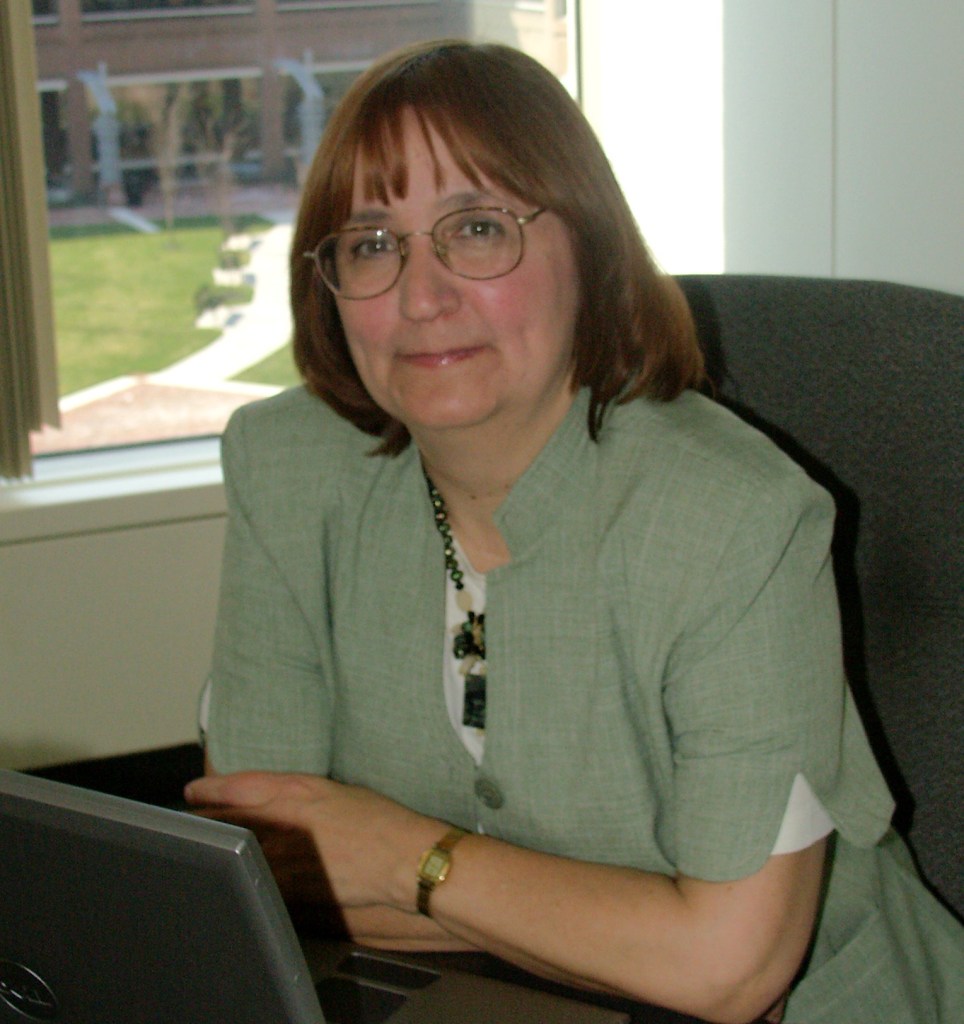
K.M. King has worn many hats—she’s been a journalist, a teacher, a business owner, a corporate trainer, a student of history, and a member of the U.S. Army.
She recently added one more line to her already impressive resume—Wild Ink author. Her novel The Bomber Jacket will be released on Aug. 20, 2024.
K.M. King has worn many hats—she’s been a journalist, a teacher, a business owner, a corporate trainer, a student of history, and a member of the U.S. Army.
When an American college student buys a World War II vintage bomber jacket, it sends here on a search to learn more about its original owner. Along the way, the veil between past and present becomes ever thinner.
You’ve said you fell in love with reading at a young age. Did that also extend to writing?
I always loved reading stories and creating stories in my head. The first writing I remember doing outside of schoolwork was in the little pink diary I got as a Christmas present in fourth grade. All through school, I was involved in writing for our school papers and was editor of our high school newspaper in my senior year. I loved all the writing assignments for English class. I had a hard time deciding whether to study English or history in college—history won.
As for writing fiction, that didn’t happen until I was in my mid-twenties. I was taking some business classes at a local college and signed up for a fiction writing class. I wrote a short story and got great feedback from my professor. The rest, as they say, is history.
It sounds like you’ve had some amazing career and life experiences. How have those experiences shaped your writing?
That’s a challenging question to answer. I think for me writing is so ingrained in who I am, I’m not always sure I can parse out what influenced my writing. Every job I’ve had involved writing, whether as a teacher, journalist, non-profit publication specialist, personal coach, or creator of staff development curriculum.
I’m essentially an introvert—like a lot of writers—and very self-reflective. I almost minored in philosophy in college. My journal, which I’ve kept from my early thirties, provides a space for me to ponder the inexplicable mysteries of life. I think I ponder those same mysteries in my fiction, through my characters, hoping they’ll give me the answers I haven’t found elsewhere.
How did the idea for The Bomber Jacket come to you?
I’ve always been fascinated by flying. Probably should have joined the Air Force instead of the Army! When I was stationed in Frankfurt, Germany, I used to go to the Frankfurt Airport and watch the planes come and go. Something about that planted the seed of a story about a pilot.
In 1997 and 2004, my husband and I took trips to Scotland, and among the places we visited was Drem Aerodrome, a former Royal Air Force base near Edinburgh. That seed, which lay dormant for more than two decades, sprouted into a Scottish bomber pilot from World War II. I began reading extensively about the RAF, and the characters crystallized during a trip to Scotland in 2011 with our oldest granddaughter, Zoe, who was 11 at the time.
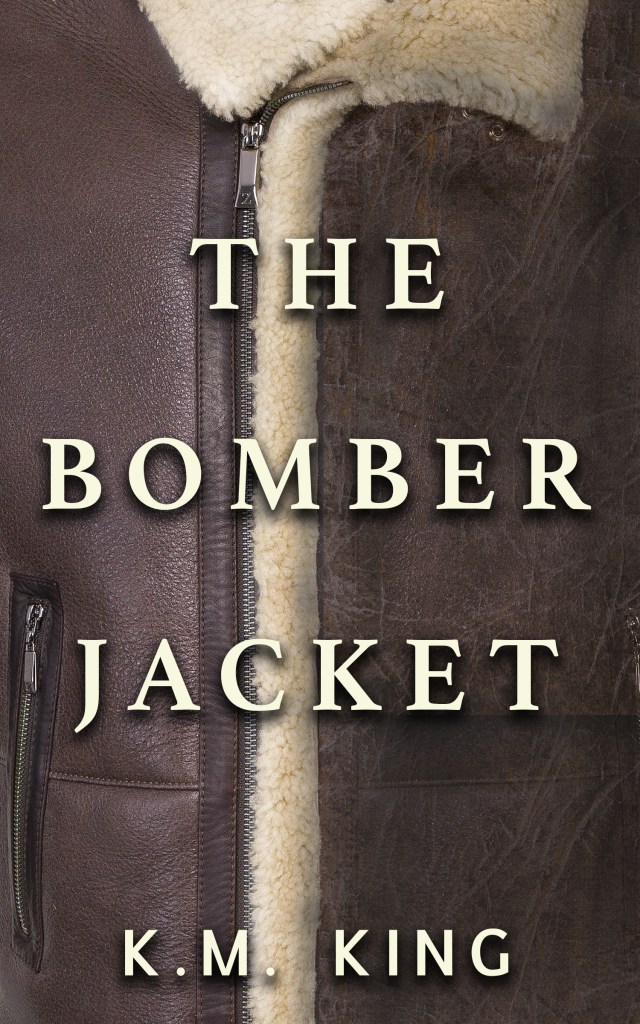
I’m also interested in the idea that the veil between the past and present could be very thin. Spirits and ghosts have always fascinated me, and the possibility that spirits linger among us until they’ve completed whatever unfinished business holds them here helped shape the novel.
I am documenting the whole process of writing The Bomber Jacket on my website: www.kmkingauthor.com.
Were you interested in World War II history before you started this book?
Yes, definitely, both because I was a history major, and my father served in the Army in World War II. Like many of his generation, he never spoke about his experiences, except for a few succinct statements here and there when he was older. I’ve been reading World War II fiction and non-fiction for years and share my enthusiasm for history of all eras with my husband.
You’ve written other novels. What has been your biggest challenge in writing? And how did you ultimately overcome it?
I think my biggest challenge is I don’t just write in only one genre. I started writing novels in the early 1990s—a series of young adult fantasy books. Wild Ink is publishing the first of them, Jenna’s Journey: The Bronze Key in January 2025. I wrote The Bomber Jacket next; it’s World War II fiction.
I’m currently working on a three-book rom-com series with fantasy elements. I also have a mother-daughter generational story half-finished and the skeleton of an idea for a comic novel about a woman who gets obsessed with K-drama and K-pop. Nothing biographical there at all!
I’ve yet to overcome this challenge.
My other challenge is imagining my books might attract the interest of a publisher, especially after 45 rejections in attempting to find an agent for The Bomber Jacket, let alone a publisher. I am astounded and incredibly gratified that Wild Ink has seen something worthwhile in my stories.
Getting published was always a dream, not a motivation for writing if that makes any sense at all.
What is your writing process like? And how has it evolved?
I have to say, my process is different for different kinds of books. But for every book, the motivation is the same: I have questions about life, about an experience I’ve had, about someone I’ve known, and I write to find the answers to those questions by giving them to my characters to grapple with. I don’t always like the answers they come up with; sometimes, I’m not even sure what question they are working out in their story. I often discover it when they do, sometimes at the end of the first draft.
With Jenna’s Journey, the story simply appeared, and I wrote it when it did. There were long periods of time when I didn’t work on it, except to edit what I had written. No wonder it took me ten years to write the four books.
With The Bomber Jacket, I did extensive research, character development and plotting, but still the characters sometimes did things I didn’t expect them to. Or the story took an unexpected twist or turn.
For all the books I write, I first tell myself the story. That’s the first, second and third draft. When I am satisfied that my characters have answered my questions, even if I don’t like their answer, then I’m ready to consider sending the story into the world and work with an editor or a writing group to hone it.
What tips would you give to new or aspiring writers?
I still feel like a new and aspiring writer, because every book is a new adventure and has its own unique challenges.
I’ve read and continue to read books on writing. I think some of the advice is awful. One famous writer, who shall remain unnamed, said unless you write every single day, you’re not a writer. Hogwash. Writing is unique to each writer– the process, the purpose, the story to be told. Discover what works for you.
I have learned that very often the first several chapters of a first draft are the backstory—what the writer is telling him/herself about the story. Finding where the story actually begins for the reader can take some work.
Also, work on your book for a while, have at least 75 pages or more written, and then join a writers’ group, but one with serious writers who give valuable and supportive feedback. Or find a developmental editor.
Anything else you want to mention, either about yourself or your novel?
I also teach journaling workshops and have written two workbooks which will soon be available on my website: Pen, Power & Possibilities: A Guided Journaling Experience to Expand the Horizons of Your Life and Time: Tyrant or Treasure: 11 Steps to Embracing Life in All Its Messiness.
Preorder K.M. King’s book, The Bomber Jacket, through Aaron’s Books here.

Interview by Bruce Buchanan
Bruce Buchanan is the communications writer for an international law firm and a former journalist. But he’s been a fan of fantasy and heroic fiction for most of his life. His influences range from the novels of Margaret Weis & Tracy Hickman and Terry Brooks to the Marvel Comics stories of Stan Lee, Jack Kirby, and Steve Ditko. Bruce has short stories appearing in the upcoming Wild Ink Publishing anthologies Tenpenny Dreadfuls, Clio’s Curious Dash Through Time, and UnCensored Ink. He lives in Greensboro, N.C. with his wife, Amy Joyner Buchanan (a blogger and the author of five non-fiction books), and their 17-year-old son, Jackson.

 Wild Ink Publishing