Category: Uncategorized

Talking with William J. Connell

Talking with William J. Connell

by Abigail Wild and William J. Connell

What sparked the idea for your current Wild Ink book?

    My current book is “Masks of Death.” The idea for it came from people who read drafts of my upcoming book, “Race with the Black Death.” People liked “Race” but had questions about the protagonists and the events leading up to the story. I thought I had set up enough hints about the past, but when I discussed it with friends, they suggested it could be its own story.  Thus, Masks of Death was started!

    How do you approach writing on days when inspiration feels thin?

    Different ways. Sometimes I put it aside and address my legal work, or exercise, or have fun with family.  Basically, walk away from writing fiction.  If I have stretches with “Writer’s Block,” then I might sit down and start writing a scene that is clear in my mind.  Doing that often helps me work both forwards and backwards around the scene. At that point, the story will write itself.

    What part of your book changed the most during revision, and why?

    In both books, it was the characterization of the protagonist turned antagonist, Elizabeth Malatesta. She is a sentient flesh eater, what is called a “Zombie” in some circles. I envisioned her as a ruthless antagonist, and a bit crazed by her sickness. While writing the first book with backstory, I began to see her more as a person who was manipulated and conflicted.  Even when she’s turned into the full-on villain, I found moments to show she retains a shred of humanity.  I found what I think are interesting ways to show this. She is cold and calculating, but on occasion will show a sliver of mercy. Elizabeth  has a sense of fairness, but it is fairness from her viewpoint.

    What do you hope readers carry with them after finishing your work?

    I hope readers find these books to be exciting reads, and that they become immersed in the world of western Europe during the Black Death plague. The story is fictional, but I sprinkle it with known characters from literature of the period (all in the public domain, of course). The superstitious elements are fantastical, but I tried to depict what everyday life was really like during the period, along with the very real and frightening effects of what they called “The Great Mortality” – minus the fleshers, of course. 

    Is there a scene or moment in the book that feels closest to your heart?

    There is a scene where Elizabeth finds a young flesher, a girl, who is sentient, like Elizabeth, though not as strong. The child does not really accept she is “undead.” This is one of the scenes where Elizabeth shows traces of her humanity.  The child was going to disappear after the scene, but in writing it, she became too strong a character. She remained a significant secondary character throughout the book (and if I am not giving too much away, she is there I the third and final book as well).

    What book or writer shaped your voice in a way you still notice?

    Really hard to pick one. I am fascinated by supernatural/horror themed stories set in the past, like “The Masque of the Red Death.” I think the books in the “Black Death Tales” series are influenced by Edgar Allan Poe and Giovanni Bocaccio, who wrote “The Decameron.” That book is a collection of stories written during the time of the plague and offers fascinating insights into life during that time.

    What are you working on now, and how is it taking shape?

    I am working on the final edits for “Race with the Black Death.” I really love the action and pace of the story. There are two races going on with two distinct groups, both  of whom are just trying to survive as the plague spreads in a northwest direction. I hope readers like the world-building and get caught up with the characters! I also hope we get enough readers to bring the survivors back in Book 3, which concludes the “Black Death Tales” series!

    Meet William J. Connell here.

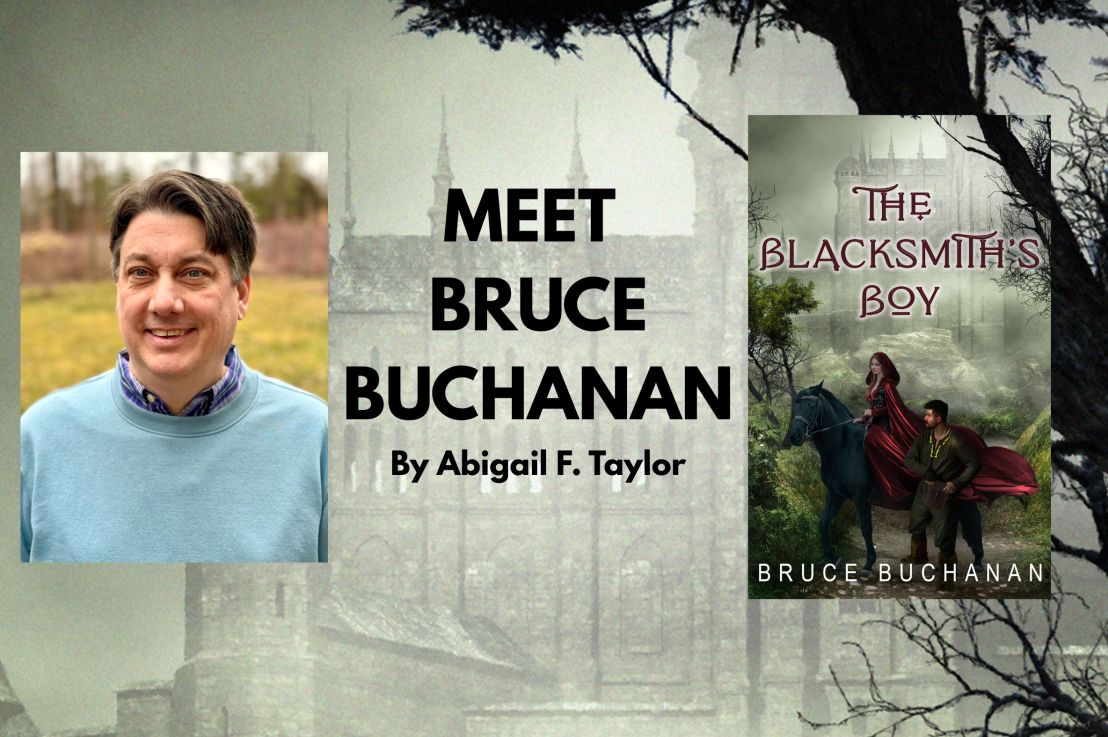
    Meet Bruce Buchanan

    Meet Bruce Buchanan

    By Abigail F. Taylor

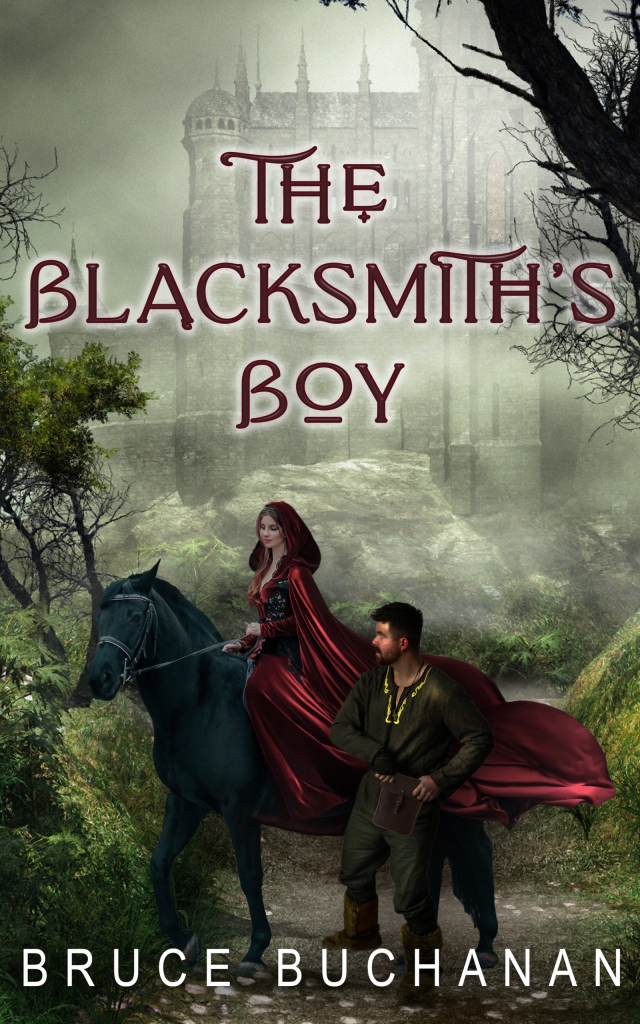
    In anticipation of his upcoming YA debut, I sat down with Bruce Buchanan, an Associated Press award-winning author. What unfolded was a fascinating chat into his process, the characters & worlds he creates, and how he made his start. His next two books, THE BLACKSMITH’S BOY and THE CERULEAN BLUR are both signed to Wild Ink Publishing.

    1. Do you remember the first story you wrote? How old were you?

    I’ve always loved making up stories as well as reading them. When I was in elementary school, I used to write and draw my own comics. Now, I’m a terrible artist, so I named my hero “Stickman” to explain why he and everyone in his world were stick figures. That’s all I could draw!

    2. In your upcoming novel, The Blacksmith’s Boy, Bok comes from the peasant class and later meets a friend in Isabella, who is a member of the royal family. How important does class play in the narrative, and how do you think it mirrors the growing divide in today’s society? 

    Class divisions are both a big plot point and a key theme of The Blacksmith’s Boy. In the fictional country of Imarina, people are born into one of three social classes: Noble, Landowning, or Serving. According to Imarina’s centuries-old laws, people in the Serving Class can only hold certain jobs and only own a small amount of land. Most notably, only members of the Noble Class can be born with the ability to perform High Magic—sorcery, in other words. At least, that’s what everyone in Imarina has been taught to believe.

    Bok comes from the lowest point on the social ladder. Isabella is literally at the top—she’s the Crown Princess. But circumstances throw them together, and they develop a deep and strong friendship. However, Bok is always aware of those class differences.

    Isabella is a reformer at heart. But her desire to make Imarina a fairer place for the Serving Class isn’t as easy to make real as she’d hoped. I’ve always thought that speculative fiction works best when it says something about the real world, and I think readers will understand those parallels when they read the book.

    But The Blacksmith’s Boy is first and foremost a fantasy adventure! The other stuff is there for those who want to think about it. But if you just want an exciting adventure, you’ll (hopefully!) find it here.

    3. Are there places in The Blacksmith’s Boy that you found difficult to write? How did you push through?

    Not so much scenes, but I originally had the idea for this book years ago! I started a draft when my son was young, and life got in the way. More to the point, I didn’t have the time management skills I needed to be a novelist then. I wrote a few chapters and some notes back then and put it aside.

    I came back to my unfinished (very) rough draft and notes in early 2023. I kept a little bit, changed a lot, and added a ton. This book has been through so many drafts and revisions, but I finally got it to where I’m happy with it. After all these years, I’m going to share my debut novel with the world. It honestly doesn’t seem real sometimes.

    4. You’ve written a fair few short stories as well. How do you know when a story will end up as a short or as a novel? 

    Good question! I don’t have a formula, really. It’s more of a gut feeling of, “How many words do I need to tell this story?” I do outlines before I start writing either a short story or a novel. But my novel outlines are much more detailed, for the simple fact there’s so much more to write.

    I like writing short stories as a break between bigger projects. You get that satisfying feeling of finishing a piece in just a few days, whereas a novel will take months (or longer).

    5. Your next novel, The Return of the Cerulean Blur, is set to hit the shelves next year! What challenges did you have transitioning from a high fantasy world to a modern-day one with superheroes? Would Bok and Isabella ever catch a drink with Susan Murphy, or would it be like Oil and Water?

    For starters, The Blacksmith’s Boy is written in third person past tense, while The Return of the Cerulean Blur is in first person present. So that was a change – as I wrote the second novel, I found myself slipping back into third person past because I’m so used to it.

    But The Return of the Cerulean Blur was a lot easier to write, because it is rooted in the real world. Susan Murphy is a parent, works at an office job, has to pay the bills, etc. These are things I certainly can relate to a lot more than being a Serving Class healer or a crown princess! 

    And I love the idea of Bok and Isabella meeting Susan for a drink. Despite the age gap (Susan is mid-40s, while Bok and Isabella are both 19), they’ve all had to look deeply inside themselves to figure out what they’re made of. And all three are genuinely good people who want to do right by others.

    6. The protagonists in your books are fighting against impossible odds. What would you like readers to take away from the experiences they’ll face? 

    To me, what makes a hero is their willingness to try to do the right thing, even when it is hard. Whether they succeed isn’t as important as the effort. Bok and his friends get put to the test. They fall short sometimes, but they learn and grow. Hopefully, readers will enjoy and appreciate the ride!

    7. What writing advice did you receive at a young age that has stayed with you throughout your journey?

    Keep writing. You only get better at writing by writing. It’s so easy to get discouraged, but don’t give up. You have stories to tell, and only you can tell them.

    Abigail F. Taylor, Texas Poet & Novelist.

    abigailftaylor.wordpress.com

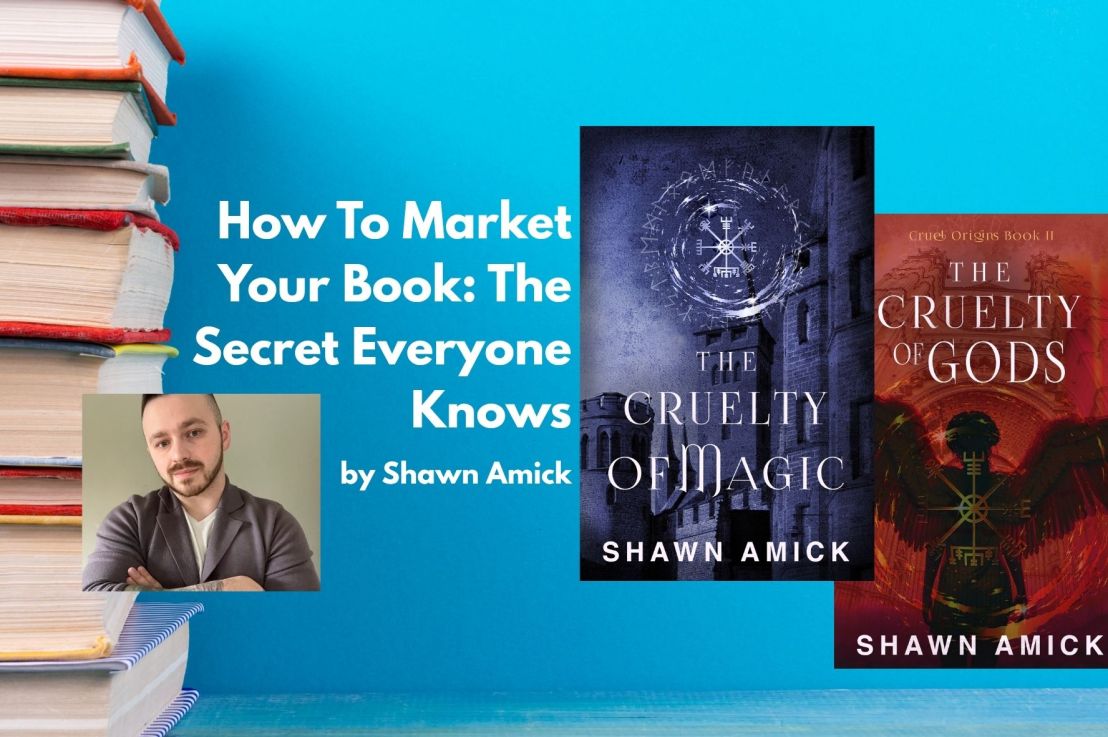
    How To Market Your Book: The Secret Everyone Knows

    How To Market Your Book: The Secret Everyone Knows

    By Shawn Amick

    This will probably not be your typical marketing advice, but I also haven’t had the typical career one might associate with being an author.

    In short, here’s my message: inspiration is a fleeting emotion, but discipline is a reliable system. 

    Writing and marketing both require discipline to be consistent. Inspiration is just how you get started. 

    The first thing you need to do is define your value proposition; in other words, what are you giving the audience in exchange for them caring about what you have to say?

    The Beginning

    At the start, I knew I needed focus, so I picked three platforms: TikTok, Instagram, and Substack. These were primarily going to be the platforms I posted on every day to grow my community. 

    How did it go? TikTok got all the focus, and I was horrible at everything else. There was a point where I abandoned every other platform for the sake of mastering TikTok, and I’d hardly say I’m an expert. 

    I created a sign-up sheet and posted an announcement saying I would interview any author looking to grow their audience. It blew up. Hundreds of authors signed up within the first few weeks, and I instantly needed a team behind me to meet the demand. 

    Those interviews continued for over a year, leading to the creation of a podcast and Discord server. Now, after some time, for my own mental health, I stepped away from this, but never stopped supporting other authors.

    I just needed to find supportive vessels that took less time from my own family and work. So, I did spotlights and got people very excited for them. Once again, I didn’t gatekeep. Anyone could participate. 

    I featured folks in newsletters, did partnerships with bookstores looking to carry indie books, and created sign-up sheets for everything I did to make a newsletter. All of this eventually led to constant introductions to professionals in the publishing industry. More importantly, it led to knowledge of the publishing industry, which I have always shared. 

    My brand has always been transparent growth within the publishing industry. People follow me to learn so they can grow themselves. 

    Did I ever claim to be the expert? No. I brought in the experts. I did interviews with Literary Agents and Publishers. I brought in editors with long tenures in the industry. More recently, I’ve opened discussions with distributors and warehousers to demystify the process of moving away from Print-on-Demand (POD) in favor of wholesale structures, though the latter is certainly a hard thing to accomplish due to financial barriers. 

    Simply put, as I grow, so too does the audience of authors who follow me.

    I share how to be successful as an author on the small scale—book signing events and how to schedule them—all the way to large-scale efforts like distribution, contracts, querying, gaining interest from literary agents, and tons more. 

    My first day considering my brand, I knew one thing was true: authors read. Thus, I’ve tried to be of value to every author I know. Moreover, I made sure to be consistent. If you follow me across a multitude of accounts, you’ll see 5-10 pieces of content from me, daily.

    I keep it close to the 80-20 rule: 80% of my content is about providing value to the audience, 20% is about my own product. 

    What Happens When The Content Doesn’t Work?

    If you pay attention to my content over a long period of time, you’ll notice one very important thing… it changes. 

    My theme has always been the same—growing as an author. But how I’ve gone about that content has changed. I used to interview two authors a night, seven days a week. Now I have one huge BookTok festival planned for August with hundreds of authors looking to participate. 

    I share more about publishing advice than I do about writing, but at one time I posted about the craft itself far more (this will be changing soon, new project in the works!) 

    Your analytics are your friend, and your views scream a message. No views mean no interest. No engagement means no interest. If it’s not working, then try something new, and try often. 

    My advice? Flood the market with content until something starts to work. Also, make sure you enjoy the content. When your brand is exhausting to maintain, then it will fail, trust me. There is a balance to be found between content you enjoy making and something the audience will resonate with.

    It’s your job as a creative to find the compromise with your audience and to reliably deliver content. Every. Single. Day.

    When Do You Stop Marketing The Book?

    You don’t. Book two of my epic fantasy series releases on August 26th. I’m still talking about book one. I’ll still be posting and talking about book one when book three releases. And I’ll still talk about book one when my next project, an entirely different fantasy, is on query. And I’ll still be talking about book one of this current fantasy series when I get the next book deal, and still so when that book hits shelves. 

    Did you know the Mistborn series by Brandon Sanderson didn’t hit a commercially recognized bestseller list until December 2024? That was all BookTok talking it up. The Final Empire was released in 2006. That means it took 18 years before one of Brandon Sanderson’s most well-known works hit a bestseller list, all because he never stopped talking about it, and BookTok heard him.

    Shawn Amick is the author of the Cruel Origins series. The Cruelty of Magic, book one in the series, was initially self-published before being acquired by small, independent press—Conquest Publishing. Book two in the series—The Cruelty of Gods—is on pre-order for $0.99 and releases on August 26th. 


    Check out his writing, projects, and more here! He’s launching a new Writer’s Group focused on growing your career as a professional writer soon.

    Getting to Know Wild Ink Author C.R. Reece

    Getting to Know Wild Ink Author C.R. Reece

    By Emily Groff

    Knowing you want to be a writer but fearing that you may not be good enough is exactly the thought that ran through Courtney (C.R.) Reece’s mind. While it took time to overcome her fear, she has officially become not only a writer, but a published author (one of the three things she loves). The other two are spending time outdoors and with her family.

    Courtney has three dogs, two beautiful daughters, and a loving husband. Her world is writing and being a stay-at-home mom. She was gifted in teaching high schoolers English, but loved spending time with her kids and writing more. It felt only right to be doing the things she loved most. Meet Me in the Woods is her first YA novel, and we can’t wait for you to read it.

    Tell us what your book Meet Me in the Woods is about.

      Meet Me in the Woods is about a teen girl, Lowen, who accidentally breaks an ancient curse that brings quite a few supernatural beings to her doorstep, including Sebastian and Wesley–two faces found in nineteenth-century photographs. She, along with two of her best friends, using alchemy, telepathy, and witchcraft, must figure out who is following Lowen and murdering teen girls who look just like her, before Lowen becomes the next victim. 

      How did you begin writing Meet Me in the Woods, and what gave you the idea?

        The idea came to me while hiking in the woods with my dog, Teddy. Being alone on the trails can be a little unsettling, so I let my mind play out my most outlandish daydreams. I would spend hours plotting while walking through the woods, and then would go home and draft those ideas.

        Why should readers read your book? What is your target reader for each book?

          I think readers will be surprised by the depth each of these characters encompasses. It truly is an ensemble cast of vulnerable, slightly broken souls who are still finding their own unique ways to care for others. This book is meant for young adults, 13-18. 

          What are you most excited about with the release of Meet Me in the Woods?

            I’m excited for readers to (hopefully) experience the quaint and slightly creepy town of Moon Creek the way I imagine it in my head. My hope is that someone will connect with one of these characters and feel a sense of being seen and valued in the process.

            When did you first know you wanted to start writing? What got you interested?

              If you ask my mother, she’d say I’ve known my entire life. As for me, it’s taken me a while to believe in myself enough to go for it. I’ve always had my nose in a book and have always written for myself, but only in the last few years have I pushed myself to write novels.

              What genre do you tend to write in? Does it differ from what you typically read?

                Meet Me in the Woods is a YA Paranormal Romance, but my second manuscript is Women’s Fiction with Speculative elements, and my third is an Adult Crossworlds Fantasy. All three may seem very different, but they all contain magic and all focus on women facing their literal and metaphorical ghosts. I love to read everything, but I am drawn to Fantasy and Women’s Fiction the most.

                What is your writing process like? Do you have any particular tips, methods, or writing strategies that help you?

                  I am definitely a panster, no matter how much I want to be a plotter. Even if I create an outline, I inevitably end up veering so far off course, so I’ve learned to embrace the magic of surprise. The method that works best for me is to write from beginning to end, giving myself a word goal each day. I use Save the Cat Beat Sheets to make sure I stay on course with a sound structure, and then I let ideas flow.

                  Tell me a fun fact about you.

                    I have eleven tattoos, and the orca on my arm is my favorite. 

                    Click here to find locations to purchase Meet Me in the Woods.

                    Learn more about Courtney (C.R.) Reece here, https://wild-ink-publishing.com/courtney-reece/

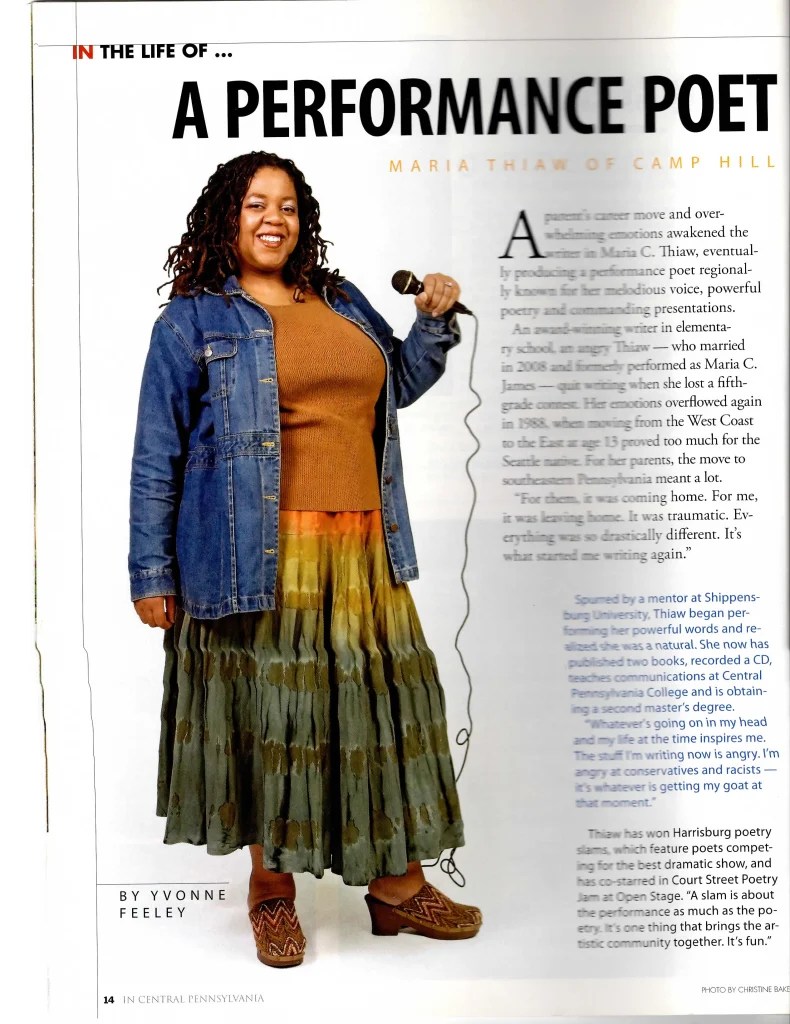
                    Meet Maria James-Thiaw, a WIP Poet

                    Meet Maria James-Thiaw, a WIP Poet

                    By Emily Groff

                    How do you decide to become a poet? For Maria James-Thiaw, it was easy. She has known she was a poet since the age of four–it only took her learning the alphabet to string words together to make beautiful lyrical pieces. By the age of seven, she had gone to share her poems on her father’s TV show, making herself and her work known. She has since become an award-winning poet, performer, and playwright.

                    Maria James-Thiaw performs and writes to seek justice. With her Reclaim Artist Collective, she is working hard to bring her American Griot Project programming to marginalized communities. She aims her goals high and never plans on abandoning them. Learn more about Maria James-Thiaw and her poetic journey in this interview.  

                    When did you first know you wanted to start writing? What got you interested?

                      I decided to be a poet when I was 4. Of course, I didn’t know how to write, I barely knew the alphabet. I saw my father reading his poetry to others, and I decided that when I learned my letters, I would make up poems. I wrote my first collection of poems at the age of 7 and won the Seattle Pacific University Young Writers’ Conference.

                      Tell me about your poetry book: Count Each Breath.

                        A healthcare system built on bias and inequity, a system of policing that snatches our sons & daughters from our arms, and a pandemic painting a target on our backs–this is 2020 through the eyes of a black woman with chronic illness. If you’ve ever been dismissed, ignored, suspected, or accused by a healthcare provider, you will relate to these verses.

                        Why should readers read your book? What is your target reader for each book?

                          If you’ve ever been dismissed, ignored, suspected, or accused by a healthcare provider, you will relate to these verses. Women of color and mostly women but anyone dealing with autoimmune diseases can relate to this. One reviewer said this would be the most important book you’d read this year. I believe that is because people have been struggling to understand what it means to be antiracist and what other groups go through. They are trying to connect despite our differences. Books like mine help folks feel connected.

                          What were you most excited about with the release of Count Each Breath? What did you want your readers to get out of it?

                            I want them to understand that they were not alone. I also want them to be aware of healthcare disparities and some of the challenges black women faced during the pandemic and continue to face.

                            How do you get the idea to write these poetry collections?

                              Unlike a novel, you don’t necessarily decide to write a poetry book and write it from beginning to end. As we went through the shutdown, the racial uprising, the chaotic presidency, QAnon and all the idiocy on the Right, I wrote poems. I don’t think I decided that I had enough for a collection until the end of the year. Then I put it in order.

                              Is there a common theme that you tend to write about? Why that specific theme? What works have influenced this?

                                I tend to write in social justice and cultural themes. My favorite poets include Patricia Smith, Langston Hughes, Lucille Clifton, Maya Angelou, Nikki Giovanni, and Sonia Sanchez, among others. 

                                What is your writing process like? Do you have any particular tips, methods, or writing strategies that help you?

                                  I teach Creative Writing, and I have a lot to offer individuals who take my classes and workshops. I think if you want to write, just do it. Don’t ask permission or wait. You don’t know how much time you have. Just do it.

                                  When I write choreopoems, I first conduct oral history, then save that story, relisten, and write it in poetic form. I weave the poems together to make a cohesive story. I call this historiographic poetics. My first topic was women who remember the Jim Crow era. This choreopoem was called “Reclaiming My Time: An American Griot Project.”

                                  You do a lot of public speaking. Were you ever scared to speak publicly, or did you find public speaking to be the best way to make a change and share your work?

                                    I’ve always been comfortable on stage. My dad, Richard C James III, first put me on his TV show, “Over The Back Yard Fence” to read my poetry when I was 7 years old. In college I recited poetry during a big cultural festival we had and got a standing ovation. I was hooked. When I was 18 my dad had me read poetry from my chapbook, Windows to the Soul for the state House of Representatives. I got a standing ovation that day as well. I have learned techniques and tips along the way that make my readings and speaking better and more engaging for audiences.

                                    Great readings sell books. When I share my book, people buy books from me. Some folks will listen to a reading even though they won’t read poetry themselves. It reaches a broader audience.

                                    You are the president of Reclaim Arts. What does this position look like for you and why is this position important to you?

                                      I founded Reclaim Arts LLC as a means of getting all of the artistic things I do under one umbrella. I produce plays with community partners and sponsors, I conduct the American Griot programs for groups of students, teaching them about oral communication and writing. I also promote and sell my published books. The newest part of Reclaim Arts is “The Promenade.” Through the Promenade (A nod to a poem I wrote for HairStory: Reclaiming Our Crown), I sell ancestral arts from West Africa including masks, paintings, statues, sculptures, and wearable art. I acquired much of the inventory from my late father, Richard James III who passed away in November. The Ancestors are an important piece of the plays I’ve written and so I feel like it just makes sense to bring them under the Reclaim Arts LLC umbrella. It also helps my mother as she downsizes and navigates her new reality.

                                      You have a choreopoem titled Hair Story, which is a play written in poetic verse that got article recognition. What was it like writing that? Why did you choose to write it as a play? How did it feel to get article recognition?  

                                        We actually got a lot of media coverage. We were on the news before and after the show. We were covered by the Burg and had a review in Broadway World. That was very exciting. It helped with marketing and I felt good about the compliments given by the reviewer.

                                        Hairstory: Reclaiming Our Crown was the second chorepoem In the American Griot Project. In this project I write poems in response to oral history interviews. The topic for HairStory was African textured hair discrimination. After gathering the stories, I translate them into poetry and then I weave the poems into a cohesive story.

                                        Tell us more about you–give us a fun fact about yourself!

                                          I’m a mother of two boys on the autism spectrum. They’re brilliant and they’ve taught me a lot. I am writing a choreopoem about parents of color with kids on the spectrum. I’m hoping to have it ready for the Harrisburg Fringe Festival in 2026.

                                          To learn more about Maria James-Thiaw, visit her website, https://mariathepoet.com/.

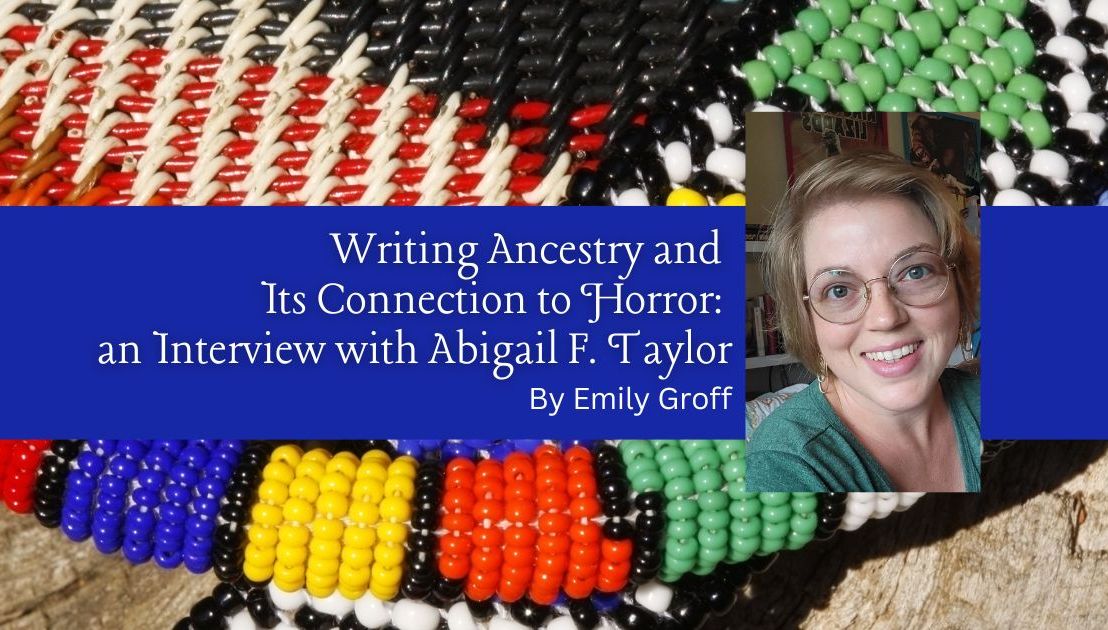
                                          Writing Ancestry and its Connection to Horror

                                          Writing Ancestry and its Connection to Horror

                                          By Emily Groff

                                          We all have a family heritage and a need to share our culture. But are we allowed to? Abigail F. Taylor wondered the same thing when she began writing. She still struggles with overcoming whether she is fit enough to write about her culture, but she’s tried, and she shares why it is important to write about her culture, and how to do it. Abigail shares her story through horror, a genre that is important to her and most compelling.

                                          You say, “It’s (horror) a chance to have revenge when the system fails victims and it’s an opportunity to explore different perspectives and cultures.” You are from an indigenous heritage. Do you write in horror to specifically explore your cultural background and make readers more aware of your culture?

                                            It’s not that I set out to make readers aware of native stories. It’s simply that I grew up with them and didn’t see a lot of it represented in the media when I was younger. We have our hallmark, such as Smoke Signals, but for a long time, we didn’t have native stories written by native people. So, diving into more of the folk side of horror was really about me wanting to share things I thought other people might find as interesting as I found them. The “exploration” doesn’t come so much from me, the author, as it does from the reader. Horror is a lot more inclusive and widespread with its genres. So, readers will come across backgrounds and communities of characters that they wouldn’t necessarily see on the mainstream. Growing up in a conservative household myself, horror was a place where I could find progressive thoughts and ideas that weren’t readily available.

                                            You say you struggled for a long time about whether or not you had a place in talking about indigenous issues and avoided it for a long time because you didn’t feel ‘enough’. Can you explain why you felt this way and how you overcame it?

                                              It’s something I’m still working on, and I don’t think I’ll ever overcome it. Much of the reason is because of culture. As a child of divorce, I was deprived from half of my family. When visits are far and few between, the focus is really on the immediacy of things, the in-the-moment experiences, because you don’t know when that chance will come again. Diving into family and genealogy took a backseat. I would live and exist around my Mexican and Choctaw-Chickasaw relatives a handful of times throughout the year. I didn’t realize there were things that were culturally unique to us until I was much older. I was raised predominantly by my white, Southern Baptist family, in a middle-class neighborhood, and not on or near the rez. I am blonde and blue-eyed. So, I’m not really the first person on (literally) face value that people would want to hear from when they want what they think of all things indigenous. There are many things in this community where it isn’t my place to talk but to simply listen, learn, and be an ally. Yet there are also aspects unique to me and my family that I feel more encouraged to write and discuss as I get older. Finding that balance is where the ‘am I enough?’ comes into play.

                                              How do you show your ancestry in Maryneal and in A Home in Tishomingo? Do you express it in different ways?

                                                In Maryneal, 1962, I hint that my main character, Delah, and her sister, Kitty, are mixed. There are several easter eggs hidden throughout to suggest this. She herself, however, believes she is white because her mother is gone and her father is all she has. This is a choice he has made for his children to help them advance in a divided society. In doing so, he protects his children, but he robs them from an important aspect of their identity. This was not uncommon for a lot of children growing up in that era. They lost language, culture, and a sense of self because so many people were worried about their children being taken away from them and thrown into Indian Boarding Schools or murdered (often both).

                                                For A Home in Tishomingo, I dig in deeper since there is no hiding the identity of these characters. It was a chance for me to explore old traditions and languages that are no longer used or hard to come by. More importantly, I had a chance to use the materials we have today that provide explanations of mental health and generational trauma that weren’t accessible in the 1920 & 30s. I could give better understanding and reasoning to the behaviors displayed that inspired the more difficult scenes in this book. One of my favorite things was creating ‘the other woman’. My main character, Skunk Lowery, is heavily inspired by my great-grandfather. Corinth is inspired by my great-grandmother, but she had a tumultuous sister-wife relationship with an unknown woman. Between the two of them were roughly 24 children that survived. I don’t know about this other woman or who her family might be other than a few scant details. So I created Madeline Roberts and stitched together ideas and theories of how everyone might get along or why this polyamourous relationship was established in the first place.

                                                How do you ensure that today we have better representation of the indigenous culture and make those from that cultural descent feel safe to be who they are and keep who they are in the family, unlike your grandmother, while maintaining an entertaining fictional story?

                                                  The best way to ensure we have better representation is to invest and indulge in what the community provides. Read the greats, watch the shows, listen to the music, find the influencers on TikTok, and ask these things of your library to order and to hold. Share these with friends and relatives. Go to powwows (most are open to the public) and support the local artists there. Outreach and volunteer, or bring your kids/ fund a school trip to cultural centers. As far as drawing from real life and putting it into fiction? If you feel that you have a good story but are worried about the safety of someone you care about, discuss it with them. Then, look into your own motivations as to why this story must be told and be told by you specifically.

                                                  Why is it important to you that your ancestry is represented in both literature and film, properly?

                                                    It’s important because culture isn’t a monolith. There are a wide variety of peoples who come from the same ethnic backgrounds but can be polar opposites of each other. Even in the same household. It’s also important to not deprive someone of their heritage while also maintaining that you can have vastly different experiences navigating life than you do because of how you present yourself. We don’t get as many mixed main characters as we should. There are at least 20% of Americans who are in interracial relationships and we are starting to see that more in the media but we aren’t seeing as much of these fictional children as we should. Discovering one’s own identity is a difficult process during the teen years. It’s important to have strong and uplifting characters that a child or teen could see themselves in to feel less alone.

                                                    Learn more about Abigail F. Taylor and her books here: https://abigailftaylor.wordpress.com/.

                                                    UnCensored Ink Interview Series – Closing Acknowledgements

                                                    UnCensored Ink Interview Series – Closing Acknowledgements

                                                    Hey everyone,

                                                    Ian Tan here again, for the last time. With UnCensored Ink finally right on our doorstep, I just wanted to say thank you to all those who expressed deep interest and support for our anthology, from the beginning. Truly, those likes, comments and especially shares meant a lot – and I am sure I can speak for the writers and staff who helped bring this into reality. Anthologies are hard work, so every little scrap of encouragement and sharing helps! 

                                                    Now that UnCensored Ink is out in the world, I would like to ask you all to continue this kind support by simply buying it, reading it, talking about it. 50% of our revenue will be donated to the American Library Association, so part of your wallet will also contribute to their fight against book banning. It’s an endless fight but we can’t afford to give up.

                                                    Special thanks goes to:

                                                    Abby Wild, our publisher and blog-owner, who so graciously allowed us use of the WIP blog and personally mentored me during the editing and proofreading process.

                                                    Please follow at X: https://x.com/WildInkPub & https://x.com/AWild_Author

                                                    Website: https://wild-ink-publishing.com/

                                                    Amy Nielsen, my co-editor who conceived UnCensored Ink in the first place, with the idea of using the Dewey Decimal System to categorize our submissions. 

                                                    Please follow at X: https://x.com/AmyNielsen06
                                                    Website: https://amynielsenauthor.com/

                                                    Demi Michelle Schwartz, Wild Ink publicist, who in addition to writing an incredible short story, has consistently given on-hands help in uploading and posting the UnCensored Ink Interview Series. Handling the logistics of this interview would’ve been much more challenging and time-consuming without her assistance.

                                                    Please follow at X: https://x.com/demimschwartz

                                                    Website: https://demimschwartz.com/

                                                    And of course, a big thank you to all our writers. It has been an immense pleasure and honor editing and coordinating this project, and it warms me to see your solidarity, even as this interview series demonstrates how spread out we are. Don’t give up.

                                                    Anonymous

                                                    Jane A. Hartsock, J.D., M.A.

                                                    Wryann Tristhan A. Benitez

                                                    Bruce Buchanan

                                                    Earl Carrender

                                                    Caleb William D. Catalan

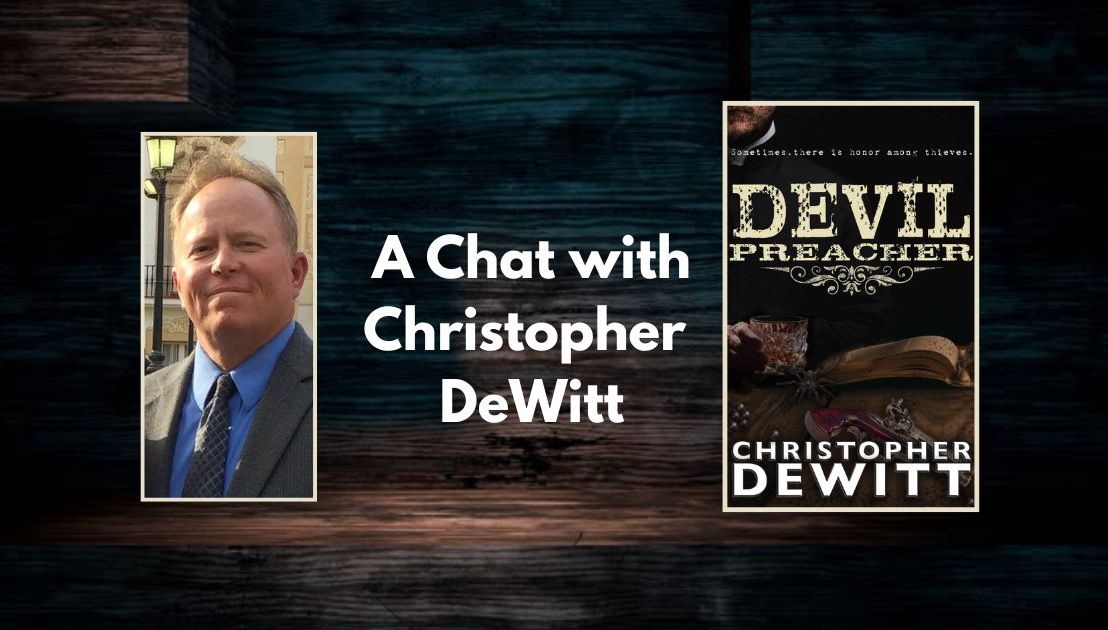
                                                    Christopher DeWitt

                                                    Eric Diekhans

                                                    Helen Z. Dong

                                                    Erica Duarte

                                                    Ryan David Ginsberg

                                                    Rinat Harel

                                                    Thom Hawkins

                                                    Dana Hawkins

                                                    A.M. Hayden

                                                    Victoria Holland

                                                    Miranda Huba

                                                    Joshua Isard

                                                    Riley Kilmore

                                                    D.S. Lerew

                                                    Rebecca Linam

                                                    Lester N. Linsangan

                                                    Maria Juweyn Liwag

                                                    Shaelynn Long

                                                    Katie Mahood

                                                    Ester M. Marquez

                                                    EJ Masters

                                                    Melissa R. Mendelson

                                                    Amy Nielsen

                                                    Maribeth Parot-Juraska

                                                    Kim Plasket

                                                    Vi Putrament

                                                    J.K. Raymond

                                                    S.E. Reed

                                                    Demi Michelle Schwartz

                                                    Nicole Smith

                                                    Mitra De Souza

                                                    Abigail F. Taylor

                                                    Jacque Vickers

                                                    Lorie Wackwitz

                                                    Kelly Webber

                                                    Johnny Francis Wolf

                                                    Warm regards,

                                                    Ian

                                                    Getting to Know Wild Ink Author William J. Connell

                                                    Getting to Know Wild Ink Author William J. Connell

                                                    by Bruce Buchanan

                                                    To the legal community, William J. Connell is an experienced attorney who works within the education and government sectors throughout Rhode Island and Massachusetts. To his students, he’s an adjunct professor at the Roger Williams University School of Law, where he shares his real-world legal experience with other aspiring attorneys.  To his home community, he is a member of the School Committee.

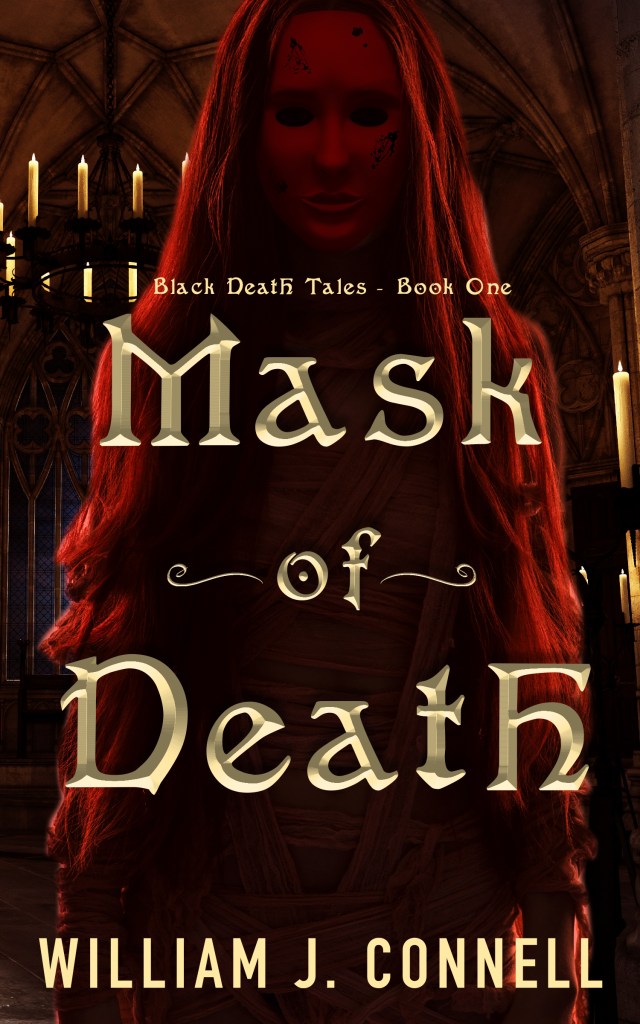
                                                    But readers know another side of William: The author. Despite his busy career, he has become a prolific short story writer and on November 27, 2024, , his debut novel, MASK OF DEATH, will be released by Wild Ink Publishing.

                                                    Set during Europe’s Middle Ages, MASK OF DEATH reexamines and expands upon the classic Edgar Allan Poe Short story “The Masque of the Red Death”. Prince Prospero. his wife, Elizabeth, and Clarinda, Prospero’s younger mistress, already face the real-life horrors of the black plague and widespread famine. Now, add supernatural terrors to that list in the form of “fleshers”—undead creatures who feast on the living – and you have the start of the novel.

                                                    1. When did you first get interested in writing? And what got you interested?

                                                    “I’ve always liked to write. In high school, I wrote a book, but didn’t publish it. But I enjoy writing. I’ve done writing for law journals, but  I really like fiction.

                                                    When I’m writing, I’m in the moment, just thinking about the characters and plot. It helps me focus and I find it engaging. For example, I spent last Sunday working on a complaint for a client. It’s rewarding, of course, but it’s not as energizing as writing a story.

                                                    2. Tell us a bit about Mask of Death. You say, “It’s not the story you think you know” – in what way (without giving too much away, of course!)

                                                    I have to thank Wild Ink Publishing for that line (and also give a reminder to my students, proper attribution is important). This story grew not only out of the Edgar Allan Poe story, but also my love for Clint Eastwood westerns and old zombie movies. I also used to teach world history, and I’ve long been interested in the Black Plague period, particularly in Europe. How did mankind survive? How hard must life have been then.

                                                    I thought, ‘What a fascinating time to set a novel. You could tell a lot of stories set during that time.” In my book, Clarinda is Prospero’s mistress.  She and plants some of ideas that set the main action in motion. But what to do with Prospero’s wife, Elizabeth? That’s a key question. I take some elements from “The Masque of the Red Death” and expand on them. I also read fiction written during or shortly after the Black Death period, particularly “The Decameron “by Giovanni Boccaccio.  My novel tells about the events leading up to and beyond Prospero’s story.  We also might glimpse what started this plague. The story is complete, but it also leads right into another. 

                                                    Also, this will be a three-book series. I’m already working on the sequels.  

                                                    3. You are an attorney as well as a writer. How do you balance such a demanding career with your passion for writing fiction?

                                                    It’s hard—you have to be committed to writing. Sometimes, I feel like I’m spread thinner than I want to me. But I want to write, and I enjoy it.

                                                    4. What is your writing process like? Do you have any particular tips or methods that help you?

                                                    “My writing process really depends on my schedule, but I like to get ideas from reading and watching movies, or just running outside. I see something I like, and I’ll take it in a different direction. Some of my horror stories have come after reading Poe or Lovecraft—I’ll take an element from one of those stories and flip it around.  I try to create the stories I’d like to see and read.”

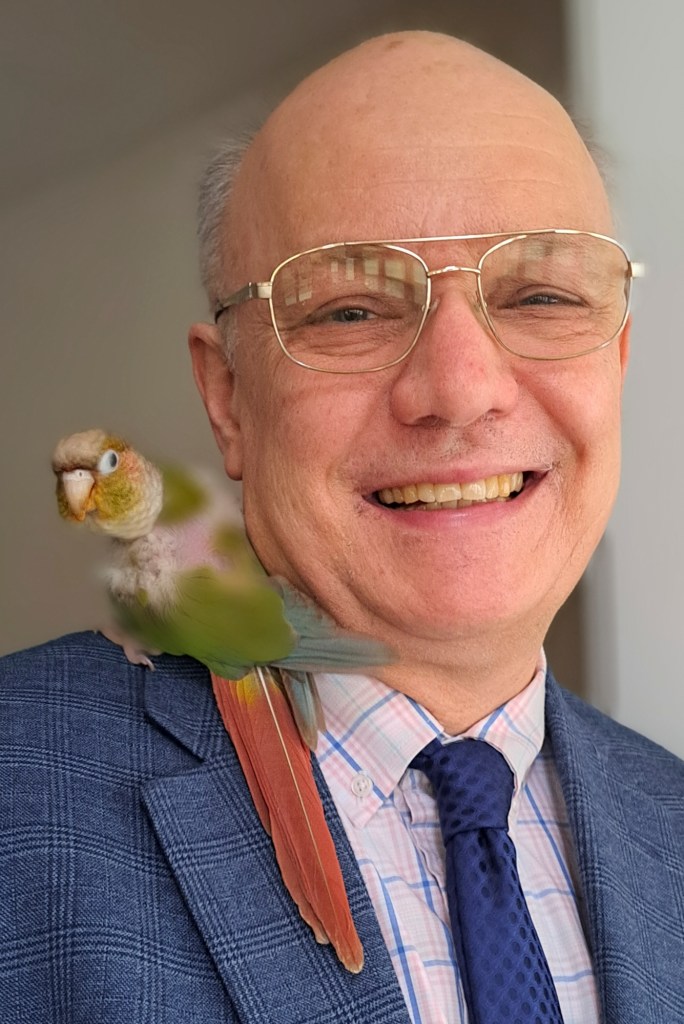
                                                    5. Finally, tell us about Lulu, the ped bird in your author photo!

                                                    My daughter Amanda has always been a bird person, and she adopted Lulu as a rescue bird from the Rhode Island Parrot Rescue. For anyone looking for a pet, I’d encourage you to consider adopting a rescue animal. Lulu is a handful, but she loves attention and being on camera.  We can’t get over how fast she adjusted to us!

                                                    Click here to pre-order Mask of Death

                                                    UnCensored Ink Interview – Melissa R. Mendelson

                                                    UnCensored Ink Interview – Melissa R. Mendelson

                                                    Hey everyone, 

                                                    Ian Tan here, lead editor and project coordinator of UnCensored Ink: A Banned Book Inspired Anthology, set to release this October 29. Here is the UnCensored Ink interview series to introduce you all to the incredible writers, as well as the local bookstores and libraries that gave them safe creative spaces. Hopefully, you can put these incredible places on your to-visit list, and feel inspired to support your own local bookstore, library and indie authors.

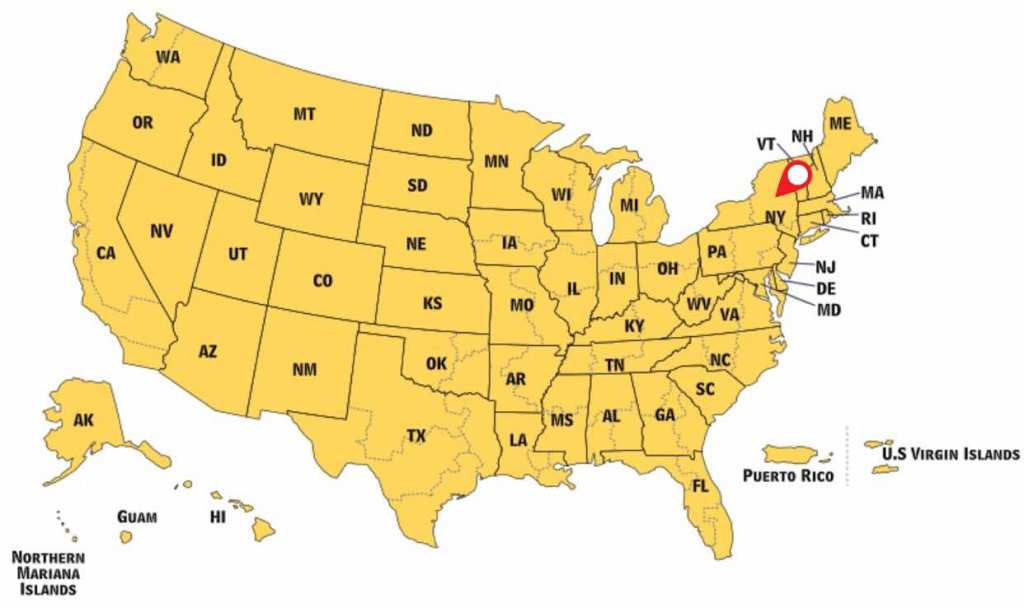
                                                    Today, I am with Melissa R. Mendelson, from New York. She is a poet, a horror, science-fiction and dystopian author.  She has been published by Sirens Call Publications, State of Matter Magazine, Altered Reality Magazine, Transmundane Press, Owl Canyon Press, Wild Ink Publishing, The Horror Zine and The Yard: Crime Blog. She is the author of a self-published sci-fi novella, Waken. She is also the author of the prose poetry collection, This Will Remain With Us published by Wild Ink Publishing. 

                                                    1. You’ve written a fine piece for UnCensored Ink: a banned book anthology. Can you give us a synopsis? How did the idea for this piece come about?

                                                    They Took Her Away –  I never belonged in school, always the outcast, but what if it wasn’t me?  What if it was them, their programming, which I did not understand nor wanted to follow, but somehow, I got sucked into it, ensnared over something simple, a book, and it was a book not approved by them.  But what really did me in was her, someone I barely knew but trusted, and when she fell, she took me down with her.

                                                    Your Last Shot – In college, I took this, I think, Anatomy Class, where I followed the digestion of a cupcake.  I even got the professor to laugh at my enthusiasm because I found it fascinating, and I still do find some Science especially in the human body interesting.  But not everyone shares my enthusiasm especially with Covid, and there was, I believe, a lot of hatred toward Scientists.  What if that hatred grew into an angry mob successful in destroying all the texts that could help save us from the next catastrophe, leading us straight into extinction?  All of us except for one.

                                                    She Kept Her Words Inside A Pillow – Growing up in a house with five brothers, there was no privacy.  I used to have posters all over my walls, and one day, my brothers decided it would be funny to tear them all down.  I did not find it amusing and started arranging things in my room to know when they were there and what they touched.  The pillow is a good hiding place, if you want to keep your words, your thoughts private especially if you live in a world, where you have to be careful with not only what you say but what you think.  Unfortunately, if they are determined to find it, they will, and the consequences could be dire.  But even in the darkest situations, there’s still a faint trace of hope.

                                                    2. Now, we would love to know you more! What do you enjoy doing in your free time, what is your favorite book quote, and how did you get into reading and writing?

                                                    In my free time, I like to take walks around the duck ponds in town.  I like to read Poets & Writers Magazines, even if I’m behind by two years.  I love YouTube but not for funny cat videos.  I enjoy watching Film Courage, Big Think, TED, Letters Live, and Inside of You with Michael Rosenbaum.

                                                    Favorite book quote?  I really don’t have one, but my favorite movie quote is from The Last Unicorn: There are no happy endings, because nothing ends.

                                                    When I was a child, my parents signed me up for this book club, where I would get books in the mail, and I loved reading them.

                                                    I did not write until the seventh grade, where I met two wonderful creative writing teachers, who were convinced that I had talent as a writer.  It took some time for that to sink in, but it eventually did.  And in my senior year of high school when I should have been paying attention to my subjects, I was too busy filling my notebooks with stories and poems.

                                                    3. Do you have a favorite local library or bookstore? Also can you remember bookstores and libraries from your childhood, if they are not the same as the ones now? 

                                                    My most recent favorite bookstore is Eureka Books and More in Sugar Loaf, NY, where I just had a reading for my book, This Will Remain With Us.

                                                    I remember the library in my high school. I used to hide out there to escape the bullies, and I would love to read the Choose Your Own Adventure Books and flip through the Audubon Magazines.

                                                    4. Tell us more about this bookstore/library. What do you love most about it? 

                                                    The bookstore, Eureka Books and More, is my favorite because you can feel the warmth and dedication that Elizabeth, the owner, puts into it.

                                                    5. What do you have to say on the importance of sustaining bookstores and libraries?

                                                    Growing up, I always turned to the libraries and later years to bookstores because they always felt like a haven to me, somewhere I could escape to and disappear into the pages that I read, and there were moments in my life that I needed to escape from.  These places gave me what I needed, and the books later inspired me to pick up a pen and write my own stories.

                                                    6. Do you have any projects that your current and future readers can look forward to?

                                                    For the last few months or so, I have been working on a Dystopian novella called, For My Son.  This story is different from other things that I have written and very, very detailed, which is not like me at all.  But my hope is that when it is done and published that readers will feel like they are there, walking among the characters.

                                                    7. Lastly, what platforms can we find you? (Social media and websites are all encouraged, this is to highlight and champion you guys)

                                                    Website (Updated Monthly): www.melissamendelson.com

                                                    Facebook: https://www.facebook.com/melissa.r.mendelson/

                                                    Instagram: https://www.instagram.com/fallenhazel/

                                                    Map indicating New York

                                                    Before we spotlight our final authors, who are outside the United States, we have one last American stop back to Pennsylvania.

                                                    Purchase UnCensored Ink at Barnes & Noble

                                                    Purchase UnCensored Ink at Amazon

                                                    UnCensored Ink Interview – Helen Z. Dong

                                                    UnCensored Ink Interview – Helen Z. Dong

                                                    Hey everyone, 

                                                    Ian Tan here, lead editor and project coordinator of UnCensored Ink: A Banned Book Inspired Anthology, set to release this October 29. Here is the UnCensored Ink interview series to introduce you all to the incredible writers, as well as the local bookstores and libraries that gave them safe, creative spaces. Hopefully, you can put these incredible places on your to-visit list and feel inspired to support your own local bookstore, library, and indie authors.

                                                    Today, I am with Helen Z. Dong from Washington. She is a Chinese-American author, product manager, and game writer. In 2018, she received a Silver Key for her writing portfolio in the Scholastic Art and Writing Awards, and her debut game, Wake Up, was released in May 2023. Since 2022, she has been sharing her writing journey on social media with over 12,000 followers. 

                                                    1. You’ve written a fine piece for UnCensored Ink: A Banned Book Inspired Anthology. Can you give us a synopsis? How did the idea for this piece come about?

                                                    Sure! In my sci-fi story, BURN, a climate research scientist living on a near-uninhabitable planet presents her invention for reversing climate change at a conference. This is everything that she has dreamed of, people are congratulating her left and right on her success, but she’s unable to celebrate because she knows that her invention will never see the light of day. The planet is dying, and she can’t do a single thing about it.

                                                    This piece is very obviously inspired by the climate crisis that we’re facing right now, but the concept first started with a scene from the animated series Arcane: Jayce’s speech in season one, episode four, where he has to decide between revealing a new invention to the world or hiding it. While I’ve cut Maia’s actual speech from my story, there are still some parallels between her and Jayce…although they are very different people.

                                                    2. Now, we would love to know you more! What do you enjoy doing in your free time, what is your favorite book quote, and how did you get into reading and writing?

                                                    Aside from reading and writing, I love playing video games, watching shows like The Boys and House of the Dragon, and hanging out with my cat. I got into reading and writing around the same time, in kindergarten — the first “book” I ever wrote was a picture book about animals and their movements (inspired by the picture books I was consuming at the time, I’m sure).

                                                    At the moment, I’d say my favorite book quote is from a book that I fell in love with recently, BLOOD OVER BRIGHT HAVEN by M. L. Wang: “The worthwhile run is never the short one. You know we’re not running from oblivion…We’re running towards hope.”

                                                    This quote hit me hard in the context of the story, but even out of context, I think it can apply to a lot of us in our daily lives and struggles.

                                                    3. Do you have a favorite local library or bookstore? Also can you remember bookstores and libraries from your childhood, if they are not the same as the ones now?

                                                    My current favorite bookstore has to be Elliott Bay Book Company in Seattle, WA! But the Newton Free Library in Newton, MA, is where I used to go with my parents all the time as a child. It’s where I first developed a love for reading, and I still remember it fondly today even though I haven’t been there in years and years.

                                                    4. Tell us more about this bookstore/library. What do you love most about it? 

                                                    I love Elliott Bay for the atmosphere. Since moving to Seattle, it’s been a central location for me to hang out with friends to either browse the shelves together or to grab a coffee and settle in for a cozy writing session in the attached cafe. The people who work there are so friendly — I filmed a YouTube video once where I went to Elliot Bay to look for a book and I must have spent twenty minutes searching for it before I gave in and asked someone for help. She not only helped me look up the book in their system, but also walked me to the right shelf herself. From this and other interactions, I can tell that the people there really care about and love books, and something about that energy just makes me so happy.

                                                    5. What do you have to say on the importance of sustaining bookstores and libraries?

                                                    Bookstores and libraries are both important (reading in general is important), but I can’t emphasize enough how invaluable libraries are in society. Anyone can go to a library and borrow any book they want to read. Anyone can stay in a library to read or study or just browse the shelves. These are such important resources for us, and it pains me every time when I see cities pinching their budgets and forcing libraries to close earlier, or on Sundays, or just for the whole weekend. Libraries used to be my favorite places to go as a child, and they’re where I developed my love for reading. They’re absolutely something that deserves to be advocated for.

                                                    6. Do you have any projects that your current and future readers can look forward to?

                                                    I am currently querying literary agents with a YA Chinese fantasy and am working on an NA dark academia horror that I plan on querying starting this fall. I’m also always working on new short stories and looking for homes for them. I’m decently active on my socials, so any updates will end up posted there!

                                                    7. Lastly, what platforms can we find you? 

                                                    I’m @helenzdong on Instagram, TikTok, and Twitter/X.

                                                    Map indicating Washington

                                                    Well, that’s Helen Z. Dong from Washington, everyone! Now, we do have one last American writer in New York, so stick with us as we fly over there!

                                                    Purchase UnCensored Ink at Barnes & Noble

                                                    Purchase UnCensored Ink at Amazon