Category: Blog

UnCensored Ink Interview – D. S. Lerew

UnCensored Ink Interview – D. S. Lerew

Hey everyone, 

Ian Tan here, lead editor and project coordinator of UnCensored Ink: A Banned Book Inspired Anthology, set to release this October 29. Here is the UnCensored Ink interview series to introduce you all to the incredible writers, as well as the local bookstores and libraries that gave them safe creative spaces. Hopefully you can put these incredible places on your to-visit list, and feel inspired to support your own local bookstore, library and indie authors.

Today I am with D. S. Lerew from Dillsburg, Pennsylvania. She lives with her husband, two teenage sons, and black lab, too far away from the river to enjoy walking along its banks, but still able to enjoy books and stars. D. S. Lerew has written a poetry chapbook called Stars in a Jar. As Leta Hawk, she penned the Kyrie Carter: Supernatural Sleuth series, which includes The Newbie, School Spirits, The Witch of Willow Lake, An Uneasy Inheritance, and Dandelion Souls.

1. You’ve written a fine piece for UnCensored Ink: A Banned Book Inspired Anthology. Can you give us a synopsis? How did the idea for this piece come about?

My piece is called “A Sonnet of Stone-Cold Stupidity.” It’s, well, obviously, a poem, a sonnet about the replica of Michelangelo’s statue of David that stands in St. Augustine, Florida. When we were on the trolley tour, the guide told us that Ripley’s had had to erect a hedge around it because some folks were offended by David’s state of undress, which I found humorous. Having been involved in ministry at one time, I recalled the passage in Scripture where King David was doing a worshipful dance in just his undergarments. His own wife was embarrassed and offended over his display. My poem combines the two events and pokes fun at the idea of the human body being censored in such a way.

2. Now, we would love to know you more! What do you enjoy doing in your free time, what is your favorite book quote, and how did you get into reading and writing?

In my free time, I enjoy crocheting, frequenting thrift shops and cafes, traveling, and stargazing.

Favorite book quote? Oh, good heavens. I can pull song lyrics at the drop of a hat, but a book quote? Um, I guess there are a couple I jotted down from “The Mists of Avalon.” The first is “Do not betray the dream,” and the other is “If you do not step forward, you will always be in the place you started.” 

I got into reading much the same as other children of my generation. My mother always read to us at bedtime, which made me love stories. Then I learned to read and got a library card, which opened the world of books to me. As for writing, I was always telling stories, or at least embellishing the boring things that happened during the day. In high school, I started writing poetry, and in college I began toying with novel writing. 

3. Do you have a favorite local library or bookstore? Also can you remember bookstores and libraries from your childhood, if they are not the same as the ones now? 

Alas, my favorite bookstore closed down a couple years ago. I’m not typically a fan of chain bookstores, as they just seem so cookie-cutter and blah. I do enjoy sniffing out bookshops when we’re on vacation, however.

4. Tell us more about this bookstore/library. What do you love most about it? 

Our library in Dillsburg has been fairly supportive of my books. I held a couple readings for the early books in my series, but unfortunately they weren’t well attended, so I haven’t done any recently.

Two other libraries that have been supportive are Ross Library in Lock Haven, PA and the Renovo Library in Renovo, PA. My series is mainly set in that part of Pennsylvania, so I’ve done several readings with them.

5. What do you have to say on the importance of sustaining bookstores and libraries?

Obviously, bookstores are important to both authors and readers. Physical books are so important both for entertainment value and for information purposes. The Internet has been such a wonderful invention, but there’s always the chance of the worldwide web crashing at some point. That won’t happen with physical books.

Libraries are also crucial for our society, and not just for books. Our county library system hosts all kinds of classes and programs for all ages, they have tax forms and information during tax season, and they have public computers and printers for people to use at little or no cost.

6. Do you have any projects that your current and future readers can look forward to?

I am currently working on Book 6 of my series. For a number of reasons, it’s been delayed, but I’m working on it.

I’m also working on a second poetry chapbook and a cozy mystery series.

7. Lastly, what platforms can we find you? (Social media and websites are all encouraged, this is to highlight and champion you guys)

I’m on Facebook 

Instagram: @leta_hawk_writes

Pinterest: @LetaHawk

TikTok: @leta.hawk.author

Map indicating Pennsylvania

Well, that’s D. S. Lerew from Dillsburg, Pennsylvania, everyone! Stay posted till the next one, still having fun in Pennsylvania!

Preorder UnCensored Ink at Barnes & Noble

Preorder UnCensored Ink at Amazon

UnCensored Ink Interview – Kelly Webber

UnCensored Ink Interview – Kelly Webber

Hey everyone, 

Ian Tan here, lead editor and project coordinator of UnCensored Ink: A Banned Book Inspired Anthology, set to release this October 29. Here is the UnCensored Ink interview series to introduce you all to the incredible writers, as well as the local bookstores and libraries that gave them safe creative spaces. Hopefully you can put these incredible places on your to-visit list, and feel inspired to support your own local bookstore, library and indie authors.

Today I am with Kelly Webber from New Jersey. She is a proud graduate of the University of Maryland’s library science program. Before entering the library world, she earned her BA in English literature and taught literacy in a variety of contexts, from reading with preschoolers to assistant teaching for an undergraduate linguistics course. Her first experience working in libraries took place in a beautiful (and possibly haunted) public library. She now combines her passions for libraries and education as a school media specialist in her home state.

1. You’ve written a fine piece for UnCensored Ink: a banned book anthology. Can you give us a synopsis? How did the idea for this piece come about? 

My piece for Uncensored Ink, “Alexandria Again,” is an essay reflecting on the role of libraries in our world. I couldn’t possibly say everything I want to about this topic in one essay, but I made sure to include a combination of key historical moments in library history, up-to-date statistics on censorship, and some of my own personal experiences. My goal was to demonstrate that libraries are not fading into obscurity; they’re more important than ever before! In addition to being included in Uncensored Ink, excerpts of my essay have been heard by a live audience in a hearing for the Freedom to Read Act, a bill in my state that would implement structures to protect libraries and librarians in the face of book bans. (njleg.state.nj.us/bill-search/2024/S2421/bill-text?f=S2500&n=2421_I1)

2. Now, we would love to know you more! What do you enjoy doing in your free time, what is your favorite book quote, and how did you get into reading and writing?

I got into reading as a kid with authors like Erin Hunter, Madeleine L’Engle, and Gail Carson Levine. I found one of my favorite book quotes in middle school, from the Princess Diaries series by Meg Cabot: “Never think that you can’t make a difference. Even if you’re only sixteen, and everyone is telling you that you’re just a silly teenage girl—don’t let them push you away.” I think I took that to heart when I started writing for my school newspaper. I wanted to write something that made a real, positive difference in the world.

3. Do you have a favorite local library or bookstore? Also can you remember bookstores and libraries from your childhood, if they are not the same as the ones now?

I grew up in a town with a big library, Westfield Memorial Library, and a small independent bookstore, The Town Bookstore (yes that’s the actual name haha). I loved both so much! I participated in the library’s summer reading program and the bookstore would sometimes give out Advanced Readers Copies of upcoming books. As an adult, I briefly worked in Raritan Public Library, a little public library I adored.

4. Tell us more about this bookstore/library. What do you love most about it? 

The library where I worked was an old historic building, with some parts being nearly 300 years old. It was such a cozy space, with relics of the town’s history preserved in glass cases between bookshelves. I’m not sure how the superstition started, but several library employees swore the building was haunted and refused to stay a minute after closing time because they said the ghost would come out at night.

Kelly put one of her favorite books on display at the library

I got to put one of my favorite childhood books on display at the library!

A library event for sustainability

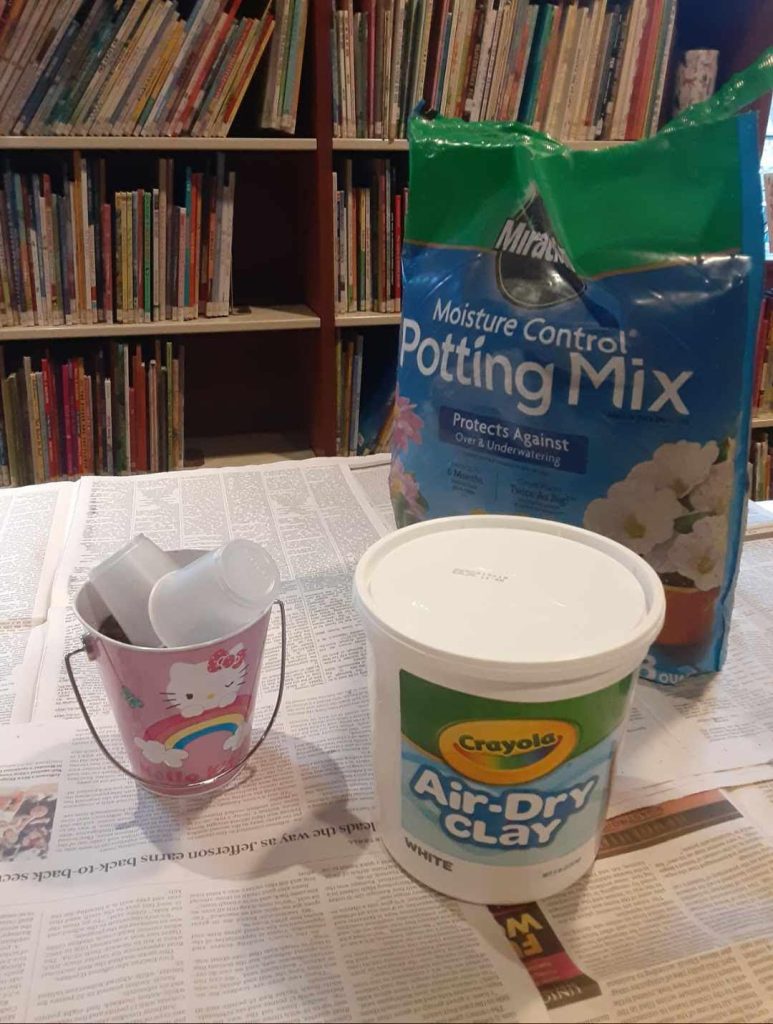
A library event focused on sustainability: We helped kids make “seed bombs” with soil, wildflower seeds, and clay that they could take home and plant in a pot or garden. Wildflowers are good for local pollinators like bees and butterflies! 

5. What do you have to say on the importance of sustaining bookstores and libraries?

I was initially drawn to libraries because who doesn’t love free access to books? But I’ve come to see libraries as so much more: a place where anyone can find community and all kinds of resources. Families come in for storytime; the building provides an escape from harsh weather for those with nowhere else to go; and there’s often free classes or tutoring for adults learning English or working toward their GED. When censorship threatens library funding, we risk losing access not just to books (although that would be bad enough on its own) but also many more resources that entire communities depend on. If you’d like to delve into these topics more and learn more, I’d recommend looking into the organization Every Library (everylibrary.org/) and the book Before the Ballot: Building Political Support for Library Funding by John Chrastka. 

6. Do you have any projects that your current and future readers can look forward to?

I’m currently working on The Battle of Goldenrod, a sequel to my debut novel Wisteria. It’s an interactive gamebook, so readers will be able to solve mysteries, break curses, and make choices for the characters.

7. Lastly, what platforms can we find you? (Social media and websites are all encouraged, this is to highlight and champion you guys)

Website: kellywebberbooks.com.

Instagram: @kellywebberbooks

Tiktok: @wisteriabooks

A map indicating New Jersey

Well, that’s Kelly Webber from New Jersey, everyone! Stay posted till the next one, next door in Pennsylvania.

Barnes & Noble

Amazon

Everything Is Copy: Nora Ephron Inspires Taylor Swift and Me.

Everything Is Copy: Nora Ephron Inspires Taylor Swift and Me.

By Maria Miller

       Though I didn’t become a published writer until my late 30’s, those voices inside my head, voices we writers tend to hear, have kept me company since childhood. Because I can’t climb inside other writers’ minds, I have no way of knowing how much of what they put on the page is rooted in their own experiences, I just know that almost everything I’ve ever written, fiction and nonfiction, is rooted in mine.

                    I believe I’m in good company. A longtime devotee of Nora Ephron and more recently, Taylor Swift, on the Dedication page of my novel debuting in Fall, 2024, SweetSpot: Now and Then, I wrote these words:

. … Ms. Ephron’s body of work includes a novel she wrote, HEARTBURN, that by her own admission  was as much memoir as work of fiction. Taylor Swift, a lyrical poet, writes songs rooted in her life experiences, too. Both writers have given this writer courage to publish a novel with roots in my own reality and crafted into fiction… .’

    I’m not the only writer of a certain age inspired by Taylor Swift. Part of her magic?  Capturing the hearts of fans of all ages. Why? Lyrics she writes, while specific to her, have a universal appeal. The same can be said about fans of Nora Ephron’s works, whether in novel, essay, memoir or film form.  On the day of Taylor Swift’s ‘Tortured Poets Department’ debut, April 2024, I happened upon a video snippet  of Taylor honoring Nora. Until I listened, I did not know that Taylor Swift views Nora Ephron as a mentor, too.

My Mentors and Me

Like Taylor Swift and Nora Ephron, I have always drawn from my life experiences. I don’t know how to tell a story any other way. If the roots of storytelling are not grounded in one’s life, where does inspiration come from? Taylor Swift’s short video, her love letter to Nora Ephron, is a reminder of storytelling’s deep roots. I have wondered if perhaps those who studied the craft at the MFA level learned how to excavate inspiration elsewhere, perhaps by having more tools their toolboxes? But that was not my experience. Like Darlene Robinson, my protagonist in SweetSpot: Now and Then, I began my freelance writing career during my kids’ wonder years and after a successful career as a psych nurse practitioner. I write what I know or yearn to know more about. That’s the process I share with writers in my workshops, those who didn’t matriculate through the ranks of academia as well as those who have.

Me and My Tribe

I hang with writers and have for decades. They are my tribe though I can’t say we have spent much time discussing story origins and/or inspirations, et al. Maybe we have but it wasn’t until Taylor Swift came under severe scrutiny for writing what she knows that I really wished Nora Ephron was still with us. Throughout her career, Ms. Ephron faced significant backlash in the press for Heartburn, her novel rooted in a transforming time of her life, a time when she discovered (in her third trimester of pregnancy) that her hubby had a girlfriend, and a serious one at that. Now writers, I ask you, had that happened and you had Nora Ephron’s writing chops, what would you do? Perhaps you would take to the page, too.  

The Evolution of Story

About those voices mentioned at the top of this piece, when Sweetspot was in its infancy, NOW and THEN was not part of my protagonist’s narrative arc. But that was then and by the time this novel was ready for reading, this writer and her protagonist had logged many more miles and along the way, learned a thing or two. The addition of NOW was born at my protagonist’s insistence. Really. Darlene Robinson’s dang voice would not quiet down and since this story includes in its telling the birth of a published author, her career jumpstarted in 1999 by attending her first writers conference, I decided to listen to Darlene and added a present-day NOW told in first person.  While the NOW section, sprinkled sparsely throughout, delivers a perspective of an older and wiser woman who achieved a modicum of literary success in her hot flashing years, the NOW addition is also meant to inspire and who among us couldn’t uses a jolt of inspiration from time to time?

Getting Ready for Publication

I’m doing what writers preparing to publish must do, expand my platform that includes finding writing sites that welcome freelancers. Wild Ink Publishing published one of my pieces a few months ago. My thanks to Abigail Wild for publishing this one, too.

Write On,

Marla Miller

SweetSpot: Now and Then debuts FALL, 2024. Marla can be reached through her social media sites and/or marketingthemuse@gmail.com

https://linktr.ee/Writersmama

MarlaMiller.com 

TikTok Twitter & Instagram:@writersmama

Medium

Facebook: Hooking Readers

Substack: writersmamasubstack

UnCensored Ink Interview – Victoria Holland

UnCensored Ink Interview – Victoria Holland

Hey everyone, 

Ian Tan here, lead editor and project coordinator of UnCensored Ink: A Banned Book Inspired Anthology, set to release this October 29. Here is the UnCensored Ink interview series to introduce you all to the incredible writers, as well as the local bookstores and libraries that gave them safe creative spaces. Hopefully you can put these incredible places on your to-visit list, and feel inspired to support your own local bookstore, library and indie authors.

Today I am with Victoria Holland from Massachusetts. She is a Pushcart Prize-Nominated Author for her work in I’m Not the Villain, I’m Misunderstood, as well as Lead Anthologist for The Carnation Collection. She has also published in multiple other collections including Into the Mirror and The Magical Muse Library Vol. 1 & 2. She is a romantic, daylighting as an activist and moonlighting as a witch and healer.

1. You’ve written a fine piece for UnCensored Ink: a banned book anthology. Can you give us a synopsis? How did the idea for this piece come about?

My piece is actually an essay! It gives a frank explanation of my belief that to censor the arts is to censor the human heart. The idea for this piece came along because when it comes to topics of activism, I don’t believe in beating around the bush. Expression of oneself and the creation therein is such an important part of the human experience. To censor that is to limit authenticity. In my life, I have experienced a time without authenticity and it just… not worth it. 

2. Now, we would love to know you more! What do you enjoy doing in your free time, what is your favorite book quote, and how did you get into reading and writing?

In my free time, I enjoy storytelling in all its forms (books, films, tv, video games, theater, etc.), studying magic and mythology, taking walks in nature, traveling, and hanging out with my friends at my local bar!

My favorite book quote… I don’t have one, as of present. Sorry to disappoint.

I got into reading and writing at 7-years-old after I saw the first Harry Potter movie and read the  novel it as based on shortly after. That took me all year! Then I wrote my first story, which was essentially Harry Potter fanfiction. It was called Emma Kenya and the Cursed Owl, which was basically a retelling of the first HP book lol
Since then, storytelling has become like a soul journey for me. All the stories I love have breathed life into my own stories, and vice-versa. My own imagination and inner world grew, and so did my skills as a writer. It became my escape and my happy place. I figured making it my vocation was the next logical step lol

3. Do you have a favorite local library or bookstore? Also can you remember bookstores and libraries from your childhood, if they are not the same as the ones now?

I don’t really. I was a big Barnes & Noble kid. I remember on my tenth birthday, my dad gave me $100 and said “Buy as many books as you can to fill up that bill.” It was one of the best birthdays I ever had!
I also have incredibly fond memories of the Scholastic Books Fairs at my school every year. It was one of the best days of the year and to be honest, I think I’d have even more fun at them today then I did then. 

4. Tell us more about this bookstore/library. What do you love most about it? 

The Barnes & Noble I attend is one of the bigger ones with multiple floors. When you walk in and look up, there is a balcony above that wraps around the whole store. The balcony in front of you is where the kids section is and they have it set up so that you always feel like you are walking into another world up there. There were other stuff at the store, fiction for adults, music, a café, and other stuff that a bookstore would usually have. But that kid’s section had bean bag chairs and a reading nook surrounded by paper-cut-out trees and a space where one of the booksellers would read new books to children in the area. I loved it there… such good memories.

5. What do you have to say on the importance of sustaining bookstores and libraries?

Despite the fact that I haven’t engaged much with my local bookstore scene, I have quite a lot to say on this topic. One of the better things about America is the public distribution of knowledge that at one time in human history was kept exclusively only to the higher classes. This concept—knowledge belonging to all—is exactly why we need to sustain local bookstores and libraries. 

Libraries, in particular, allow the every-person to be able to learn so much about the world in a way that emphasizes that basic right to knowledge. It being free is absolutely key. The more a person knows, the more they can empathize with the world around them. That is how healing happens. That is how positive changes happens! Libraries are one of the most beautiful things modern society has to offer.

As for independent bookstores, the sustenance of them is necessary because if some corporate behemoth comes along and consolidates all book sales for only their store, it sets a dangerous precedent for what could come next. Corporate bookstores have a direct link to very affluent, powerful people who could very well decide one day to police what books these stores sell. That would impact the general public, the publishing world, and little old writers like me in a really debilitating way! 

Power to the people is why sustaining bookstores and libraries is important. 

6. Do you have any projects that your current and future readers can look forward to?

On sale now is a Greek Mythology-inspired literary collection called The Carnation Collection; a lot of Goddess power in that book. I also just finished up a fandom project for the Frozen 10th Anniversary, a fanzine called Water Has Memory: A Frozen Decade and it is so good. I had such an incredible team for that and if I hadn’t, there was no way it could have been finished.

And as for now? I’m finally working on my novel again after a year-and-a-half. Without giving too much away, it is a spiritual fantasy novel following a young artist as she discovers the world of magic… and how it impacts, well, everything. Including her own life.

7. Lastly, what platforms can we find you? (Social media and websites are all encouraged, this is to highlight and champion you guys)

Well for a full list, people can check my linktree:
linktr.ee/victoriaholland

I can be found at @toriofthetrees on all my socials, but please check especially Instagram and Tumblr (where I have posted all my creativity and writing).

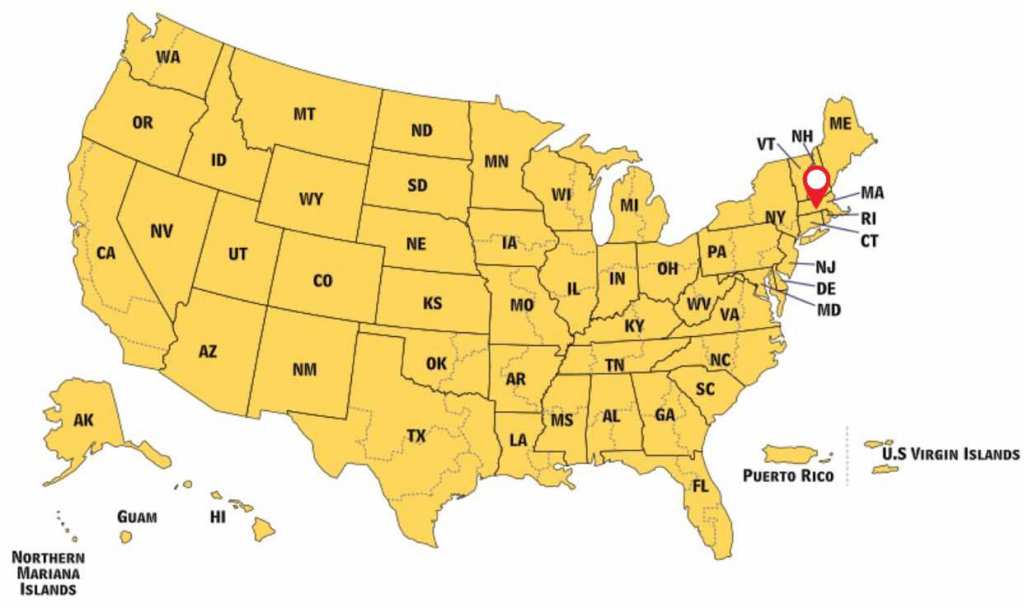
A map indicating Massachusetts

Well, that’s Victoria Holland from Massachusetts, everyone! Stay posted till the next one, a little lower in New Jersey.

Barnes & Noble

Amazon

The Hidden Gems of the Publishing World: Why Indie Publishers Might Be Your Best Bet

The Hidden Gems of the Publishing World: Why Indie Publishers Might Be Your Best Bet

By Torina Kingsley

In the ever-evolving publishing industry, authors have more choices than ever before. One option that has gained significant traction recently is working with an indie publisher. Independent publishers, often smaller than their traditional counterparts, offer a range of benefits that can make them a great option for lots of authors. Whether you’re a first-time writer or a seasoned author looking for a more personalized experience, an indie publisher might be the perfect fit.

Here’s why indie publishers are great:

1. Niches Don’t Scare Them

One of the most significant advantages of working with an indie publisher is the level of creative control you retain over your work. Unlike traditional publishers, who may ask for changes to make a book more commercially viable in the wide marketplace, indie publishers aren’t afraid of niches. Books that might be overlooked by larger publishers due to their niche appeal often find a passionate audience when published by an indie publisher with expertise in that area.

Many authors who’ve partnered with indie publishers have praised the freedom to maintain the integrity of their story, especially when it comes to niche genres or unconventional narratives.

If your book caters to a specific niche or a less mainstream audience, an indie publisher might be better equipped to market your work effectively. Indie publishers often specialize in particular genres or market segments, allowing them to target and reach the right readers more effectively.

2. You’re Not Just a Number

Indie publishers typically work with a smaller number of authors, which means you’re more likely to receive personalized attention throughout the publishing process. From editorial feedback to marketing support, indie publishers often provide a more tailored experience.

Authors frequently cite the close working relationship with their indie publisher as a key factor in their book’s success.

3. Faster Turnaround Times

The traditional publishing route can be notoriously slow, with timelines stretching from months to even years before a book sees the light of day. Indie publishers, on the other hand, are often able to move more quickly, getting your book to market faster.

Many indie publishers operate with streamlined processes, allowing for quicker decision-making and fewer bureaucratic delays. This efficiency can be particularly beneficial if your book is time-sensitive or if you’re eager to start building your author brand.

4. More Author-Friendly Terms

Indie publishers often offer more flexible and author-friendly contracts compared to traditional publishing houses. This might include better royalty rates, shorter contract terms, and the ability to retain certain rights to your work, such as audio or foreign rights.

Indie Publisher vs. Vanity Press: How to Tell the Difference

Not all publishers are created equal, and it’s important to understand the difference between an indie publisher and a vanity press.

What is an Indie Publisher?

An indie publisher, short for independent publisher, is a small, often niche-focused publishing house that operates independently of the major publishing conglomerates. Indie publishers typically offer traditional publishing contracts, meaning they don’t charge authors to publish their work. Instead, they invest in the production, marketing, and distribution of the book, earning their profit from book sales.

  • Key Characteristics:
    • No Upfront Costs: Indie publishers do not charge authors to publish their books.
    • Editorial Support: They provide professional editing, cover design, and other services as part of the publishing process.
    • Revenue Sharing: Authors typically receive royalties from book sales, and the publisher covers the production costs.

What is a Vanity Press?

A vanity press, on the other hand, is a company that charges authors to publish their books. Unlike indie publishers, vanity presses often make their profit from the fees paid by authors, rather than from book sales. While vanity presses may offer similar services to indie publishers—such as editing, cover design, and marketing—these services come at a cost, often with no guarantee of quality or distribution.

  • Key Characteristics:
    • Upfront Fees: Vanity presses require authors to pay for the publishing process, often with significant costs involved.
    • Limited Distribution: Books published by vanity presses may not have the same reach or distribution as those published by traditional or indie publishers.
    • Quality Concerns: Since vanity presses make their money from authors rather than book sales, there may be less incentive to ensure the book’s success in the market.

How to Tell the Difference:

To distinguish between an indie publisher and a vanity press, pay attention to the submission process and the financial arrangements.

  • Submission Process: Indie publishers typically have a selective submission process and do not require any payment from the author. Vanity presses, however, often accept all manuscripts—provided the author is willing to pay.
  • Contract Terms: Review the contract carefully. Indie publishers offer traditional contracts with royalties paid from book sales. Vanity presses, on the other hand, will likely include fees for services like editing, design, or marketing.
  • Reputation and Reviews: Research the publisher’s reputation within the industry. Indie publishers often have a track record of producing quality books and supporting their authors. Vanity presses may have mixed or negative reviews, particularly regarding the value of the services provided.

Do You Need a Literary Agent to Work with an Indie Publisher?

One of the first questions many authors ask when considering publishing options is whether they need a literary agent to work with an indie publisher. The answer isn’t always straightforward and largely depends on the specific publisher and your own goals.

When a Literary Agent is Beneficial:

While it’s true that many indie publishers accept direct submissions from authors, there are still benefits to having a literary agent. An agent can help negotiate the best possible contract terms, ensuring you retain valuable rights and receive favorable royalties. Additionally, agents bring industry expertise and connections that can open doors to marketing and promotional opportunities you might not access on your own. If you’re new to publishing or unsure about the nuances of publishing contracts, having an agent can provide peace of mind and ensure you’re not missing any key opportunities.

When You Might Not Need an Agent:

Many indie publishers pride themselves on being accessible to authors without representation, offering straightforward contracts that don’t require extensive negotiation. If you’re confident in your ability to evaluate a contract or if you’re working with a smaller press that offers fair and transparent terms, you might choose to go it alone.

Having a literary agent has advantages, but it’s not always necessary when working with an indie publisher. Evaluate your own comfort level with contract negotiations and consider the specific publisher’s reputation and submission process before deciding whether to seek representation.

While there’s no one-size-fits-all answer to the question of how to publish, the benefits of working with an indie publisher are clear. From retaining creative control to enjoying personalized attention and flexible contracts, indie publishers offer a compelling alternative to the traditional publishing route. If you’re looking for a partner who values your vision and is committed to your success, an indie publisher might just be the perfect choice.

Torina Kingsley has always dreamed of becoming a published writer. By the time high school came around, her mind was swirling with tales ready to be told. She finds inspiration for her stories from viewing things from a different perspective, including THE KING’S DECREE, a spin on the well-known Russian folktale, The Princess Who Never Laughed.

Kingsley believes that a great story needs to be relatable and completely captivating, dropping the reader into a whole new world. When she isn’t writing thought-provoking and socially conscious young adult stories, Kingsley teaches music and loves working with her students. She lives with her husband, two kids, and two rescue dogs in the Chicago area where she enjoys reading and spending time with her family.

Spooky Season is Upon Us: An Interview with Greg Jones

Spooky Season is Upon Us: An Interview with Greg Jones

by Bruce Buchanan

Not every good fright comes from phonebook-length novels. Horror poetry can deliver goosebumps and jump scares in just a few words.

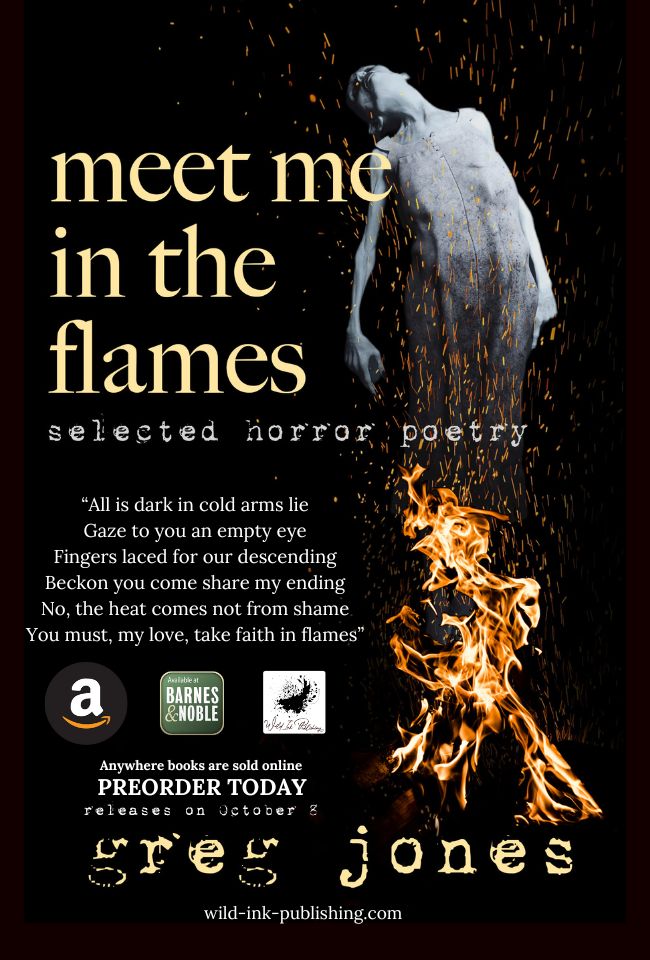
Take “Meet Me in the Flames,” an upcoming collection of dark poetry written by poet/author Greg Jones. In this Wild Ink Publishing collection, Jones not only taps into inspiration from such legendary horror authors as Edgar Allen Poe, H.P. Lovecraft, and Clive Barker, but he also draws upon the movies, comic books, music, and TV shows of his childhood.

The result is a tantalizingly terrifying book of poems.

1. Tell me about the stories and art that inspired you (or maybe gave you a scare!) growing up in the ’80s. What types of books/art/movies/music, etc. were you into?

I was fortunate enough to have parents that weren’t too strict on the content I was consuming. In this day and age, maybe social services would have been involved, but this was the 80’s. Anything went.

We were the first family to have a VHS player so our house was very popular. I grew up with John Carpenter, Wes Craven, early Spielberg and Lucas. I still remember seeing the second Friday the 13th at the drive in and having my dad move the car when I went to the bathroom. Saw Jaws when I was 7. The Thing blew me away. I think The Howling is the best werewolf movie ever made. I was seven when Star Wars came out. Ten for Empire. What an absolute perfect time to be a little boy.

The comics that were being published were incredible. Springsteen was on the radio. I would tape Spider-Man cartoons and Dr. Demento shows on my Kmart cassette recorder and listen to them until they wore out. My first concert was Weird Al.

I am still basically 12 years old. You ask me what inspired me back then?  Everything was an inspiration.

2. Why do people love horror so much? What is the appeal of a well-written scary poem or story, in your opinion?

What do we do right after we get scared and scream? We laugh. It’s a release. I think that is a big part of it . People like being scared and taken out of their comfort zones. They like being titillated. It’s fun.

If you can write a scene where people have to turn away or put their book down and turn off the light, you have achieved something. If you can elicit an emotional response like that with just the words you have written, not with images and sound and effects, but just words? That’s amazing.

I love reading something and then going back and reading it again because I couldn’t believe it the first time around. When you say “wait! Did I just read that?” And do a double take … that is a gift. That is what I strive for.

I posted a poem online a while back and someone commented simply” Wow”. I coasted on that one-word review for quite a while.

3. You recently wrote about meeting legendary author Clive Barker. What was that like, and what did it mean to you?

That was definitely a highlight reel moment for me. His appearance announcement came within minutes of me getting my first proof of cover art for “Meet Me in the Flames” so it seemed like fate. I have always been a big believer in giving credit where credit is due and if it weren’t for his writing and my discovering him at such a pivotal time in my life, I might not have ever had the desire to do this.

Books that were being written before he came on the scene were pretty tame and somewhat formulaic. I enjoyed them at the time, but his stories were so much richer and more imaginative and really kicked the door open for me as to what could be done in the genre.

Meeting him was a full circle moment for me. I know I will probably never have the chance to see him again but knowing he has samples of my writing and that we were able to have that interaction 20 years after we first met means the world to me.

When my collection is published, I plan on sending him a copy. Just knowing that my words might be sitting on his shelf somewhere makes all of this worthwhile.

4. What is your writing process like? Is there a certain place or time in which you like to write? And is your process different for poetry versus prose?

I’m not sure if I actually have a writing process. I pull inspiration from things I hear or see or phrases and words I come across. Something that may start out as a more tongue in cheek idea may morph into something more disturbing or creepy. It all depends on where my mind takes me. It sounds cliche but it’s the truth. It’s a lot of stream of consciousness type of thing.

I have a desk in my basement that I write at or I’ll go to a coffee shop for a few hours but mostly it’s on my phone for convenience sake. There is a list on it of ideas and fragments of ideas and poems that I have gotten to a certain point and may revisit in the future. I don’t discard anything because you never know when a thought might be recommissioned into something you never even imagined when you wrote it.

It’s fun to challenge myself to come up with new things or expand ideas into longer pieces. Eventually I would like to rework some of these into short stories to go along with story ideas I already have brewing. I don’t know if I have a novel in me but definitely a short story collection.

5. “Meet Me in the Flames” is your first book. What made you decide to do a book of poetry? And how did it come together?

I found myself a few years ago recuperating from a torn tendon in my arm and with some free time on my hands. I was into some newer Americana and folk music at the time and started writing songs with the intention of learning the guitar. A few good things came out of that but eventually, like most things, my attention started drifting toward darker material and the horror poems were born.

I had a goal to reach 100 poems and if I could hit that and have some content I was proud of I would submit them somewhere as a collection. I googled who was taking submissions and Abby at Wild Ink asked for a sampling since she was looking for a horror title to print. She loved the samples, asked for the rest of the collection and I found out she was interested in publishing them around the beginning of 2024.

I’ve been constantly writing and am working towards an even stronger second collection of poetry before trying my hand at some short stories.

6. How did you find Wild Ink Publishing on your writing journey?

This whole journey has been very surreal. I have heard of the trials and tribulations of getting published but honestly, I was not too keen on going the self-publishing route. I wanted the affirmation that goes with someone reading your work and saying “This is good enough that I want other people to read it. I believe in this.” That is what I have experienced with Wild Ink.

I realize how uncommon this is and I am extremely grateful for the opportunity. Everything right down the line has been handled with extreme professionalism and care and the fact that I still feel like this is MY book and it hasn’t been corrupted by someone else’s vision or agenda is the best take away so far. The community of creative people involved have been encouraging and attentive from the very beginning and I hope that other aspiring authors have the opportunity to get their work published in much the same manner.

7. I understand you also did the illustrations for this book! That is so cool – how long have you been drawing?

For as long as I can remember. I have always been a comic book fan from a very young age and spent my childhood reading, collecting, and drawing as much as humanly possible. I would spend hours hunched over a drawing table or any flat surface really and study techniques and anatomy and storytelling. I am proud to say that I am completely self-taught and everything I know how to do artistically came from those years.

I have had aspirations to be a comic artist, but it is a very hard field to break into, especially pre-internet and growing up in the Midwest. I still have a dream to write and draw my own comic and have the story all fleshed out so maybe sometime in the future we will be having a conversation about that.

Between the comics, the movies, the music, and the general carefree nature of the world during those decades, it was a hell of a fun way to grow up.

Preorder Meet Me in the Flames here: https://www.barnesandnoble.com/w/meet-me-in-the-flames-greg-jones/1145985867?ean=9781958531853

Interview by Bruce Buchanan

Bruce Buchanan is the communications writer for an international law firm and a former journalist. But he’s been a fan of fantasy and heroic fiction for most of his life. His influences range from the novels of Margaret Weis & Tracy Hickman and Terry Brooks to the Marvel Comics stories of Stan Lee, Jack Kirby, and Steve Ditko. Bruce has short stories appearing in the upcoming Wild Ink Publishing anthologies Tenpenny DreadfulsClio’s Curious Dash Through Time, and UnCensored Ink. He lives in Greensboro, N.C. with his wife, Amy Joyner Buchanan (a blogger and the author of five non-fiction books), and their 17-year-old son, Jackson.

An Interview with K.M. King

An Interview with K.M. King

By Bruce Buchanan

K.M. King has worn many hats—she’s been a journalist, a teacher, a business owner, a corporate trainer, a student of history, and a member of the U.S. Army.

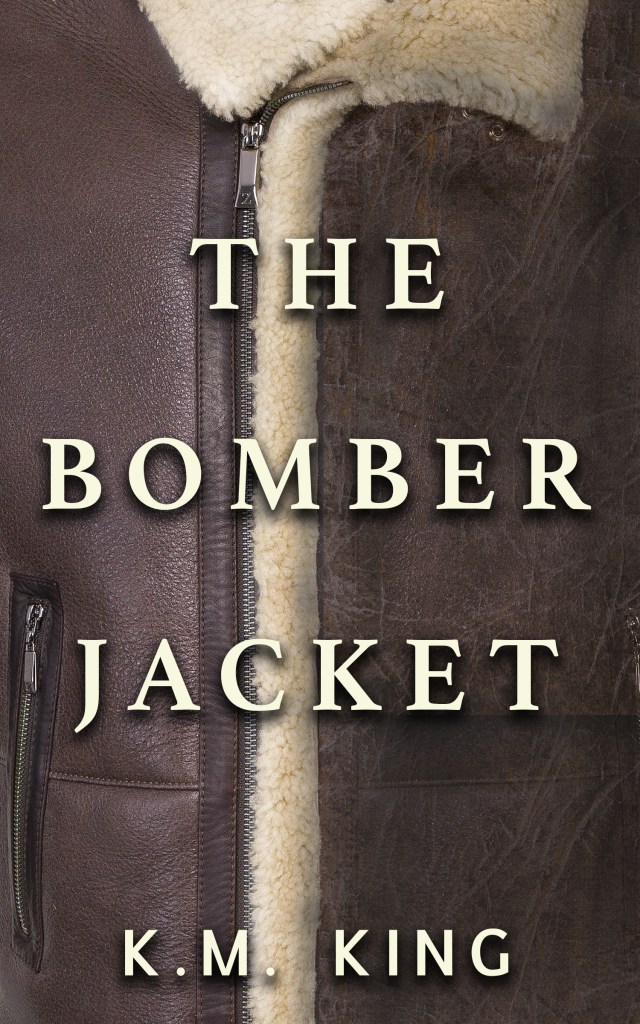
She recently added one more line to her already impressive resume—Wild Ink author. Her novel The Bomber Jacket will be released on Aug. 20, 2024.

K.M. King has worn many hats—she’s been a journalist, a teacher, a business owner, a corporate trainer, a student of history, and a member of the U.S. Army.

When an American college student buys a World War II vintage bomber jacket, it sends here on a search to learn more about its original owner. Along the way, the veil between past and present becomes ever thinner.

You’ve said you fell in love with reading at a young age. Did that also extend to writing?

I always loved reading stories and creating stories in my head. The first writing I remember doing outside of schoolwork was in the little pink diary I got as a Christmas present in fourth grade. All through school, I was involved in writing for our school papers and was editor of our high school newspaper in my senior year. I loved all the writing assignments for English class. I had a hard time deciding whether to study English or history in college—history won.

As for writing fiction, that didn’t happen until I was in my mid-twenties. I was taking some business classes at a local college and signed up for a fiction writing class. I wrote a short story and got great feedback from my professor. The rest, as they say, is history.

It sounds like you’ve had some amazing career and life experiences. How have those experiences shaped your writing?

That’s a challenging question to answer. I think for me writing is so ingrained in who I am, I’m not always sure I can parse out what influenced my writing. Every job I’ve had involved writing, whether as a teacher, journalist, non-profit publication specialist, personal coach, or creator of staff development curriculum.

I’m essentially an introvert—like a lot of writers—and very self-reflective. I almost minored in philosophy in college. My journal, which I’ve kept from my early thirties, provides a space for me to ponder the inexplicable mysteries of life. I think I ponder those same mysteries in my fiction, through my characters, hoping they’ll give me the answers I haven’t found elsewhere.

How did the idea for The Bomber Jacket come to you?

I’ve always been fascinated by flying. Probably should have joined the Air Force instead of the Army! When I was stationed in Frankfurt, Germany, I used to go to the Frankfurt Airport and watch the planes come and go. Something about that planted the seed of a story about a pilot.

In 1997 and 2004, my husband and I took trips to Scotland, and among the places we visited was Drem Aerodrome, a former Royal Air Force base near Edinburgh. That seed, which lay dormant for more than two decades, sprouted into a Scottish bomber pilot from World War II. I began reading extensively about the RAF, and the characters crystallized during a trip to Scotland in 2011 with our oldest granddaughter, Zoe, who was 11 at the time.

I’m also interested in the idea that the veil between the past and present could be very thin. Spirits and ghosts have always fascinated me, and the possibility that spirits linger among us until they’ve completed whatever unfinished business holds them here helped shape the novel.

I am documenting the whole process of writing The Bomber Jacket on my website: www.kmkingauthor.com.

Were you interested in World War II history before you started this book?

Yes, definitely, both because I was a history major, and my father served in the Army in World War II. Like many of his generation, he never spoke about his experiences, except for a few succinct statements here and there when he was older. I’ve been reading World War II fiction and non-fiction for years and share my enthusiasm for history of all eras with my husband.

You’ve written other novels. What has been your biggest challenge in writing? And how did you ultimately overcome it?

I think my biggest challenge is I don’t just write in only one genre. I started writing novels in the early 1990s—a series of young adult fantasy books. Wild Ink is publishing the first of them, Jenna’s Journey: The Bronze Key in January 2025. I wrote The Bomber Jacket next; it’s World War II fiction.

I’m currently working on a three-book rom-com series with fantasy elements. I also have a mother-daughter generational story half-finished and the skeleton of an idea for a comic novel about a woman who gets obsessed with K-drama and K-pop. Nothing biographical there at all! 

I’ve yet to overcome this challenge.

My other challenge is imagining my books might attract the interest of a publisher, especially after 45 rejections in attempting to find an agent for The Bomber Jacket, let alone a publisher. I am astounded and incredibly gratified that Wild Ink has seen something worthwhile in my stories.

Getting published was always a dream, not a motivation for writing if that makes any sense at all.

What is your writing process like? And how has it evolved?

I have to say, my process is different for different kinds of books. But for every book, the motivation is the same: I have questions about life, about an experience I’ve had, about someone I’ve known, and I write to find the answers to those questions by giving them to my characters to grapple with. I don’t always like the answers they come up with; sometimes, I’m not even sure what question they are working out in their story. I often discover it when they do, sometimes at the end of the first draft.

With Jenna’s Journey, the story simply appeared, and I wrote it when it did. There were long periods of time when I didn’t work on it, except to edit what I had written. No wonder it took me ten years to write the four books.

With The Bomber Jacket, I did extensive research, character development and plotting, but still the characters sometimes did things I didn’t expect them to. Or the story took an unexpected twist or turn.

For all the books I write, I first tell myself the story. That’s the first, second and third draft. When I am satisfied that my characters have answered my questions, even if I don’t like their answer, then I’m ready to consider sending the story into the world and work with an editor or a writing group to hone it.

What tips would you give to new or aspiring writers?

I still feel like a new and aspiring writer, because every book is a new adventure and has its own unique challenges.

I’ve read and continue to read books on writing. I think some of the advice is awful. One famous writer, who shall remain unnamed, said unless you write every single day, you’re not a writer. Hogwash. Writing is unique to each writer– the process, the purpose, the story to be told. Discover what works for you.

I have learned that very often the first several chapters of a first draft are the backstory—what the writer is telling him/herself about the story. Finding where the story actually begins for the reader can take some work.

Also, work on your book for a while, have at least 75 pages or more written, and then join a writers’ group, but one with serious writers who give valuable and supportive feedback. Or find a developmental editor.

Anything else you want to mention, either about yourself or your novel?

I also teach journaling workshops and have written two workbooks which will soon be available on my website: Pen, Power & Possibilities: A Guided Journaling Experience to Expand the Horizons of Your Life and Time: Tyrant or Treasure: 11 Steps to Embracing Life in All Its Messiness.

Preorder K.M. King’s book, The Bomber Jacket, through Aaron’s Books here.

Interview by Bruce Buchanan

Bruce Buchanan is the communications writer for an international law firm and a former journalist. But he’s been a fan of fantasy and heroic fiction for most of his life. His influences range from the novels of Margaret Weis & Tracy Hickman and Terry Brooks to the Marvel Comics stories of Stan Lee, Jack Kirby, and Steve Ditko. Bruce has short stories appearing in the upcoming Wild Ink Publishing anthologies Tenpenny DreadfulsClio’s Curious Dash Through Time, and UnCensored Ink. He lives in Greensboro, N.C. with his wife, Amy Joyner Buchanan (a blogger and the author of five non-fiction books), and their 17-year-old son, Jackson.

The Facts and Fantasy of ‘Bestselling’ Author

The Facts and Fantasy of ‘Bestselling’ Author

by Marla Miller

Los Angeles author Joe Ide, a frequent speaker at conferences and seminars, is delighted with the success he has enjoyed since selling his first novel, IQ at age fifty-eight, delighted and making no bones about this when he addressed a room filled with writers at a recent Southern California writers conference. Few writers reach the heights of bestselling. Part of the magic motivating us to remain seated at our writing place includes nurturing the fantasy that our stories will someday resonate, too.

The dream of becoming a bestselling author is perfectly fine to dream. After all, at our core, writers are dreamers. But is this why we write stories? For fame and fortune? The answer is no and if chasing fame/fortune provides the only motivation, this segment of writers eventually moves on to other ventures.

Craft vs Business

We write stories because we have to write them and why Joe Ide’s keynote so resonated with me. In his time at the podium, Ide delivered many terrific tips about creating characters from our everyday living, echoing what we know about our tribe: at our core, writers are nosy. I videoed what I could and had to hear more so I attended Ide’s Sunday morning workshop. He did not disappoint. Ide talked craft, the creative side of publishing, co-mingling solid craft ‘pointers’ with the business side of publishing, sales and making money. Again, he pulled no punches, straight talk from his own experience about what bestselling means in terms of dollars and cents.

Defining Publishing ‘Advance’

Joe Ide’s  latest novel, The Goodbye Coast: A Philip Marlowe Novel garnered a six-figure advance. Sweet, right? Absolutely, and Joe wasn’t complaining as he broke down what the six-figure sum meant to his bank account. Some writers, likely those new to our tribe, don’t know that getting an advance from a traditional publisher requires the author to earn back that sum in book sales before seeing any more money from the publisher. Since Ide’s novel centered on a famous person, Raymond Chandler’s ‘Phillip Marlow’ character, permission to use this name came with a price. Raymond Chandler’s estate had to be negotiated with before Ide could publish his novel.  I don’t know what the estate required but when I negotiated with the Women’s National Team to write All American Girls: The US Women’s National Soccer Team (with full access to the team) that sum was 50% of a very nice advance offered by my publisher, Simon & Schuster. Joe Ide pointed out other facts: his agent’s take of 15% as well as Uncle Sam’s portion. All of a sudden, that six figure advance has a bit of a different context in reality.

Why Writers Write

Even before traditional publishing took a pummeling from the arrival of the worldwide web, writers have nurtured fantasies about bestselling books, national book signings, film options, TV interviews and oodles of money. None of these fantastical imaginings are rooted in facts. I share this story often in my workshops, a story told by one of my writing mentors, the founder of the Santa Barbara Writers Conference, Barnaby Conrad, a multi-published, bestselling author in fiction and nonfiction. In the early 1990’s, as we gathered for the opening night SBWC ceremonies, Barney announced that this SBWC session had attracted the greatest number of conferees in its (then) 20-year history. He asked us to look around the packed auditorium brimming with 400 writers and so we did. Then he said, “…At the most, one to three writers sitting here will be offered contracts from New York publishing.”  The audience let out an audible gasp to which he replied, “We write stories because we have to write them.”
Wisdom shared from a man who had enjoyed a storied career himself, Barnaby Conrad.

So, write on. That’s what we writers do.

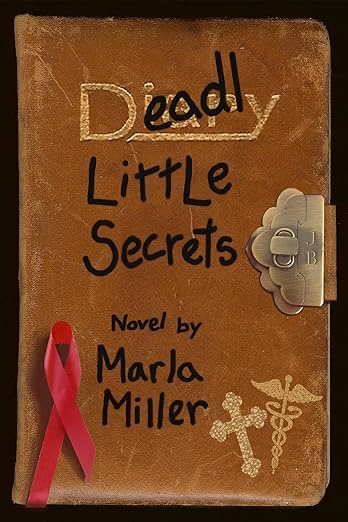
Marla Miller segued to the writing life in midlife. Her writing credits includes editor-in-chief of a lifestyle magazine and books published by traditional and independent publishers. Her e-novel, Deadly Little Secrets is available on KDP. Her novel, SweetSpot: Now and Then, whose setting includes a writers’ conference, will be published by an independent press in Fall 2024.  Since 2003, she has delivered workshops at The Santa Barbara Writers Conference and The Southern California Writers Conference.

Where to find Marla Miller:

https://linktr.ee/Writersmama

MarlaMiller.com 

TikTok Twitter & Instagram:@writersmama

Medium

Facebook: Hooking Readers

Substack: writersmamasubstack

Amazon Author Page: https://bit.ly/4avJTRX

An Interview with our Editor-in-Chief

An Interview with our Editor-in-Chief

Abigail here! Brittany McMunn and I talked daily. Truth be told, she’s probably tired of me at this point. But she humored me for this interview. I’m currently teaching a course on editing and coaching for the SNHU MFA program, and I knew she would have some amazing insights to share with my students. She did not disappoint.

Here’s the interview…

What brought you here?

Since my hair-brained idea at the start of 2021 to change my MHA a year into the program to something I was more passionate about, my MFA journey has been one of the best things I’ve ever done. It provided me with a creative outlet and gave me back a sense of identity I had lost after running up the corporate mountain, being a wife, and a mother for more than a decade prior. But most importantly, it gave me the structure to help others find their kernel of success, whatever that may look like for them.

I was recently asked to interview for MFA students at my alma mater and there was no way I was going to turn it down!

What made you decide to start editing?

I’ve always had a keen eye for the small details. However, editing is more than just picking out the errors & opportunity gaps in craft; it’s about bettering the other person. I love to teach and learn, and editing provides me with both of those things in droves.

How did your coursework with SNHU’s MFA program help you achieve your goals of editing?

The MFA program at SNHU gave me structure and intention. The things I was editing before SNHU were based more on the stylistic choices I had as a reader than on what was foundationally appropriate for the context and material. SNHU gave me the confidence to build a business on my knowledge and provided me with the framework to understand industry terms, inner workings, and methodology. 

Do you do freelance work or do you work for a publishing company? 

I started out as a freelance editor through an LLC I started while in grad school. I have since taken on a position with Wild Ink Publishing as a managing partner & editor-in-chief as well as launching my own publishing company, in collaboration with Wild Ink, in May of 2023. I still offer freelance work as pro bono editorial assessments one, because I just simply love it, and two, because I not only feel I have a lot of knowledge I have a passion to share but because I learn so much in return.

What skills are necessary to become an editor?

Editing requires both technical and personal skills in equal measure. As a role that puts you directly in the path of another’s persons creative vision, you not only have to be versed in the subject matter and know where to research topics if you are unsure but you also have to contain very healthy levels of empathy, compassion, and the ability to listen. Editors are very technical and analytical individuals, but don’t forget edges blur and not everything is going to fit into a predefined box the industry has created for it. 

What is most important to remember when working with authors?

Authors are artists, and just like any artist, their vision is their own. Regardless of whether an editor agrees with it or enjoys it, it is their job to ensure that vision is conveyed in the most accurate and clearest way possible. Take their soggy sand castle and build a metropolis of brick and mortar. 

Which type of editing do you prefer and why? 

For me, it depends on the genre. I am an emotional reader, so any genre that causes me to feel something at my core is my favorite to developmental edit. Those genres that I wouldn’t pick up and read for pleasure, such as literary or science fiction, are the ones I prefer to line edit. It is easier to separate myself from the content and focus on the technique of the writing if I’m not immersed in the story so deeply that I overlook the grammatical and syntax opportunities. 

You are an Editor-in-Chief; what does that mean? What do you do in that role?

It means everything that goes array is my fault. Okay, not literally, but a lot of it. As an EiC, I have final approval of all material content, formatting, and typesetting that leaves the safe haven of the publishing company before it enters the world for mass consumption. Editing is not a one (wo)man show as there is a whole team of freelance and staff editors who I must ensure remain on schedule with the publishing projects. Publishing timelines are set approximately 1 year in advance, so it is imperative that delays do not happen unless otherwise unavoidable so as to not cause a horrendous domino effect to the other dominos in layout, formatting, cover design, publicity, etc. I also set the timelines for editing based on genre and word count and provide the second set of eyes when or if an author does not agree with another editor’s critique. 

What should MFA students know about the publishing business?

The publishing industry is exceptionally saturated, more now than ever. Thank you, BookTok. This means standing out like the Mount Everest of Zits through continued and persistent efforts and a unique style/tone is what it’s going to take to be recognized. Agents and publishers are very particular about what they will accept because they want to ensure it sells successfully in accordance with market trends.

However, that being said, there are new agents and publishers coming onto the scene just as quickly as authors right now. There is a perfect fit for you and your story; just remain true to yourself and keep at it until you find your path. Whether that path is traditional Big 5 publishing with an agent, indie publishing with self-representation, or self-publishing; all of these avenues have shown to bring authors immense success. Do not let the lack of immediate success or overnight stardom deter you from writing and putting your creative vision into the world. You will find fulfillment in your efforts by the level of investment you put into it. 

Brittany McMunn

Author | Editor | Writer | Entrepreneur

Brittany has been an avid reader since before she could remember. The dusty bounds bought from local flea markets and thrillers lining her grandmother’s bookshelves were her place of peace as a child.

As an editor with a deep passion for helping writers achieve their dreams, Brittany saw the need novice writers had for someone to assist them in refining their works. This need is what drove Brittany to create an online writing community for MFA students aspiring for publication, as well as branching out into freelance editing through her LLC, The Paraphraser.

Brittany has an undergraduate degree in communication and has earned her Master of Fine Arts in Creative Writing, as well as being a member of the Sigma Tau Delta English honor society. Brittany enjoys genres such as paranormal, fantasy, contemporary, thriller, and young adult fiction all with heavy romantic elements.

Pride at Wild Ink and Conquest

Pride at Wild Ink and Conquest

By S.E. Reed

Celebrating Pride Month by sharing some of our favorite Wild Ink and Conquest books that feature LGBTQ+ characters.

Adorned in Ice by Kylie Wiggins

Fear was not for the weak but for the intelligent who knew they were up against an unpredictable foe.

Eliza Hawke, the ice-wielding Princess of Keruna, has been married off to Will, the earth-wielding Prince of Mineros. The cruel and unfeeling place that is Mineros cares about power over anything else. As Eliza’s days of forced betrothal go by, Will leaves his mark with bruises and veiled threats. Yet, through Eliza’s misery, she finds solace within thePrincess of Mineros, Nissa.

Nissa, is a beam of light even on Eliza’s darkest days. It is not until Will’s coronation is almost in his grasp, Eliza and Nissa hatch a daring plan of escape. If the Prince is allowed control over the largest army in Catalina, then all will surely be lost.

As the two fight desperately to unite the kingdoms in their war against the Prince, a tale of danger and betrayal unfolds every step of the way.

Fate’s Fury by Shaelynn Long

Pansexual Olivia Beckett has lived through thousands of lifetimes, dispatching miscreant supernatural creatures alongside her sisters as the mythological trio of Furies. Memories of her past lives begin to appear and haunt her, and she starts questioning everything she thought she knew about her life and her duty. In the midst of a brewing war between the factions of Creatures, Olivia goes against all the rules and falls in love with a human, only to realize he may be connected to her mysterious past. Can she have it all, or will she have to make the ultimate sacrifice in order to stop the war?

The Funeral Director’s Wife by Lindsay Schraad Keeling

Brooklyn Blatrix takes on a new job at the local funeral home after being dumped and fired in the same week. She strikes up a relationship with her supervisor, Brantley McAffey, in a hopeful attempt to make her ex-boyfriend jealous. However, Brantley has a secret he’s been keeping from everyone – a secret he’s willing to kill for. Brooklyn is about to find herself in the trenches of a trial by media before the year is over.

Infinite Mass by J.K. Raymond

“Hi there kittens, It’s Karma. I just helped Morna save the Omniverse from yet another impending apocalypse. It wasn’t my first, but funny thing about this turn on the merry go round, it was in fact my last! I’ve been at this game a long while. I’m not a stranger to these lands, I’d go so far as to say most of you lovelies know me. But do you? Karma is neither male nor female, she is whatever he wants to be, whenever they choose to be…get it? Got it? Good! But I’ve retired and now I’m just plain old Jane the bisexual human. A human that gets ravaged every night by their transgender boyfriend Loki.  Don’t get your runes in a twist. How did you expect a shapeshifter to identify? I bet you never even thought about it did you…just a trickster was all, right? Anyhoo, since it’s technically my first Pride Month as a queer human, I thought I’d wish you darlings a happy Pride! And let you in on a little secret…Karma’s always been on your side.”

Of Stars and Lightning by Melanie Mar

Sol Yarrow didn’t ask for much. A nice day for hunting. A peaceful shift at her gods-awful job. A steaming bowl of her aunt’s famous stew. Easy. Simple.


After twenty-five years of simplicity, everything she thought to be true is rewritten when four strangers come to Yavenharrow and take her back to the kingdom of Rimemere, a shielded land inhabited by ruthless Elemental Magic Wielders. A land only known through rumors and bedtime stories.


A kingdom where her mother was Queen. A kingdom, by order of succession, now belonged to her. What would a human with no magic and a short temper have to offer the Wielders? Sol didn’t think much.


Her Court thought otherwise.

Old Palmetto Drive by S.E. Reed

LGBTQ+ teen socialite Rian Callusa’s privileged NY life is over! Following her parent’s nasty divorce, and the death of her aunt & uncle, Rian’s mom drags her kicking and screaming all the way to Everglades City. Who cares if her new home is a mansion when it’s in the middle of nowhere without a nail salon or shopping mall in sight? And friends? Hell might as well freeze over before Rian would hang out with her hillbilly cousins.

The news that her Dad won’t be returning to New York after his job abroad crushes any hope Rian had of moving back to the Big Apple. So without a plan B, Rian explores the swamp and learns her cousins aren’t as backward as they first appeared. She even falls head over heels for a cute vintage-loving local girl named Justine. Now that she thinks about it, this might turn out to be the best summer of Rian’s life! Until her cousin Travis gets drunk at a party and confesses the dark truth about what really happened on Old Palmetto Drive, sending Rian into a tailspin of fear and self-doubt.

The Physician by Magdalene Dietchka

Jake Perlman’s fate changed forever as a child when a dam broke on the way to school, washing his bus over a bridge. Before the Angel of Death could claim him, a Shepherd named Omiel stole Jake from his fate. Now as a Stolen in his adulthood, Jake uses his powers under Omiel’s guidance to assemble his coterie, a group of Stolen with abilities like his.

Yael Taube learned in her youth she would become a Companion, the soulmate to a Stolen. After an unfortunate event finds Yael in the presence of her Stolen, Jake, things take motion.

Jake and Yael learn of their fates and see hope for their future. However, pulling the coterie together is anything but easy. Between their shared trauma, doubt in their fate, and evil beings called Sirens trying to harm them, the coterie’s future is anything but certain. Despite the Shepherds’ direction, there are dangers ahead. If the Stolen and their Companions come together too soon, it could lead to their undoing, but the world and the coterie are counting on their success.